
Cheap Active Cases vs Discontinued Classics
One case costs less than a gumball; another costs more than a AAA game. Both are sealed CS2 cases, both are stacked by the same people, and calling them the same asset is like calling a seedling and an oak "the same tree." They behave differently, they pay you differently, and the strongest stacks deliberately hold both.
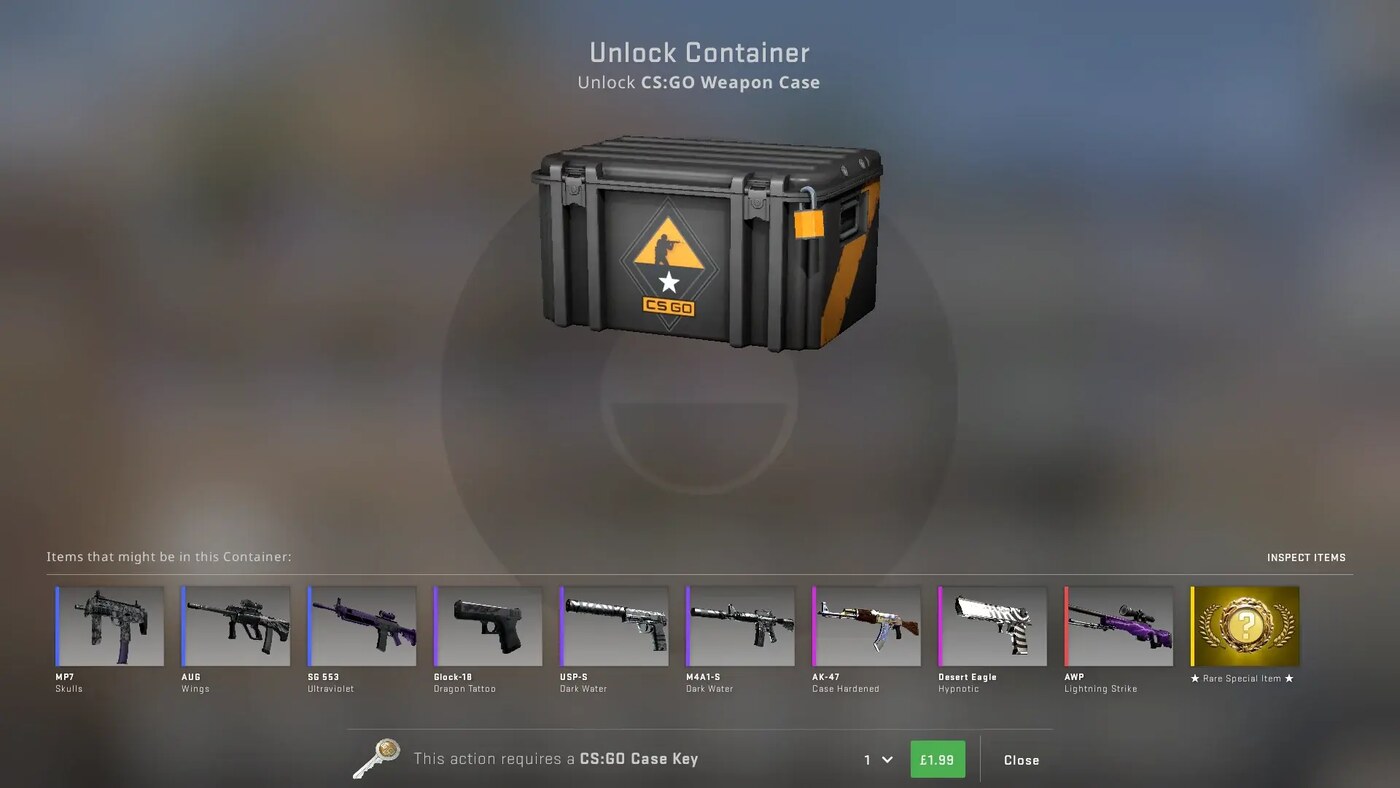
Two engines, one thesis
Every case appreciates for the same underlying reason — openings destroy supply while demand persists — but the two ends of the price spectrum are at opposite points of that process, which makes them behave like different assets:
| Cheap active case | Discontinued classic | |
|---|---|---|
| Supply | Still growing — case drops weekly to players | Shrinking only; no meaningful new supply |
| What you're buying | Future scarcity, at pre-scarcity prices | Existing scarcity, at scarcity prices |
| Price behavior | Flat-to-boring for possibly years, then repricing when it leaves the drop pool | Grinding appreciation; already through its boring phase |
| Unit economics | Pennies per unit — accumulate hundreds | Dollars to hundreds per unit — accumulate few |
| Main risk | Oversupply lasts longer than your patience; Valve extends the drop era | You paid a full price for slower percentage growth; deeper drawdowns in cash terms |
Call them the volume play and the scarcity play. The volume play is a bet on the conveyor belt: today's $0.40 case is tomorrow's rare drop, if you can wait through the flat years while supply still floods in. The scarcity play skips the wait and buys the finished product — the mechanism already switched on, the discount already gone. Why discontinued cases are the blue chips covers that end's economics in depth.
What the cheap end is really for
Cheap active cases are an accumulation flow. Their superpower is that a small daily budget buys meaningful quantity: at sub-dollar prices, a modest daily spend compounds into hundreds of units over months, and quantity is exactly what you want to own when a case eventually rotates toward rarity. The lifecycle history — documented across generations in case supply mechanics — has repeatedly rewarded whoever quietly hoovered up a case during its high-supply, low-price era. A modern worked example of that era is the Fracture Case: huge supply, long boring stretch, textbook conveyor.

The cost of that upside is time and uncertainty. Nobody outside Valve knows when a case leaves the active pool, and while it's dropping, burn is offset by fresh supply — the price can stay pinned near its floor for years. The volume play is cheap precisely because you're being paid to endure boredom.
What the classic end is really for
Discontinued classics are the store of value end. Supply only falls, demand is proven across a decade of unboxing culture, and liquidity is deep because everyone knows these names. You're not waiting for a mechanism to activate; you're riding one that's been running since before CS2 existed. The archetype is the original CS:GO Weapon Case — the 2013 case that started everything and now trades at prices that make newcomers double-check the listing.
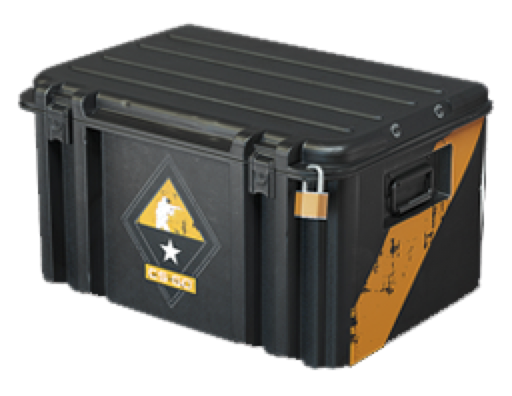
The trade-off mirrors the cheap end exactly: you pay full price for certainty. A three-figure case appreciating steadily may compound less spectacularly than a penny case that finally rotates — and when the market corrects, the same percentage drawdown costs far more per unit in cash. Classics are the ballast, not the rocket. Where a given classic sits on that spectrum is a matter of supply record, not opinion.
The barbell: hold both, on purpose
Since the two ends fail differently — the cheap end's risk is time, the classic end's risk is price paid — pairing them is a genuine diversification inside a single asset class. A practical shape, and the one this site's founder actually runs in public: a few dollars a day spread across roughly five cheap-to-mid active cases (the flow engine), plus one CS:GO Weapon Case on a weekly standing order at around $110–120 per unit (the anchor). About $20 a day total, roughly split so that daily volume accumulation and weekly scarcity accumulation both tick forward — the $20/day experiment publishes the ledger.
Mechanically, the two legs even suit different order types: dailies fit a budget-split allocation, while a chunky classic fits a "buy 1 per week" standing order — one unit, best venue, done. A tiered version of the same idea, with more rungs between the extremes, is the case ladder.
Choosing your mix
There's no universal ratio, but the inputs are knowable. Tilt toward cheap active cases if your horizon is genuinely long, your budget small, and boredom doesn't shake you out of positions. Tilt toward classics if you want the thesis already de-risked on the supply side and you're willing to pay for that. Both ends still have to pass the same four-filter checklist — liquidity especially, since a cheap case you can't exit in size is just colorful clutter.
And both ends reward the same behavior: steady, capped, unemotional buying. The gumball case and the AAA-priced case disagree about almost everything except how they should be bought — a fixed budget, on a schedule, at the cheapest venue available that morning. That part, at least, a machine can do for either.