
Building a Case Ladder: From $0.40 Fillers to $116 Anchors
A pile of one case is a bet. A ladder is a portfolio: cheap modern cases bought in volume at the bottom, discontinued knife-chase cases in the middle, and one genuinely scarce relic at the top, accumulated slowly. Here's how the tiers work, what belongs on each rung, and how a daily budget feeds all of them at once.
Why tiers instead of a favorite
Cases at different price points are, functionally, different assets. A $0.40 case still in active drop circulation behaves nothing like a $5 discontinued case with a beloved knife pool, which behaves nothing like a $100+ relic whose supply is measured in scraps. They respond to different forces — drop-pool rotations, knife-fashion cycles, pure scarcity — on different clocks. Holding one price tier means holding one risk. The ladder spreads a fixed budget across all three — ordinary diversification instinct applied inside a single asset class — with each tier doing a distinct job. The name fits: like a bond ladder, it's a boring structure that turns one lumpy decision into several small, staggered ones.
The bottom rung: fillers ($0.30–$1)
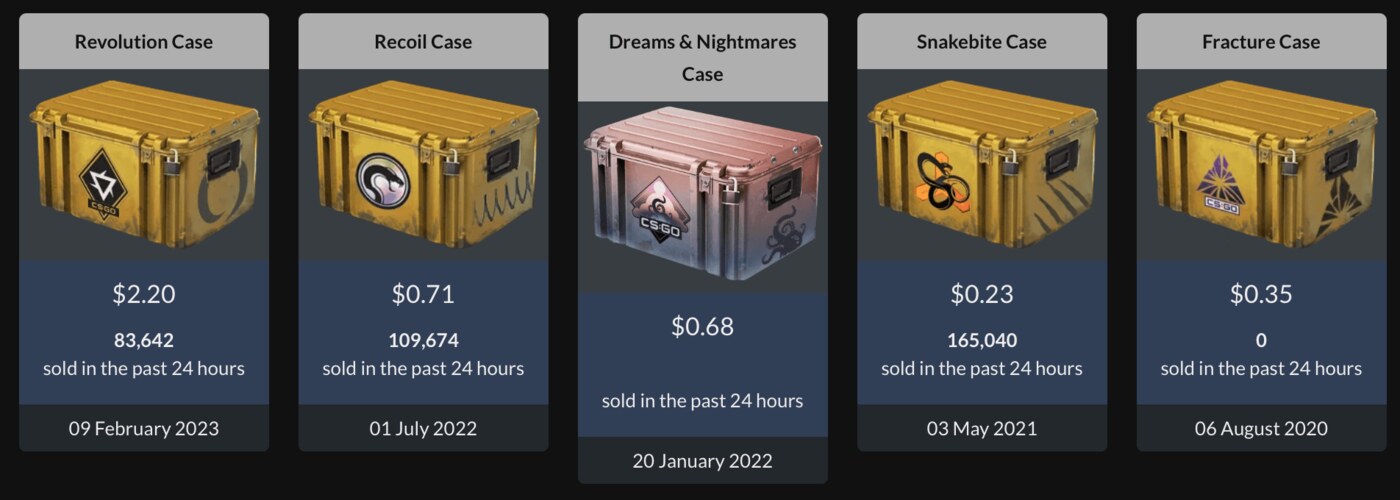
Cheap, high-supply, usually still dropping or recently retired — think of the tier the Dreams & Nightmares Case has occupied for much of its life, alongside the likes of Fracture and Recoil. Individually unimpressive; collectively the compounding engine. What fillers offer is copies: a few dollars a day accumulates hundreds of units, and if a case from this tier eventually follows the historical path from active glut to discontinued scarcity, percentage moves on a huge unit count do the heavy lifting. The risk is symmetric: supply overhang can keep this tier flat for years, which is why it earns volume, not faith. The economics of the tier are dissected in cheap actives vs discontinued classics.

The middle rung: knife-chase cases ($2–$15)
Discontinued cases whose knife and glove pools people still actively want to unbox — the Chroma line with its Doppler finishes, the Gamma generation, the Glove Case family. Supply is finished growing; demand renews itself every time a knife finish comes back into fashion or a trade-up path (like the October 2025 five-Coverts-to-a-knife mechanic) makes their contents newly interesting. This tier has historically carried much of case stacking's return story, per third-party trackers — with the matching caveat that it's also the tier most sensitive to update shocks, since its value leans on unboxing demand. Middle-rung picks deserve the most homework; the selection guide covers the checklist.
The top rung: the scarcity anchor ($50+)
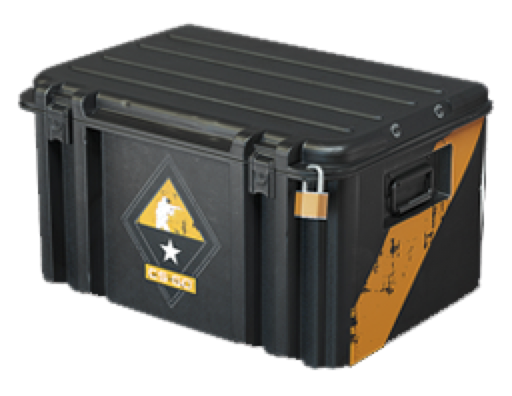
One line, bought slowly, chosen for supply that can never meaningfully grow. The founder's ledger uses the original CS:GO Weapon Case — recent fills around $110–120 — a 2013 item whose history is the founding story of the whole market. At this price you're no longer really buying unboxing demand; you're buying the blue-chip scarcity that collectors and museums-of-the-game pay for. Anchors move slowly in both directions: less upside velocity than a mid-tier case catching a knife meta, far more resistance to the update-shock drawdowns that maul the lower rungs.
Feeding the ladder from one budget
The mechanical problem: a $116 anchor doesn't fit inside a $20 day. The solution is cadence, not exclusion — dailies for the rungs that fit, a standing order for the one that doesn't:
| Rung | Example lines | Cadence | Share of budget | Job |
|---|---|---|---|---|
| Fillers | 2–3 cheap liquid cases | Daily | ~30–40% | Unit count, compounding |
| Knife-chase | 2–3 discontinued mid-tier | Daily | ~35–45% | Core return engine |
| Anchor | 1 scarce classic | Weekly "buy 1" | ~20–30% | Ballast, scarcity exposure |
Those shares are a starting shape, not gospel — tilt them to your conviction and rebalance rarely. The weekly "buy 1" pattern is exactly what standing orders exist for: the anchor accumulates at four-ish copies a month without ever distorting the daily flow. Within each daily tier, a plain equal split keeps the arithmetic boring and fair. Every line gets a price cap so a spiking rung skips rather than cannibalizes the others' budget — the day a mid-tier case runs 30% hot, its dollars stay unspent instead of chasing, and the rest of the ladder buys as usual.

Running it without running yourself ragged
A five-or-six-line ladder with two cadences and per-line caps is trivially easy to design and genuinely annoying to execute by hand — it's five venue comparisons and a calendar obligation, every day, forever. This is the configuration cs2stack was effectively built around: multiple plans from one config (the multi-plan setup), each line with its own cap, dailies and weeklies coexisting, every fill in the ledger. The founder's live account runs precisely this shape — roughly five daily cases at ~$19–20/day plus the weekly Weapon Case — so the pattern above isn't theoretical; it's the public record.
Two honest warnings before you build one. First, a ladder diversifies within cases, not beyond them — a market-wide crash drops every rung at once, just not equally, so the ladder is a complement to real risk management, not a substitute. Second, the anchor rung concentrates money in single expensive units: a mistyped name or fat-fingered cap costs more up there, which is why name validation and hard caps matter most on the rung where each fill is a three-figure decision. Build the tiers, set the caps, hand the repetition to something that never gets bored — and let the ladder climb at its own speed.