
Automation Doesn't Pick Winners. You Do.
Here is the sentence no tool selling you automation wants to lead with: a bot will execute a bad plan with exactly the same flawless discipline as a good one. Understanding what automation actually contributes — and what it can't — is the difference between using a tool and being fooled by one.
Two very different kinds of edge
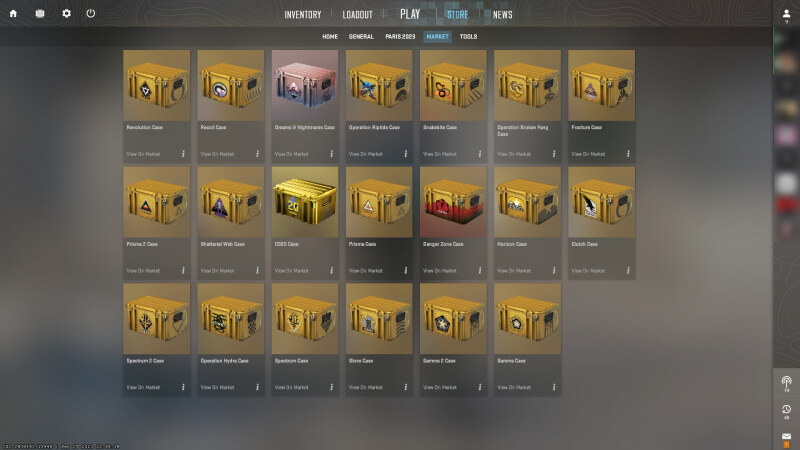
Every investing result decomposes into two parts. Selection is what you chose to buy — which cases, which mix, which budget. Execution is how well the buying itself was done — what price you paid versus what was available, whether you actually bought on schedule, whether fees and currency conversion ate more than they had to.
Automation lives entirely in the second category. A well-built bot delivers real, measurable execution edge: it never forgets a day, never pays above your cap, never gets lazy and buys on the expensive venue because the cheap one required a login. Across hundreds of buys, routing each purchase to the cheaper of two marketplaces and never missing a scheduled day compounds into money — that's the case made in manual vs automated, in numbers.
But execution edge is bounded. It can save you percent-level amounts on each transaction. Selection is unbounded in both directions: pick the wrong list and no amount of beautifully executed buying will save it. A perfectly DCA'd position in a case that goes nowhere for three years is a perfectly documented disappointment.
The flawless execution of a bad list
Imagine handing a bot a list consisting of one illiquid, high-supply case bought at its hype peak. The bot will buy it every single morning, at the best available price, under your cap, with a money-exact ledger entry — and none of that changes the fact that the thesis was wrong. The receipts will simply document the mistake with unusual precision.
This is why "set and forget" is a half-truth. Set, yes: the daily mechanics genuinely should run without you. Forget, no: the list itself is a living decision. The inputs that made a case worth stacking — its knife pool, its drop status, its supply trajectory — change when Valve ships updates, and Valve ships updates. A case that made sense before the October 2025 trade-up change may deserve a different weight after it.
What selection actually requires
The good news: selection for a case stacker is not stock-picking. You're not forecasting one skin's fashion cycle; you're choosing a handful of containers with sane supply-demand mechanics. The frameworks are learnable:
- Which cases at all — liquidity, age, knife pool, supply status. Start with how to choose cases and the cheap-actives vs discontinued-classics trade-off.
- Why the container has value — in most cases, the answer runs through the knife pool, because rare special items are what unboxers are actually paying for.
- How to weight them — for most people, equal-split allocation is boring, fair, and correct, precisely because it doesn't smuggle a forecast into the weights.
None of this demands daily attention. It demands honest attention, occasionally.
The quarterly review: the human's recurring job
A reasonable division of labor: the bot works every day, the human works four times a year. A quarterly review needs about thirty minutes and three questions:
- Did the world change? New Valve mechanics, a case entering or leaving the drop pool, a structural shift in supply. Updates are the market's tectonic events — they move everything, every time.
- Did my thesis change? For each line item: would I add this case today at today's price? If the answer is no and the reason is structural (not just "it went up"), it may be time to stop buying it — which is a different decision from selling it.
- Did my life change? Budget, horizon, risk appetite. The plan should fit the person running it.
Everything between reviews, the automation handles — and critically, it also protects the review from your moods. The worst selection decisions are the ones made mid-correction or mid-euphoria. A system that only accepts list changes deliberately, in config, on your schedule, quietly filters out the 2 a.m. impulses.
How to tell which alpha you actually have
Your ledger can answer this, if you let it. Compare your fills against the day's best available price and you're measuring execution: did you buy well? Compare your list's performance against a naive equal-weight basket of liquid cases and you're measuring selection: did you choose well? Most people who do this exercise discover their execution was costing more than their selection was earning — missed days, wrong venues, impulse buys above sane prices. That's actually good news, because execution is the fixable half. Selection skill takes years to prove; execution discipline can be installed this week.

Why an honest tool draws this line
A tool that claimed to pick winners would be making a prediction business dressed as a software business — and you should ask why anyone with a genuinely predictive edge would retail it for a subscription. cs2stack deliberately doesn't cross the line: you write the list, the caps, and the cadence; it executes, compares venues, converts currencies, and keeps the ledger. If your selections do badly, the ledger will show it plainly, which is exactly what a truthful system should do. Execution alpha is real, claimable, and shippable as code. Selection alpha is yours to earn — and the linked guides above are the honest starting point.