
One Case or Five? How Many Cases to Stack (With a Worked Example)
A stacker with $20 a day faces exactly one portfolio decision: how many lines on the list. One case is a conviction bet. Ten is a museum. The useful answer sits in between, and the cleanest way to see why is to run the same budget through three allocations and watch what a bad month does to each.
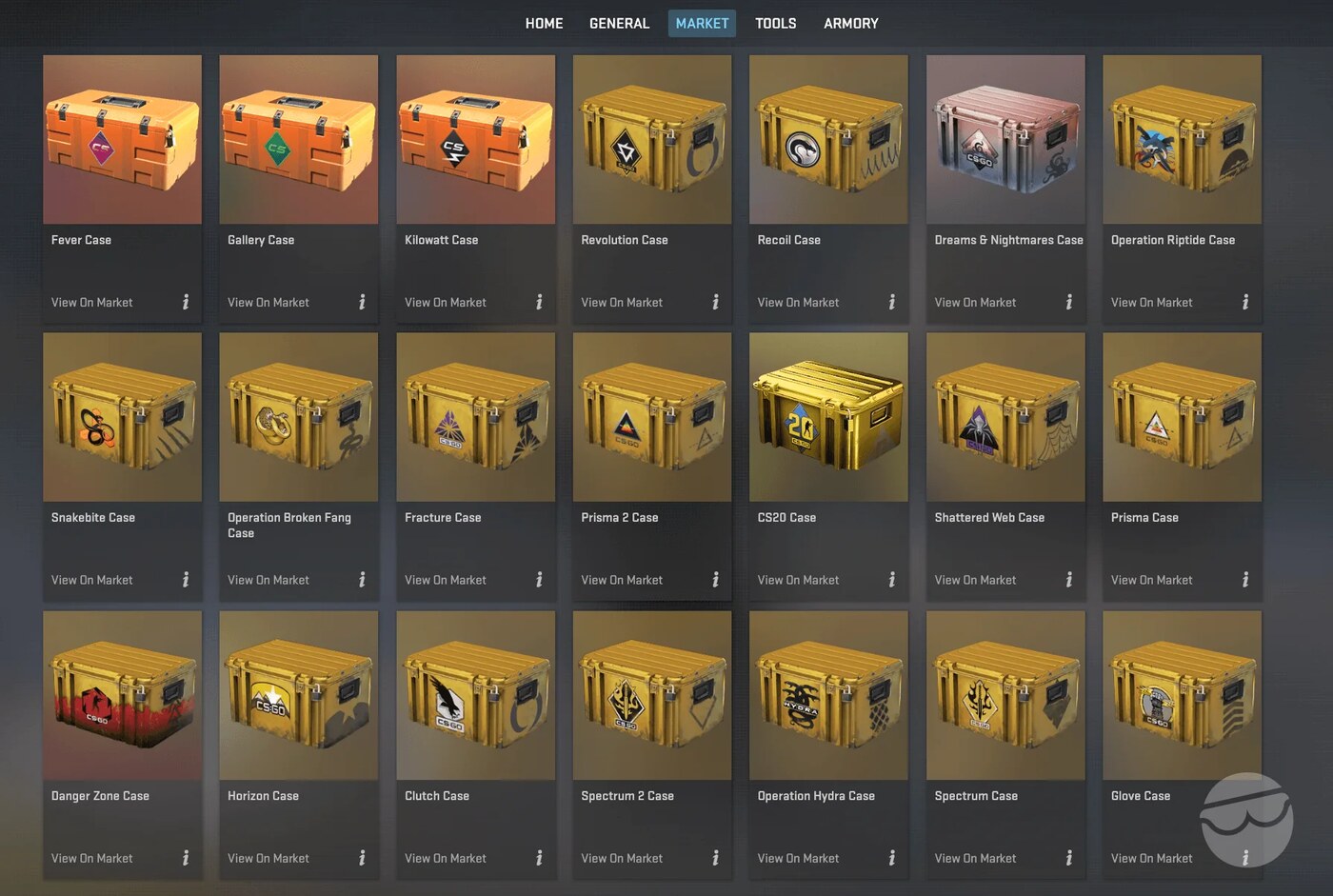
The trade-off in one paragraph
Every case you add dilutes your best idea and dilutes your worst one. Since stackers reliably know which idea was which only in hindsight, the question is really: how much upside on the best pick are you willing to trade for protection against your worst? Case prices move together in broad market events, but they diverge hard around case-specific news — a knife pool falling out of fashion, a drop-pool change, a hype cycle around one series. Diversification across cases mostly protects you from the case-specific part.
The worked example: $20/day, three ways
Take the same budget the founder of this site runs publicly — $20 a day — and consider three allocations. The correction below is illustrative, not a forecast: assume the overall case market slides for a few weeks, and one case on the list takes an extra case-specific hit (say its knife finishes fall out of the meta).
| Allocation | Daily buys | Broad correction | One case takes an extra hit |
|---|---|---|---|
| 1 case | $20 into one case | Whole stack down; DCA lowers average | Whole stack takes the full extra hit |
| 3 cases | ~$6.66 per case | Same broad drawdown | ~1/3 of the stack affected |
| 5 cases | ~$4 per case | Same broad drawdown | ~1/5 of the stack affected |
Notice what diversification does and doesn't buy. Against the broad correction — the market-wide kind covered in the crash playbook — all three portfolios fall roughly together, and the fix is the same for each: keep buying and let the DCA lower your average. Against the case-specific hit, the difference is arithmetic and brutal: the one-case stacker eats 100% of it, the five-case stacker eats 20%. And a case-specific surprise is not exotic — a single update repriced Covert-heavy cases within days in October 2025.

Why the answer isn't ten
Past five or six cases, each new line adds bookkeeping and dilution but little protection — the case-specific risk is already mostly spread, and what remains is market-wide risk that no number of cases removes. There's also a floor problem: split $20 across ten cases and some lines get $2 a day, which for mid-priced cases means many skipped days and a lumpy, hard-to-read cost basis. Small budgets argue for fewer lines, not more; the $100 starter math makes the same point from the other end.
The practical sweet spot for most budgets: three to six liquid cases, mixed ages — an older discontinued case or two for the scarcity story, a mid-age case, a cheap modern case for the long game. That's a case ladder, and picking the rungs is covered in how to choose cases.
The || trick: diversify without deciding daily
One refinement automation makes easy: instead of hard-coding one case per line, define a family and buy whichever member is cheapest that day. In cs2stack config this is the || alternatives syntax — a line like "Prisma Case || Prisma 2 Case" means each morning the bot prices both and buys the cheaper. You hold the view "I want exposure to this family" and let daily prices decide the member. Over months this systematically tilts your fills toward whichever sibling is lagging — a tiny, free edge explained in the || trick.

The other allocation detail that matters more than it sounds: how the budget divides. Equal split is boring and correct — every line gets the same daily allowance, no line quietly starves because another got expensive. The reasoning (and the failure modes of cleverer schemes) is in equal-split allocation. And when you add a new case to an existing plan, it should start accumulating from today, not retroactively "catch up" on missed days — a lesson this site's founder learned when a naive allocator once tried to buy 19 cases in one morning to backfill a newly added line. Fresh starts exist for a reason.
What the founder's list actually looks like
For the concrete version: the public $20/day ledger shows fills spread across roughly five cases daily, plus a weekly standing order for one CS:GO Weapon Case (a ~$110–120 item bought once a week rather than sliced daily). That mix — several affordable daily lines plus one expensive weekly line — is what the math above looks like in practice: enough lines to spread case-specific risk, few enough that each fills nearly every day, and the pricey classic handled on a standing order so it doesn't distort the daily split.
One case or five? Five-ish — unless your budget is tiny, in which case three. And whichever number you pick, the count matters less than the consistency with which you fill it.