
Buying the Cheapest of a Family: The || Trick
Somewhere right now, a stacker is agonizing over whether to accumulate Chroma, Chroma 2, or Chroma 3. The agonizing is the mistake. When several cases share what makes them valuable, "which one?" has a better answer than a decision: whichever is cheaper today — encoded as one line with a couple of ||s in it.
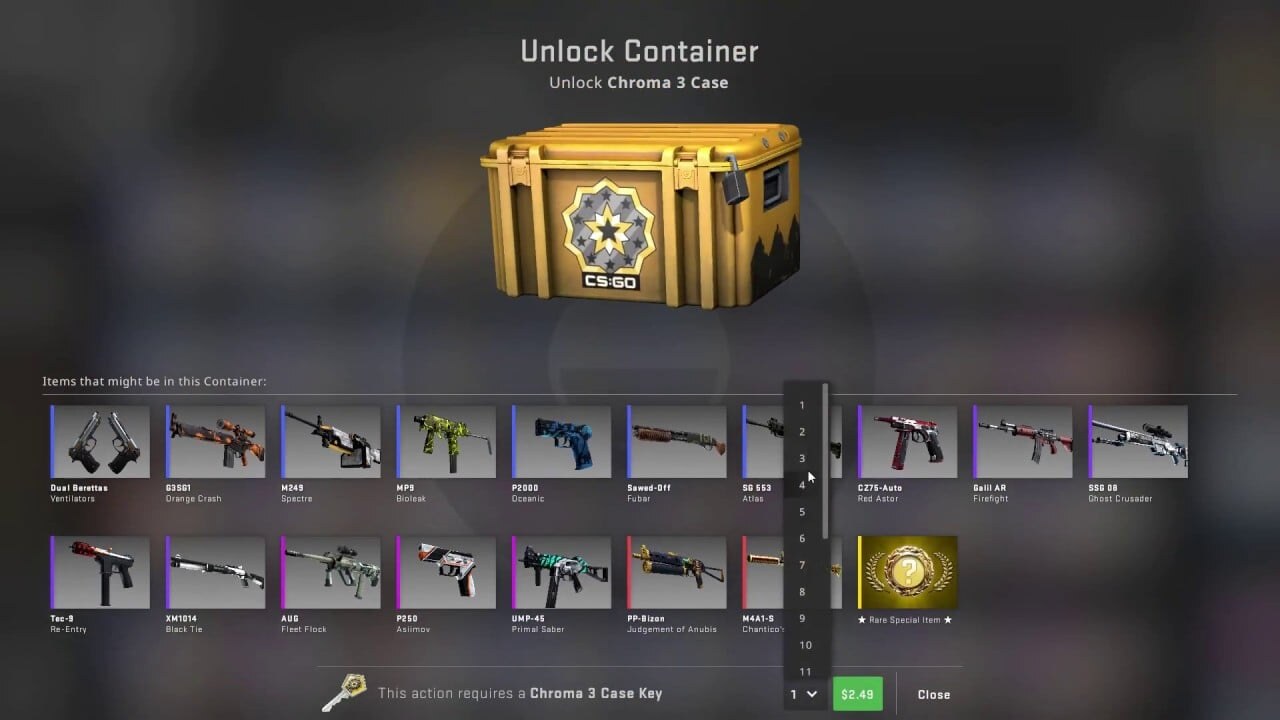
What makes cases siblings
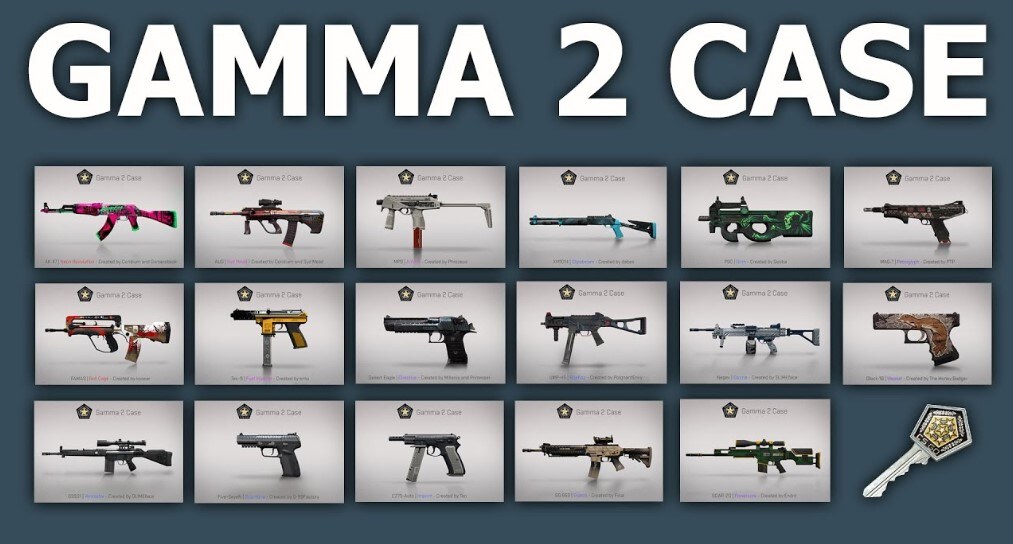
A case family is a set of cases whose long-term value rests on the same pillar. Usually that pillar is the rare special pool: Chroma, Chroma 2, and Chroma 3 all open into the same Chroma knife finishes, and every case's floor is anchored by the 0.26% chance at that pool — the mechanism unpacked in why the knife pool anchors every case's value. The Gamma and Gamma 2 pair works the same way with Gamma knives, and the same logic extends to other same-pool clusters and near-substitute groups: similar age, similar drop status, similar unboxing demand.
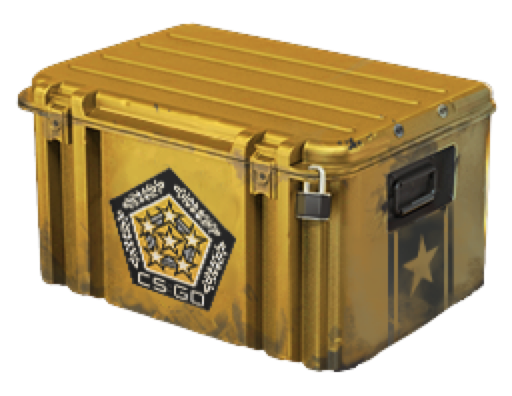
Siblings aren't identical — the non-knife skin lineups differ, one case may be older or scarcer, and their prices do drift apart over the years. But for an accumulator whose thesis is "shrinking supply of containers holding a desirable knife pool," the differences are second-order. What's first-order is the price you pay per lottery ticket into that pool. And on any given day, the market quotes three different prices for nearly the same ticket.
The || line
In a cs2stack config, a family is written as alternatives separated by ||:
Chroma Case || Chroma 2 Case || Chroma 3 Case
The whole expression behaves as one item. It gets one slot in the plan's equal split, one budget share, one max-price line. At run time the bot prices every alternative — each one on both DMarket and SkinBaron, since the venue comparison in picking the cheapest listing applies per alternative — and buys the single cheapest option under the ceiling. Tomorrow the answer might be a different sibling; the bot doesn't care, and neither should you.
Three properties fall out of "one slot" that are easy to miss:
- No triple-dipping. Listing all three Chromas as separate items would give the family three budget shares and quietly overweight it against everything else on your list. As alternatives, the family weighs the same as any single case.
- Automatic mean-reversion harvesting. Sibling spreads wobble — one case runs hot after a knife-unboxing video, another lags. Always buying the laggard means you systematically accumulate whichever sibling is relatively out of favor, without ever watching a chart. It's a slow-motion cousin of cross-market price lag harvesting: same asset thesis, different quote, take the cheap one.
- Resilience to per-case droughts. If one sibling's listings go thin or spike past your ceiling, the line still fills through the others. A single-case line would just skip.
What the trick doesn't do
Honesty section. The || pattern optimizes within a thesis; it cannot rescue a bad one. If the whole family's knife pool falls out of fashion, you'll own the cheapest tickets to a lottery nobody plays. Deciding which families deserve a slot is still the human's job — the criteria in how to choose which cases to buy apply to the family as a unit, and liquidity screens matter doubly since you'll end up holding a mix of siblings you'll someday want to sell individually.
It also assumes the siblings really are near-substitutes. Some pairs that look like families aren't: an old, scarce case and its common younger sibling can sit at wildly different supply points, and the price gap is information, not noise — the market charging for scarcity, as the supply rankings show. Chaining a genuinely scarcer case behind cheap alternatives means the bot will almost never buy it, which is fine only if that matches your intent. If you specifically want the scarce one, give it its own line — or its own standing order.
One operational note: alternatives multiply the number of item names in your config, and a typo'd name is worse in a chain because the bot can silently never consider it. Name validation against live markets — the safeguard from the "Gamma 3 Case" problem, where cs2stack rejected a config naming a case that doesn't exist — is what keeps a fat-fingered alternative from becoming a permanent blind spot.
A worked day
Say the Chroma line holds a $2.20 ceiling and today's converted quotes across both venues come back with Chroma 3 as the cheapest sibling, under the line. The bot buys Chroma 3, logs the fill (with the winning venue and rate) to the ledger, and the family's slot is done for the day. Next week, if Chroma 3 has run up and plain Chroma is the laggard, the fills shift automatically. Over a quarter, your inventory becomes a self-balancing basket of whichever siblings the market kept discounting — with a blended cost per knife-pool ticket that no manual buyer picking a favorite case would beat except by luck.
That's the whole trick: refuse to answer a question the market answers for you daily, for free. Save your judgment for the questions that actually need it — which families, what ceiling, how much per day — and let two pipe characters handle the rest.