
Price Floors: Why Cheap Cases Rarely Go to Zero
Stocks can go to zero. A company can vanish, taking its shares with it. A CS2 case is a strange asset by comparison: below a certain price, buyers reliably appear — not because of sentiment, but because of arithmetic. Understanding where that floor comes from, and what can break it, is core stacker literacy.
The arithmetic that builds the floor
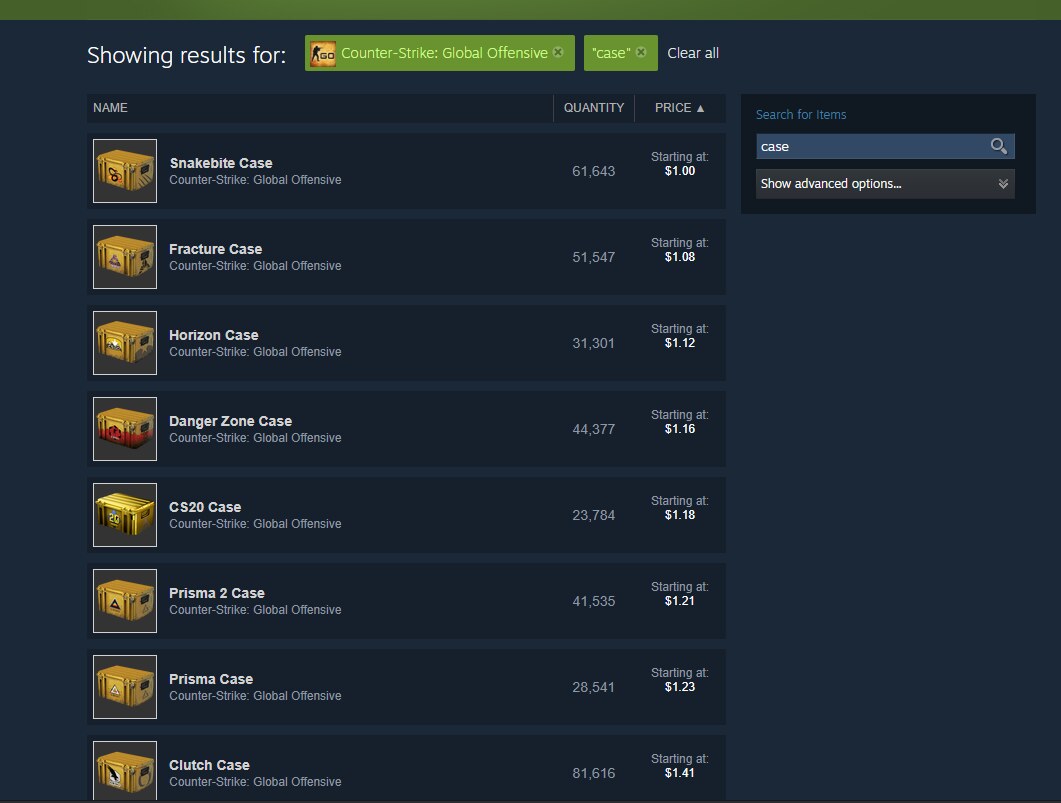
Every case opening costs the case price plus a $2.49 key, fixed by Valve. That fixed key cost does something subtle: it makes the case price a shrinking fraction of the total gamble as the case gets cheaper. To an unboxer paying $2.89 all-in versus $2.54 all-in, a case falling from 40 cents toward a dime barely changes the cost of the lottery ticket — but it does change the expected value.
Expected value (EV) is the average return of an opening, weighted by the drop odds: 79.92% Mil-Spec, 15.98% Restricted, 3.2% Classified, 0.64% Covert, 0.26% rare special item. As a case's price falls while its contents' prices hold, opening it gets mathematically less bad. Somewhere on the way down, the all-in cost approaches what an average opening returns — and at that point mass unboxers, EV hunters, and content creators start eating the supply. That absorption is the floor. It isn't a line anyone drew; it's where the sellers run into arithmetic-motivated buyers. Scanning case EV covers how people estimate where that zone sits for a given case.
Three layers of support
The floor is really a stack of independent demand sources, each activating at different prices:
| Layer | Who's buying | Why the price triggers them |
|---|---|---|
| Entertainment demand | Ordinary unboxers | Opening is fun at almost any case price; this demand never fully sleeps |
| EV demand | Bulk openers, odds-watchers | Cheap case + fixed key ≈ least-bad lottery available; they buy in volume |
| Stacker demand | Investors | A case near its historical floor is the classic accumulation setup |
Underneath all three sits the slow structural fact: every opening the floor triggers is a case permanently destroyed. Floor-price periods are, mechanically, when a case's supply burns fastest — the phase that sets up the scarcity later. That feedback loop is the heart of the deflationary mechanics.

Where floors have historically sat
High-supply modern cases — the Fractures and Recoils of the world — have spent long stretches trading for pocket change, per third-party price trackers, and that's the floor doing its job: enormous supply pinned near the level where unboxing absorbs it, drifting rather than collapsing. The typical journey of a new case runs through exactly this valley: launch hype, a long slide as drops flood in, a floor-bound stagnation that bores everyone, and then — if and when the case leaves the active drop pool — the slow climb that made older cases famous. The full arc is mapped in the price lifecycle of a new case, and the destination in why discontinued cases are the blue chips.
The practical reading for a buyer: a cheap case near its long-run floor has limited downside in absolute cents — not in percentage terms, a distinction that matters for position sizing — while retaining the full upside of the supply story. It's why floor-hugging cases are popular as the low tier of a case ladder.
When floors break
"Rarely go to zero" is not "never go down." Floors are soft, and three things have historically cracked them:
- Supply events. The floor assumes supply only shrinks. When Valve changes distribution — as the Armory era did by giving players a new way to acquire cases — the assumption breaks and floors reset lower. The Armory update is the modern case study.
- Contents repricing. The floor is anchored to what's inside. If an update changes the value of a case's skins — as the October 2025 trade-up change did, violently and in both directions across the market — the EV math moves and the floor moves with it.
- Demand shocks. The floor's bottom layer is people opening cases for fun. Anything that dents playing and unboxing — a platform change, a regional ban, a genuine decline of the game — lowers every layer at once. This is the slow-burn version of single-publisher risk.
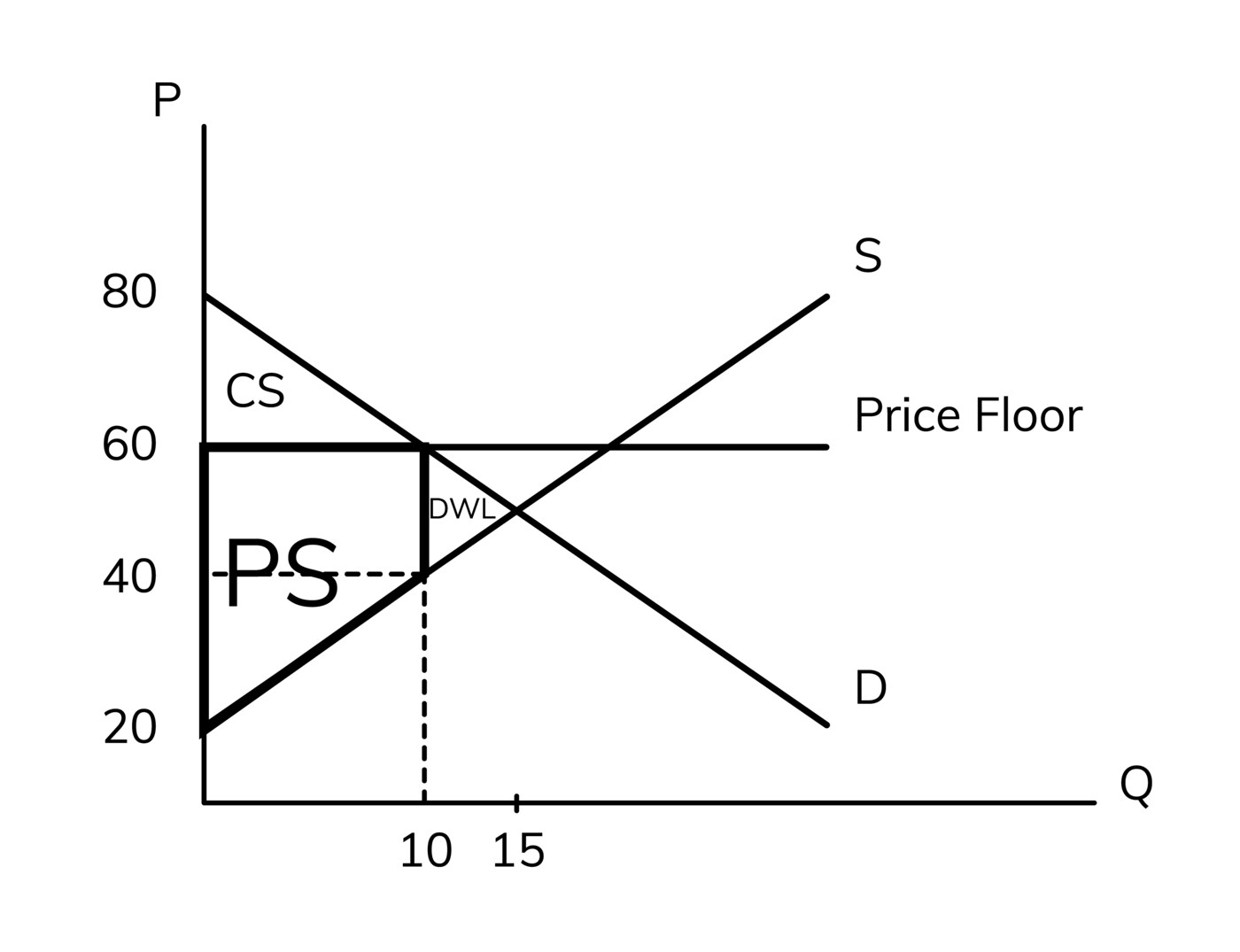
Note what's absent from that list: ordinary bear markets. Sentiment selloffs push cases toward their floors; they don't usually break them, because the arithmetic buyers don't care about sentiment. Floors break when the inputs to the arithmetic change — and only Valve can change those.
What this means for a stacker
Three working conclusions. First, cheap cases are not automatically safe — they're safe-ish against going to zero, which is a different and weaker property; a 40-cent case can still halve. Second, the floor is an accumulation signal, not a guarantee: buying near historical floor levels via a steady schedule, rather than all at once, respects the fact that floors occasionally reset — that's the logic of buying through corrections. Third, watch the inputs, not the chart: key price, drop odds, distribution mechanics, and update news are the floor's actual foundations. The chart just tells you where the floor used to be.
And keep the asymmetry in view: a case bought within cents of a durable floor offers a rare shape of bet — bounded absolute downside, open-ended upside if the supply story plays out. Shapes like that are worth building positions in slowly, mechanically, and without excitement. Excitement is for the people paying above the floor.