
Liquidity First: The Investor's Filter Nobody Markets
Every skin-investing pitch shows you a price chart. None of them shows you the order book — the actual queue of buyers waiting when you finally want out. That omission isn't an accident: charts flatter, depth confesses. So here's the confession up front: if you can't sell 100 units without crushing your own price, you never owned an investment. You owned a listing.
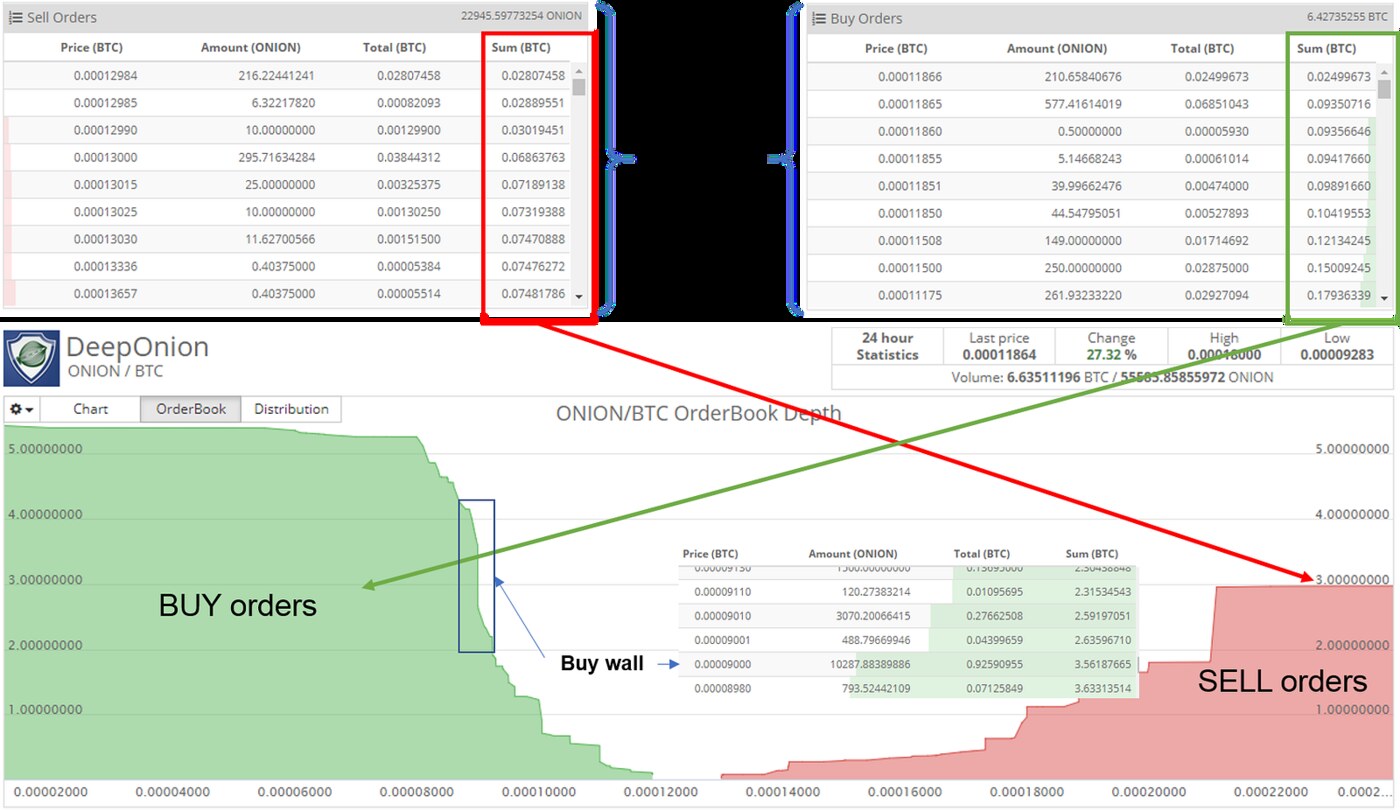
Price is a rumor; depth is a fact
A price chart records what the last unit traded for. It says nothing about what your next hundred units would fetch. Those are different numbers whenever a market is thin, and the gap between them — the discount you eat for wanting out in size, called slippage — is invisible right up until the moment you sell. An item can chart a 60% gain while offering perhaps three actual buyers near that price; unit four sells lower, unit ten lower still. The chart was technically true and practically a lie. That mechanism, and why your position size is itself a strategy decision, is worked through in slippage in small markets.
So the liquidity filter asks, before any question about upside: who buys this from me, at what depth, on which venues, on an ordinary Tuesday? Concretely, that means looking at three things: daily traded volume (are there dozens-to-hundreds of real transactions, or three?), the spread between best bid and best ask (tight spreads mean active competition on both sides; wide ones mean you pay a toll each direction), and how many venues make a real market in the item — one marketplace's whims shouldn't be your only exit, which is part of the broader counterparty-risk picture. The venue-by-venue landscape is mapped in liquidity in the CS2 market, explained.
Cases pass. Most skins don't.
Run the whole skin economy through this filter and the result is unfashionable: mainstream cases pass easily, and most individual skins don't. A liquid case is a commodity — every unit identical, thousands changing hands daily, order books thick on multiple venues. A skin is a snowflake: sliced by exterior, float, pattern, and StatTrak into ever-thinner markets, so "the price" of your particular specimen is often an extrapolation from a handful of comparable sales. Beautiful assets, hard exits — the valuation gymnastics in how to actually value a skin exist precisely because thin markets don't hand you a price.
This is also why nobody markets the filter. Liquidity is a boring virtue attached to boring items. The content economy around skins runs on grails and pattern gems; "this asset is unremarkable but you can always leave" has never gone viral. It's still the property that decides whether your paper gain converts to money.
Liquidity is when-you-need-it insurance
The filter's real payoff isn't convenience — it's optionality in bad moments. Liquidity is famously abundant when nobody needs it and scarce when everybody does; in a drawdown, thin markets don't just fall, they gap, because the few resting buyers vanish. Deep markets fall too, but they keep functioning: spreads widen, volume continues, exits remain possible at some price. If part of your plan is ever "I'd sell tranches into strength" or "I'd cut this position in a crisis," that plan quietly assumes depth. Check the assumption before you need it — it's a core plank of risk management for stackers, and it's what makes staged exit strategies executable rather than theoretical.
Depth also compounds a subtler benefit: honest accounting. Marking a portfolio of liquid cases to market is arithmetic; marking a shelf of thin-market skins is creative writing. If your net-worth spreadsheet contains fiction, every downstream decision inherits it.
Liquidity is what makes automation possible at all
There's an engineering angle that deserves more attention: automated buying requires liquid targets. A bot that buys daily needs items that are listed every day, on multiple venues, at prices dense enough that "cheapest listing under your cap" is a meaningful comparison rather than a coin flip between two stale offers. That's why a DCA system pointed at liquid cases works — the market can absorb a small buy every morning without the buyer becoming the price — and why the same system pointed at a thin collectible would just be automated slippage. Liquidity-first isn't only an investor's filter; it's a precondition for the whole buying-without-overpaying machinery.
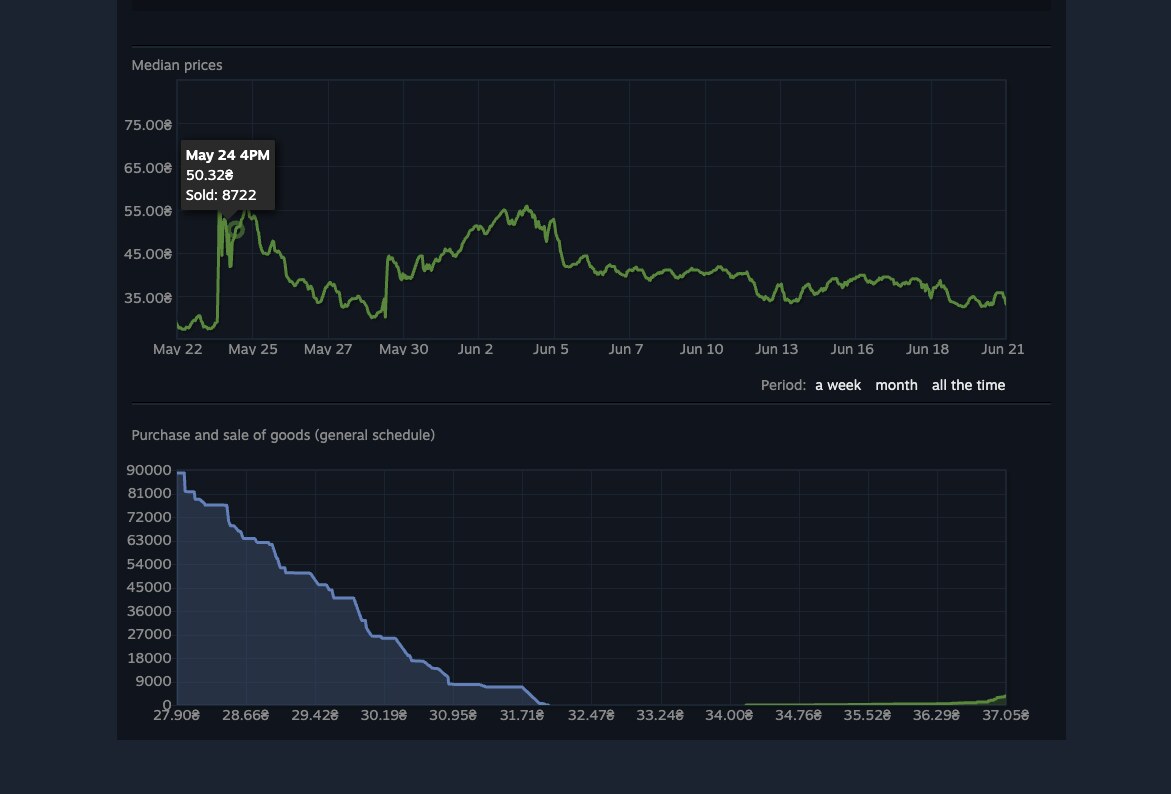
Applying the filter without overdoing it
Three closing calibrations. First, the filter is a gate, not a scoring system — an item either offers credible exits at your size or it doesn't; there's no upside so exciting it buys back a failed gate. Second, your size matters: liquidity adequate for a $500 stack may be inadequate at $20k, so the filter re-runs as you scale. Third, illiquid holdings aren't forbidden — a grail sticker or pattern piece can be a fine collector's position — but label it honestly in your own books: it's a collectible with a story, not a position with an exit. The filter's one-line summary fits on a sticky note: never buy anything you couldn't sell on a boring Tuesday.