Float and Wear for Buyers: What Actually Matters
Two identical AK skins can differ in price by a factor of ten because of a decimal the game rolled once and will never change. That decimal is the float, and whether you should care about it depends entirely on what kind of buyer you are. For most stackers, the honest answer is: barely at all.
The ninety-second primer
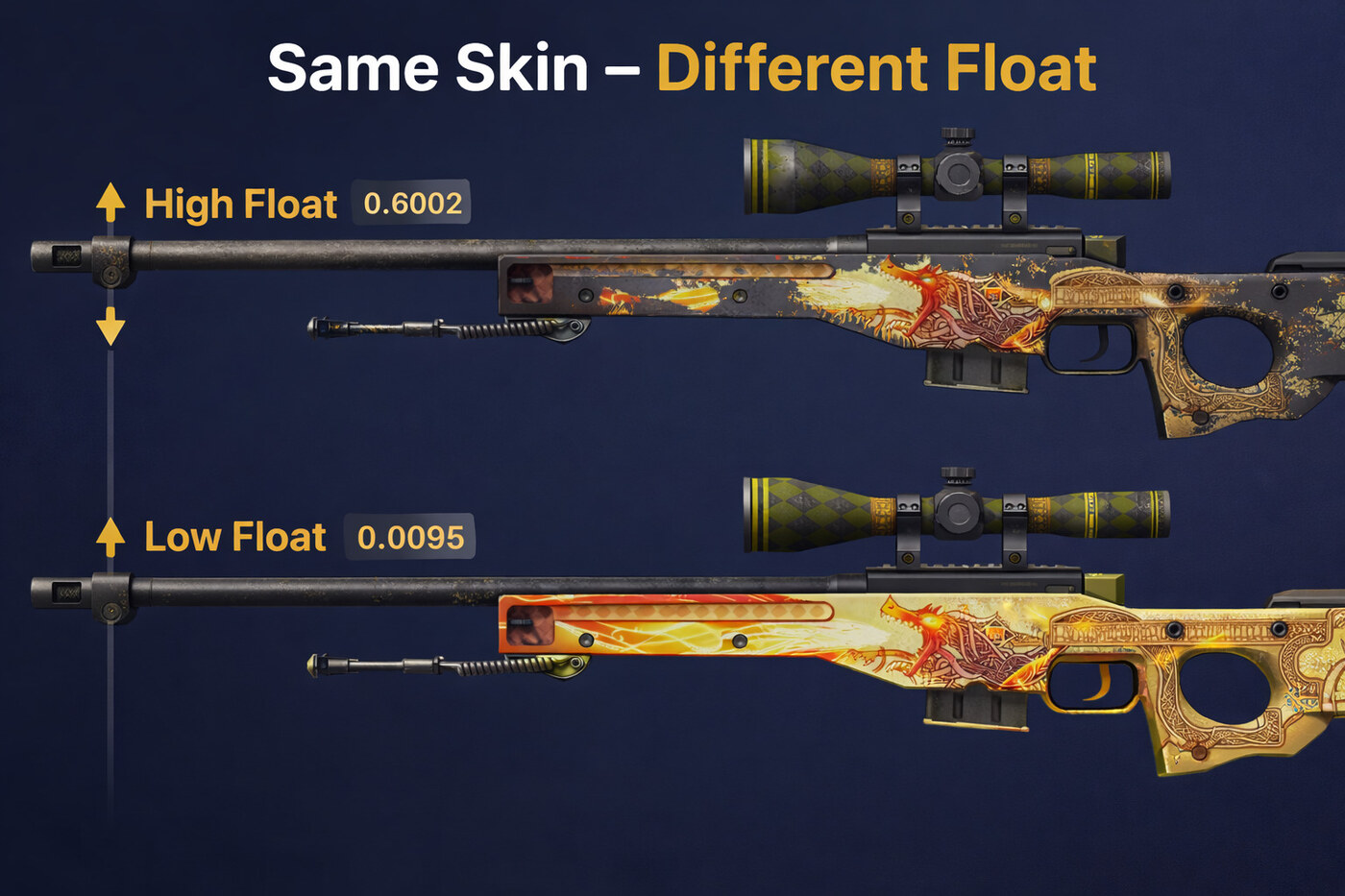
Every skin in CS2 carries a float value — a number between 0 and 1 assigned the moment the item is created. Lower means cleaner: a float near 0 looks factory-fresh, a float near 1 looks like it was dragged behind a truck. The float never changes. A skin doesn't wear out with use; it was born at its wear level and stays there forever.
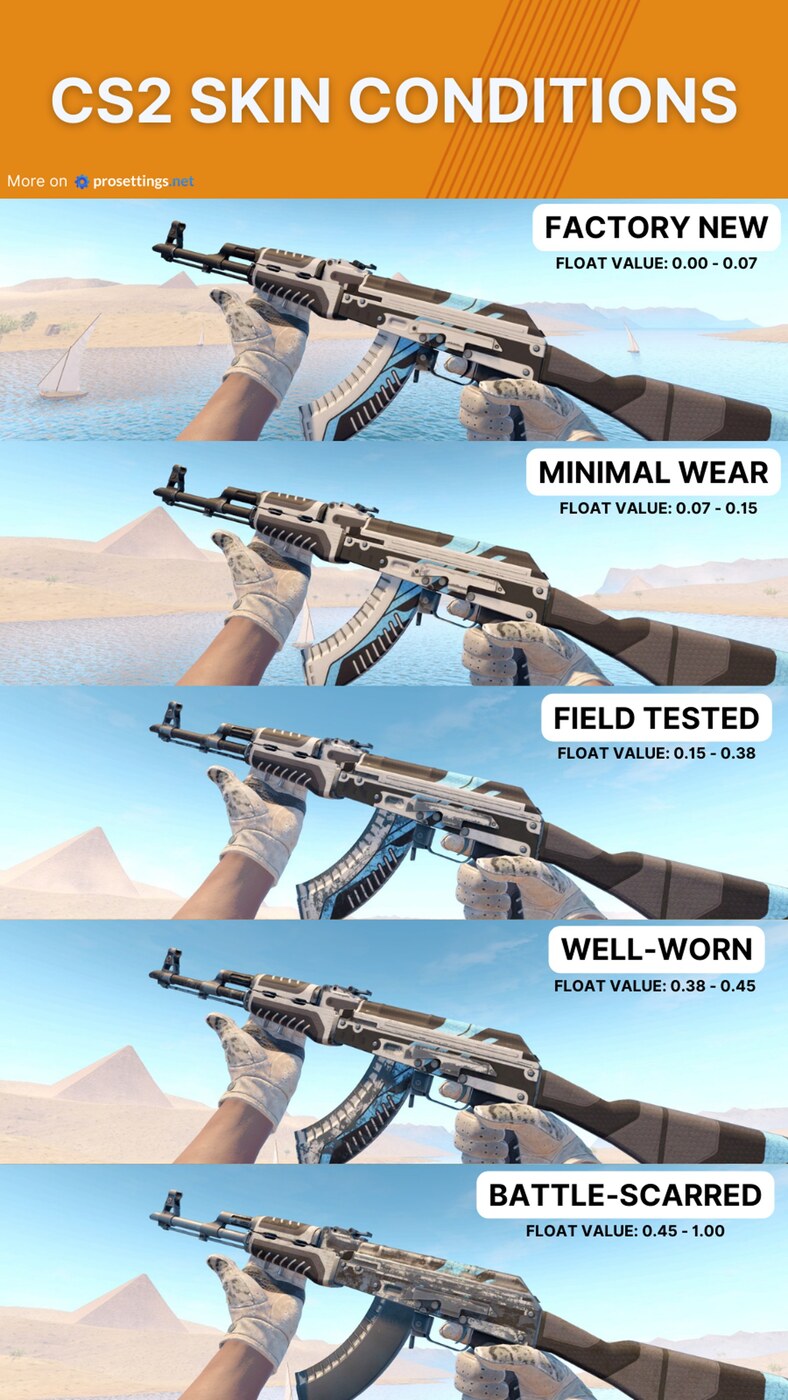
Floats map to five named wear tiers, and those names are what you see on listings:
| Wear name | Float range | Shorthand |
|---|---|---|
| Factory New | 0.00 – 0.07 | FN |
| Minimal Wear | 0.07 – 0.15 | MW |
| Field-Tested | 0.15 – 0.38 | FT |
| Well-Worn | 0.38 – 0.45 | WW |
| Battle-Scarred | 0.45 – 1.00 | BS |
The tiers are where most of the price action lives — an FN copy of a popular skin routinely costs multiples of the FT copy. But within a tier, floats matter too, especially at the extremes. Collectors pay real premiums for floats like 0.0009, and for a handful of skins the visual difference between a 0.15 and a 0.37 (both "Field-Tested") is dramatic. The deep dive is in Float Values Explained; pattern seeds, floats' weirder cousin, get their own guide.
The triage: who actually needs to care
Here's the part most float content skips. Wear knowledge has wildly different value depending on your strategy, and pretending everyone needs to master it sells courses, not returns.
Skin snipers and flippers: floats are the job
If you buy individual skins hoping to resell them, floats are half your edge. Mispriced listings are very often float mispricings — a low-float FT priced like an average FT, a 0.07 MW that's visually FN priced like mid-tier. Sniping is substantially the art of noticing what a lazy seller didn't. The same goes for valuing any individual skin: name and wear tier get you the neighborhood, float and pattern get you the address. StatTrak status stacks on top of all of it — the orange counter carries its own premium with its own logic.
Trade-up grinders: floats are arithmetic
Trade-up contracts turn ten same-rarity skins into one skin of the next rarity, and the output's float is not random: it's the normalized average of your ten inputs' floats, mapped onto the output skin's float range. That one formula is why grinders buy ugly-cheap low floats in bulk — feed the contract clean inputs and you can manufacture Factory New outputs on purpose. If that sounds like a part-time job, it is; trade-up grinding covers whether the hourly rate is worth it.
Case stackers: floats are irrelevant
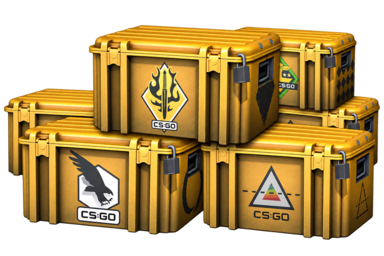
A sealed case has no float. It's a container, identical to every other copy of itself, which is precisely what makes it liquid and easy to automate. If your strategy is accumulating sealed cases, the entire float apparatus — inspect links, third-party float checkers, pattern databases — is machinery you never have to touch. You're not picking the best copy of an item; every copy is the best copy.
Why "no floats" is quietly a feature
This sounds like a consolation prize for people too lazy to learn floats. It's actually a structural advantage, and it's worth spelling out.
Float-sensitive items are heterogeneous: every listing needs individual inspection, which means buying them well requires eyes on screen. That's why skin snipers can't fully automate — a bot can filter by float range, but judging whether this particular 0.16 looks clean takes a human, and the good ones get taken in minutes. Fungible items — sealed cases above all — are the opposite. Any copy at the lowest price is the correct copy to buy. That's a decision a machine can make perfectly, every day, without you. It's the reason automated dollar-cost averaging works on cases and doesn't really exist for float-sensitive skins, and it's a big part of why cases are the default instrument for hands-off skin investing.
There's a corollary for budgeting, too. Float premiums are taste premiums — they're paid by players and collectors who care how an item looks in their hands. Taste can shift. Scarcity of sealed supply, the thing case stackers hold, doesn't depend on anyone's aesthetic opinion. Neither thesis is risk-free, but they fail in different ways, which is worth knowing before you decide which lane you're in.
The five minutes of float knowledge everyone should keep
Even a pure stacker should retain a small kernel of wear literacy, because it protects you in the moments you step outside your lane:
- Never buy a skin by wear name alone. "Field-Tested" spans 0.15 to 0.38, and on many finishes those endpoints look like different items. Check the float, or better, the inspect screenshot.
- Compare like with like. A price history chart that mixes floats within a tier is mushy data. When you sanity-check a price, anchor to listings near your candidate's float.
- Extremes are their own market. Sub-0.01 floats and 0.99+ "blackest Battle-Scarred" copies trade on collector logic, thin books, and patience. Treat their prices as anecdotes, not comps.
- Floats never change. Anyone implying a skin "degrades" or can be "restored" is confused or scamming. It's one number, set at creation, forever.
That's genuinely most of it. Learn the table, learn the triage, and spend the hours you saved on the decisions that move your outcome: what to buy, how much, and how consistently. In this market, consistency has historically been the underpriced skill — and it's the one part software can carry for you.