
CS2 Skin Sniping: How Underpriced Listings Get Caught
Every skin trader has the story: a listing 30% under market, gone in the two seconds it took to click. Sniping — catching underpriced listings before anyone else — is real, the mispricings are real, and so is the arms race around them. Here's why cheap listings exist at all, who actually catches them, and where a normal person's edge honestly is.
Why underpriced listings exist
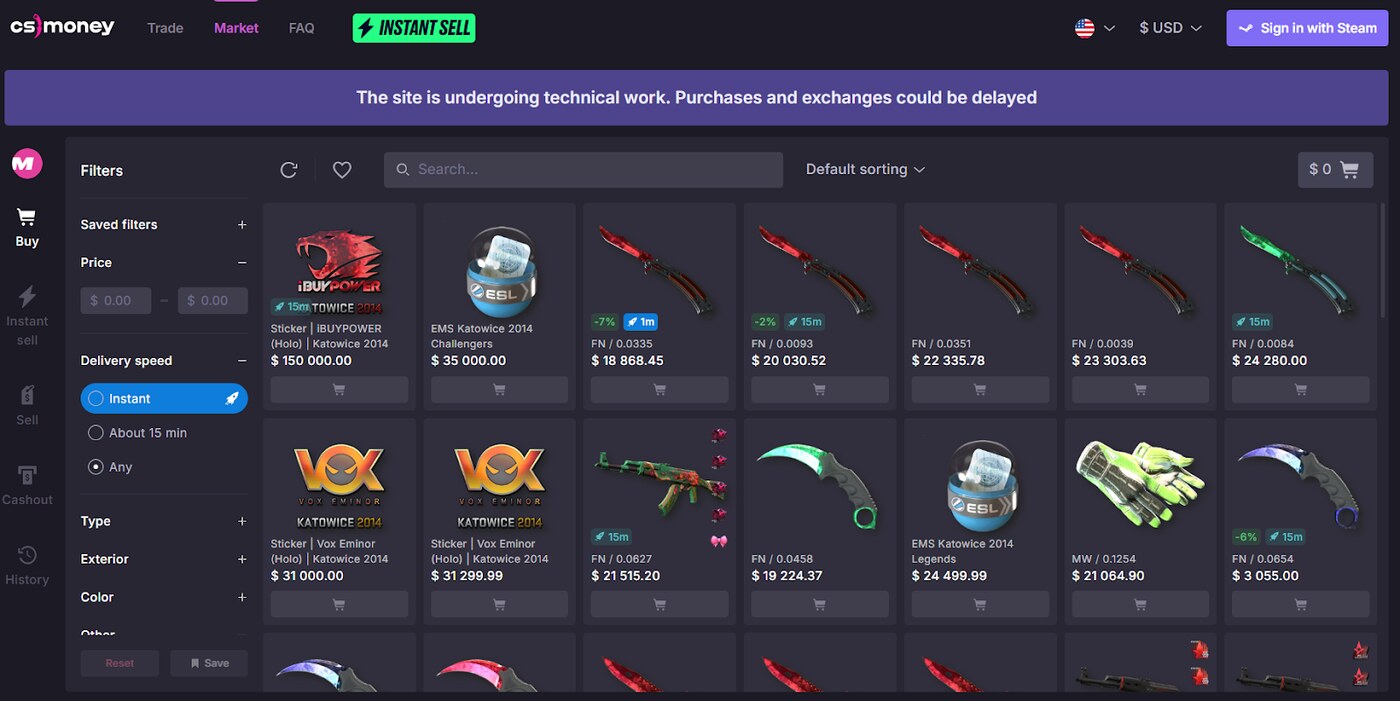
In an efficient market they wouldn't. The skin market is not efficient — it's dozens of venues, multiple currencies, no consolidated tape (no single official price feed), and a seller population that includes teenagers who want cash tonight. Mispricings come from a handful of repeatable sources:
- Urgency sellers. Someone wants money now and prices to sell in minutes, not days. Cash-out impatience is a permanent feature of a market where Steam wallet funds can't become cash — sellers on cash venues often accept a haircut for speed.
- Fee blindness. Sellers anchor on Steam Community Market prices (which embed a roughly 13–15% fee) and misprice on venues with different fee structures — typically around 2–12% for sellers depending on the marketplace. The gap between fee regimes creates listings that are cheap relative to somewhere else. The mechanics are in Steam's cut, explained.
- FX sloppiness. European venues list in euros. A seller converting in their head, or a stale exchange rate on a repricing bot, produces listings a few percent off — a small but systematic source covered in EUR marketplaces, USD brains.
- Cross-market lag. When the market moves fast, venues reprice at different speeds. A price jump on one marketplace can leave stale, now-cheap listings sitting on another for minutes or hours — the anatomy is in cross-market price lag.
- Attribute ignorance. A seller lists a skin at "the price for that skin" without knowing their float, pattern, or stickers make it worth multiples more. This is the connoisseur's snipe, and it requires genuine expertise in how skins are actually valued.
The three ways snipes get caught
Manual refresh. The romantic era: sort by price, refresh, pounce. It still works occasionally on obscure items and chaotic moments, but as a strategy it's a job that pays in lottery tickets. The time-cost math is grim: hours of watching for opportunities that may not come, in competition with software that never blinks.
Alerts. Price-alert tools ping you when an item lists below a threshold. Better than staring, but alerts have a structural flaw: they notify you of an opportunity that other people's automation is already executing on. By the time a human reads the notification, unlocks their phone, and logs in, the fat snipes are gone. Alerts inform; they don't fill — the full argument is in alerts vs automated buys.
Automation. Bots watch listings via marketplace APIs and buy within seconds or less when an item crosses a rule. This is who actually gets the dramatic snipes, and it's an arms race: speed, rate limits, venue relationships. Retail players entering the millisecond game are late to it — the honest comparison of what different bots are actually for is in DCA bots vs sniper bots.
The honest part: your edge is not speed
Here's what the sniping-guru content skips. The millisecond race is won by whoever invested most in infrastructure, and each fat mispricing can be captured by exactly one buyer. For everyone else, there's a slower, fairer version of the same idea: the standing limit-buy. Instead of racing to catch a fluke listing, you define in advance the price at which an item is a clear buy — below fair value by more than your required margin — and leave that order standing. A limit order (a rule that buys only at-or-below your set price) doesn't need to be first; it needs the market to come to it. Red days, urgency sellers, and cross-venue lag all deliver fills to a cap that's simply always there.
This is slow sniping, and it compounds differently: no single fill is a screenshot-worthy steal, but every fill is at your price, on items you chose, without a minute of screen time. The mechanics — using per-item max prices as standing orders across venues — are the subject of sniping without watching, and the comparison with pure accumulation strategies is in sniping vs DCA.
A word on the traps
Not every cheap listing is a snipe. Some are lessons:
- It's cheap because it's worse than you think. A terrible float, an undesirable pattern, a souvenir variant you didn't notice. If you can't explain why it's cheap, assume the seller knows something — float and wear basics are the minimum entry fee.
- It's cheap because it isn't the item. Near-identical names and lookalike skins are classic scam patterns. Exact-name verification matters; automation should refuse to buy anything whose name doesn't validate against live markets. (A human typo works the same way in reverse — a mistyped "Gamma 3 Case," an item that doesn't exist, is the kind of order a good tool rejects rather than creatively interprets.)
- It's cheap on a venue you can't trust. An unbeatable price on a marketplace you've never heard of is usually the product being sold. Stick to venues with track records — the venue is part of the trade.
Where this leaves a normal person
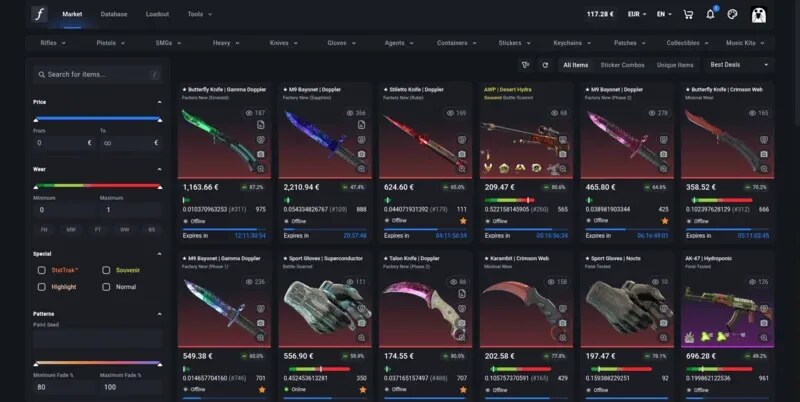
Treat dramatic snipes as weather: enjoy one if it lands on you, build nothing on them. The durable, retail-accessible version of sniping is patience encoded as a price: standing limit-buys on items you'd be happy to hold, executed automatically across venues, funded by a budget you cap. Less cinematic than the two-second click — and unlike the two-second click, it still works while you sleep.