The Cheapest Way to Buy Your First CS2 Skin
Most people buy their first skin the expensive way: they top up their Steam wallet, pay the highest price in the market, and lock that money inside Valve's ecosystem forever. The cheap way takes about twenty extra minutes of setup and routinely saves 20–30% on the exact same item. This is the full first-timer walkthrough — venue, funding, purchase, delivery — plus the traps that catch almost every newcomer at least once.
Why the obvious route is the expensive one
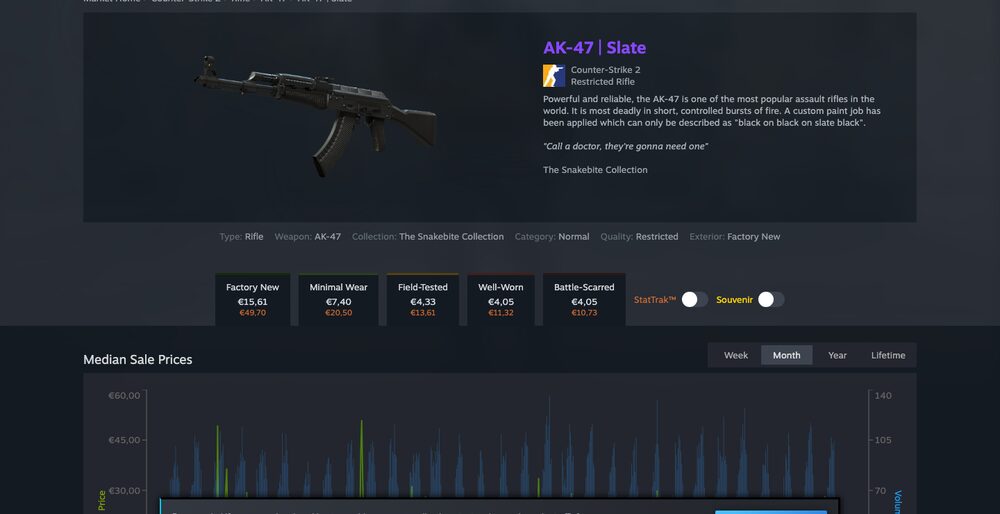
The Steam Community Market is where every new buyer starts, because it's built into the client and requires zero research. It's also, almost without exception, the priciest place to buy. Two structural reasons. First, Valve takes roughly 15% of every sale — the fee breakdown is worth five minutes of your time — and sellers price that cut into their listings. Second, and more important, Steam wallet money is locked: once cash goes in, it can never come back out as cash. Sellers on Steam are being paid in credit they can't withdraw, so they demand more of it. That's why a wallet dollar is worth meaningfully less than a real dollar, and why the same skin on a cash marketplace commonly costs 20–30% less than its Steam listing.
Your first skin is the perfect moment to learn this, because the savings scale with everything you ever buy afterwards.
The walkthrough: venue, funding, purchase, delivery
Step 1 — pick one reputable cash marketplace
Third-party marketplaces sort into tiers by price and friction — the full venue map is here — but for a first purchase you don't need the absolute floor. You need a venue that has operated for years, handles payments cleanly, and delivers reliably. The safety shortlist is the right starting point; venues like Skinport (convenience tier, card-friendly checkout) or DMarket (on-site inventory, near-instant delivery) are common first stops, and either is a fine place to learn the ropes.
One rule matters more than any ranking: never buy from a site you found through a Discord DM, a stream chat link, or an ad promising prices far below everyone else. Unknown sites undercutting the established floor are how first purchases become last purchases. If a venue isn't on any credible shortlist, treat it as radioactive regardless of the discount.
Step 2 — fund exactly what you need
Most venues accept cards, and many take PayPal, bank transfer, or crypto. Each payment method carries its own fee stack — commonly a few percent depending on the rail, per each venue's published schedule as of late 2026 (verify before paying; these change without fanfare). For a first purchase, a card is usually the path of least resistance: it settles instantly, you already have one, and the fee difference against fancier rails is pennies at this size. Two funding habits will save you money and grief:
- Top up only the purchase amount. A marketplace balance is not a bank account. Don't park spare money on any venue, however established.
- Compare the landed cost, not the sticker. A listing that's 5% cheaper on a venue with a 6% deposit fee isn't cheaper. Add payment fees and any currency conversion before deciding where to buy.
It's also worth deciding your budget before you open a single listing page. Skins are designed to make the next tier up look like a small stretch, and first-time buyers routinely walk in for a $10 rifle skin and walk out $60 lighter. Pick the number, then shop inside it — there are genuinely good-looking options at every price point, and nothing about a first skin needs to be expensive.
Step 3 — buy, receive, verify
Before you can receive anything, your Steam account needs three things: Steam Guard Mobile Authenticator enabled (accounts without it face trade restrictions), your trade URL copied from your inventory privacy settings, and an inventory set to public so the marketplace can deliver. Do this a week before buying if you can — newly enabled authenticators can trigger temporary holds.
The purchase itself, in order:
- Search the exact item — full name including wear, e.g. "AK-47 | Redline (Field-Tested)". StatTrak and souvenir variants are different items at very different prices.
- Sanity-check the price against the Steam listing and at least one other venue. A sixty-second comparison is enough.
- Buy. On on-site inventory venues delivery is a trade offer within minutes; on peer-to-peer venues you may wait for the seller to respond.
- Accept the trade offer from inside the marketplace's flow, checking that the item in the offer matches what you bought — name, wear, pattern.
- Expect a possible hold: trade locks mean some purchases can't be moved again for about a week. That's normal, not a scam.
The classic first-purchase traps
Nearly every horror story in this market is one of a handful of patterns, and all of them are avoidable:
- Clone sites. Phishing pages imitate real marketplaces down to the pixel. Type the URL yourself or use a bookmark; never log in through a link someone sent you.
- The too-good listing. A knife at half the going rate on an unfamiliar site is bait, not luck.
- Wrong variant. Buying Minimal Wear when you price-checked Field-Tested, or missing that a listing is StatTrak, is the most common self-inflicted overpay.
- API key phishing. Never enter your Steam credentials or API key anywhere a "verification bot" asks. The standard scam catalog is short and worth reading once.
- Parked balances. Money left sitting on a venue is exposed to that venue's fate. Buy, receive, done.
The whole path in one list
Pick an established venue, fund the exact amount, verify the exact item, receive the trade, and keep no balance behind. That's genuinely all of it — the twelve-point checklist turns this into something you can run down in two minutes before you click buy. And if you find yourself doing the price-comparison step often, that part automates well: cs2stack, this site's product, watches DMarket and SkinBaron continuously and buys from whichever is cheaper under caps you set. For a single first skin, though, the manual route is the right way to learn what you're paying for.