
SkinBaron Review (2026): the German Discount Floor
Want the cheapest converted price on cases and mid-tier skins? Surprisingly often, the quiet German venue is where you'll find it. SkinBaron rarely tops the "best marketplace" listicles — it's EUR-priced and understated — yet it sets the floor on the board more days than most buyers realize. This review covers why that happens, what makes it such a strong buy-side venue, and the few things to watch.
What SkinBaron is
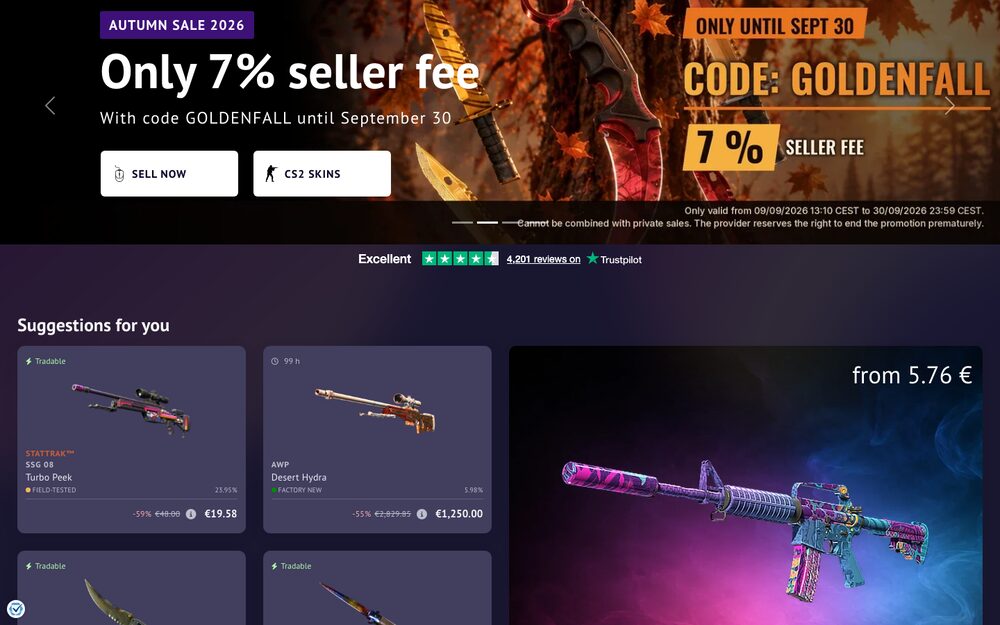
SkinBaron is a German marketplace for CS2 items, priced in euros and built for a European seller and buyer base. It's been operating for years as one of the EU's established skin venues — a licensed German company rather than an offshore brand, which shapes its conservative, compliance-first personality. The catalog leans hard into bread-and-butter inventory: cases, liquid skins, mid-tier knives. Exotic patterns and top-shelf grails are thinner here than on the global houses.
Full disclosure, prominently: this is cs2stack's blog, and cs2stack compares SkinBaron and DMarket on every single purchase it makes — buying whichever is cheaper after currency conversion. We watch this venue's prices every day; that familiarity is the source of this review, and also its bias. The full head-to-head is worth reading alongside this.
The model: on-site inventory, no trade-offer ritual
SkinBaron runs the on-site inventory model: sellers' items sit in the venue's custody, so when you buy, the item settles into your on-site inventory immediately — no Steam trade offer to accept at purchase time, no seller who needs to be awake. Delivery to your Steam account happens afterwards through their system, on your schedule. That architecture is the key distinction between marketplace types, and it's what makes SkinBaron one of the very few venues where hands-off automated buying actually works end to end.
One practical note on the character of the books: because the seller base is smaller and more regional than the global venues, listings refresh in bursts rather than a constant stream. On liquid items that doesn't matter — several sellers usually sit within a few cents of each other. On anything unusual, the listing you see may be the only one, and it may sit there for days. Shop accordingly.
Strengths
- Frequently the euro floor. EUR-side sellers pricing for EUR-side buyers, plus less bot traffic than the global venues, regularly produces the cheapest converted price on cases and mid-tier skins. Not always — frequently. That's a real, harvestable edge.
- EUR-native rails. Deposits via European bank transfer and common EU payment methods, payouts oriented to EU bank accounts. If your money starts and ends in euros, SkinBaron is the shortest path from skins to bank balance — see our cash-out guide for the fuller picture.
- Instant on-site settlement. Purchases complete in seconds at any hour, which is the property automation lives or dies on. Our SkinBaron autobuy guide covers the practical side.
- A reputable, long-running operation. A German company that has survived multiple market cycles, in an industry where venues have vanished with user balances before.
Weaknesses
- Narrower catalog. If you hunt rare patterns, high-tier knives, or obscure floats, the books are thinner here. The global venues carry more of everything.
- A quiet API. One exists and supports what a buyer needs, but the documentation surface is thin and the developer ecosystem small. Integrating takes more patience than on API-first venues.
- EU-centric rails cut both ways. If you're outside Europe, deposits and especially payouts are awkward. This venue was not built for you, and it shows.
- Thin depth on exotics. Even when a rare item is listed, there's often only one listing — no price competition, so the "discount floor" reputation doesn't extend to the exotic end of the catalog.
Fees, payments, and KYC
Per its published schedule, SkinBaron's seller commission lands in the single digits to low teens percent depending on item and promotions — verify the current numbers before listing, because schedules move. Buyers pay sticker plus their payment method's cost. Both figures compare favorably with Steam's ~15% cut into a wallet you can never empty; against other cash venues, the fee fight is close. The 2026 cross-venue fee table has the fuller comparison.
Expect identity verification before money leaves the platform — German compliance culture means KYC is applied seriously, scaling with the amounts involved. For buyers moving modest sums, friction is low; for sellers cashing out meaningfully, have your documents ready.
The scorecard
| Strengths | Weaknesses |
|---|---|
| Frequent cheapest-in-EUR price on liquid items | Narrower catalog; thin on exotics and grails |
| EUR bank rails in and out | Awkward for non-EU users |
| Instant on-site settlement — automation-ready | API is real but thinly documented |
| Long-running, licensed German operation | Single-listing depth on rare items |
Who it's for — and the verdict
For the European accumulator, SkinBaron is close to ideal: stack cases or liquid skins on a budget, pay from an EU bank account, and eventually cash out to one — all at prices that frequently beat the global houses. Pattern hunters and non-EU users will want another venue alongside it, since the exotic tail is thin here, but for bread-and-butter recurring buying it's a genuinely great home base.
Verdict: an honest, unflashy venue whose value is concentrated exactly where most recurring buyers spend — and one of the best deals in the market whenever its euro floor is live. Use it as one leg of a two-venue price check against DMarket, taking whichever is cheaper that minute. SkinBaron will hand you the floor price many days — and lose it to a rival the next. Run the comparison on each purchase rather than picking a loyalty; over a year, those per-order wins are what separate a good average entry from a great one.