
Autobuying on SkinBaron: What the API Allows
SkinBaron doesn't market itself as a bot playground. It's a German marketplace with a compliance-forward personality, EUR pricing, and a user base that skews European and patient. But under the quiet surface sit the two things automated buying actually requires: on-site inventory that settles instantly, and a public API. This is the practical guide to automating on SkinBaron — what the platform allows, what the euro does to your math, and why the venue punches above its weight for accumulation.
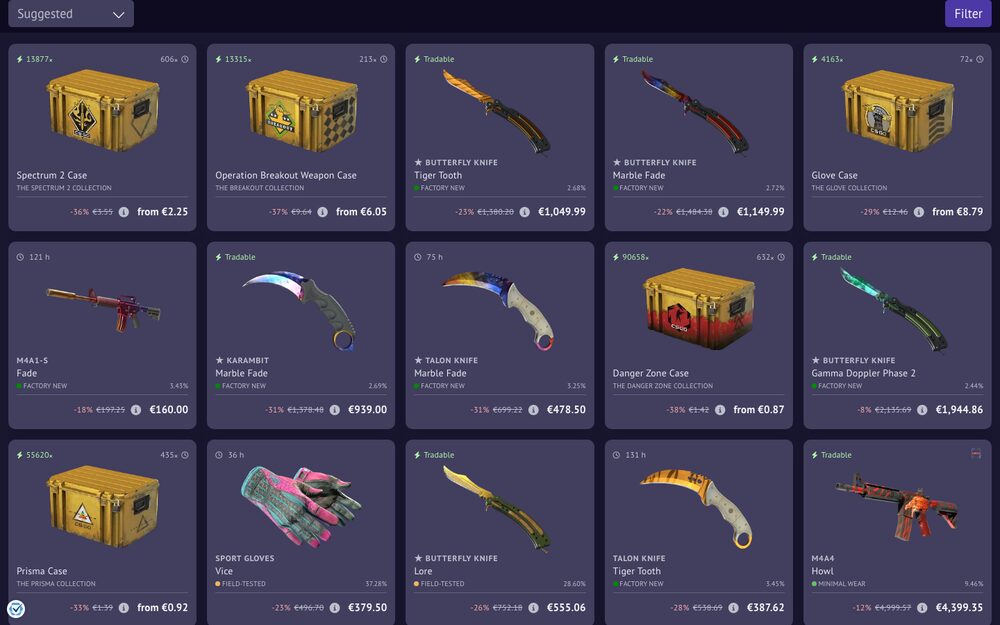
SkinBaron in one paragraph
Sellers deposit items to SkinBaron before listing, so when a buyer — human or bot — commits, the sale completes without any seller confirmation step. That puts it on the right side of the split that decides what bots can finish, covered in P2P vs on-site inventory marketplaces. Prices are in EUR, the company operates under German/EU rules, and the general vibe is closer to a regulated shop than a trading floor. Our full SkinBaron review covers fees and cash-out; this post is only about the automation surface.
What the API actually offers
Per its public API docs, SkinBaron exposes programmatic access to the operations an automated buyer needs, in broad categories:
- Market data — querying current listings and prices for named items, which is the feed your rules run against.
- Buy operations — executing a purchase against a specific listing from your account balance.
- Account and inventory — checking your balance and confirming that bought items actually arrived, which is what reconciliation is made of.
Authentication is by API key tied to your account. The usual hygiene applies with full force — the key can spend your balance, so store it like a secret, rotate it if in doubt, and never paste it into anything you don't control (API key security has the checklist). Don't take endpoint details from blog posts, ours included; the docs are the source of truth and the surface evolves. What you can rely on structurally: it's an official, documented interface, which puts SkinBaron automation firmly on the sanctioned side of the line drawn in are autobuy bots allowed?
What you won't find is a native standing-bid system to match DMarket's target orders. SkinBaron's on-site tooling for watchers is wishlist-shaped — notification when an item you track appears at an interesting price — which means hands-free buying at a price ceiling is something your client (or your tool) implements on top of the API, not something you configure on the site. Disclosure: cs2stack, our product and this blog's publisher, is one such client — it builds on SkinBaron and DMarket and buys whichever is cheaper.
The euro is a feature and a chore
Every SkinBaron price is EUR, and most skin-price references (Steam, most aggregators) are USD. Two consequences:
The chore: your rules need one honest exchange rate, applied consistently. A bot comparing a €2.10 listing against a $2.30 ceiling with a stale or generous rate will systematically overpay or systematically never fill — both silently. Pick a reference rate source, convert at decision time, and log the rate used on every fill so the ledger stays auditable. The mechanics are in FX conversion fairness.
The feature: currency and audience create real spreads. EUR venues reprice on their own schedule, European sellers anchor to EUR round numbers, and cross-venue lag opens gaps that a two-venue comparison catches — the mechanism behind a surprising share of boring, repeatable discounts, laid out in cross-market price lag. A buyer that only watches USD venues never sees these; see also regional price differences for the wider pattern.
SkinBaron vs DMarket as an automation venue
| SkinBaron | DMarket | |
|---|---|---|
| Settlement | On-site inventory, instant | On-site inventory, instant |
| Public API | Yes, per public docs | Yes, per public docs |
| Native standing bids | No — wishlist alerts only | Yes (target orders) |
| Currency | EUR | USD |
| Flavor | EU-regulated shop, deep on EU-hours supply | Trading-floor feature set, deeper API tooling |
The right answer for an automated accumulator is usually not either/or — it's both, with the buy routed to whichever venue is cheaper for that item at that moment. The head-to-head is in DMarket vs SkinBaron.
A sane setup sequence
- Open and verify the account manually; deposit a small EUR balance you treat as prepaid and expendable.
- Generate an API key from your account, store it as a secret, and confirm you know how to revoke it.
- Run read-only for several days: watch prices, log hypothetical buys, sanity-check your EUR conversion against reality.
- Go live with one item, a ceiling a few percent under spot, and a small daily budget — then reconcile the first fills by hand against your balance and inventory.
- Only then scale items and budget, with the full guardrail stack from the autobuy safety checklist in place.
Two more operational notes worth knowing before you commit. First, timing: SkinBaron's supply is heaviest on European hours, so a bot that only evaluates during US evenings systematically sees a thinner, pricier book — let it run around the clock and the EU-morning listings do the work. Second, transfers: bought items move to Steam on the platform's schedule and inherit the ecosystem's usual trade frictions, so an accumulate-and-hold plan feels frictionless while a rapid-resale plan should model the delay first.
SkinBaron rewards exactly the temperament it projects: unhurried, budgeted, verified. It will rarely be the flashiest venue in your logs — just, on a lot of European mornings, the cheapest one.