
Why CS2 Skins Cost Less in China (and What That Means for You)
The same AK-47, the same float, the same day — one price in yuan on Buff, another in euros on SkinBaron, a third in dollars on a US-facing venue. In any textbook market, arbitrage would crush those gaps in minutes. In skins, the gaps persist for years, wax and wane on a schedule, and quietly tell you which region's traders are buying and which are cashing out. For a buyer, that stubborn messiness is the gift: it's a big part of why the reputable third-party venues sell below Steam, day after day. Here's why the map has prices on it, and how to read them.
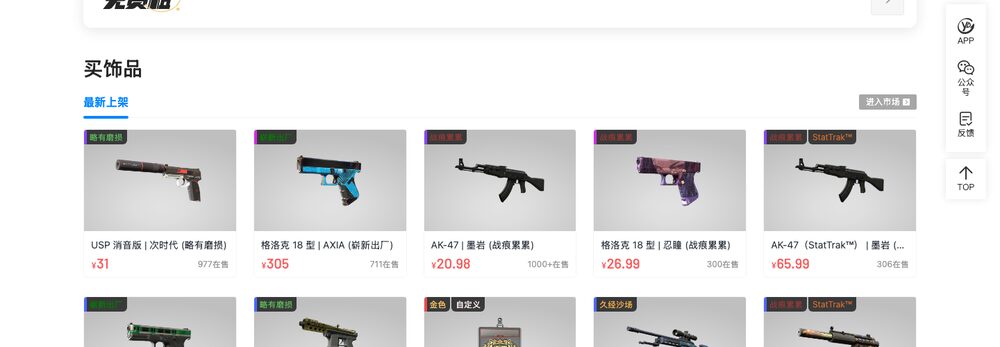
One item, three prices: the standing pattern
The recurring structure, observed across trackers for years and still broadly true in late 2026 — with the caveat that gaps move constantly and any specific number would be stale by Friday:
- Chinese venues (Buff163, YouPin898) tend to quote the lowest cash prices on liquid mid-market items — often enough that western traders use "the Buff price" as shorthand for an item's real value, as covered in our Buff163 review.
- EU venues sit in the middle, with EUR-native books that drift against USD venues as the currency pair moves — the mechanics of EUR/USD skin pricing.
- Convenience-priced western venues quote the highest cash prices, and Steam — inflated by its closed wallet — floats above everything.
None of this is mysterious once you ask the only question that matters: what does it cost to move value from one of these books to another?
Why the China discount exists
- Payment rails are walls. Chinese venues run on regional payment apps and real-name verification that most westerners can't complete. Demand that can't reach a book can't lift its prices; supply that can't leave can't drain it.
- Cash-out flows concentrate there. China hosts one of the world's largest CS2 player bases — see our China piece — and a persistent population of sellers converting inventories to local currency. Structural sell pressure means structurally softer prices, most visibly in the annual Lunar New Year dip.
- Regulatory overhang gets priced. Traders discount assets they might one day struggle to move across a regulatory boundary. That discount lives permanently in the region's prices, widening whenever policy news stirs.
- Trade locks slow the pumps. Even for traders with access to both sides, every arbitrage hop costs a week of lock time plus fees on both ends — so gaps must exceed that full toll before anyone profitably closes them. The toll math is in the fee comparison.
Why the gaps don't close (all the way)
Arbitrageurs do work these spreads — cross-border traders with verified accounts on both sides move volume whenever gaps exceed their all-in costs, and that keeps regional prices roughly in line over months. But "roughly" is carrying weight. Friction — KYC on two venues, FX conversion, double fees, a 7-day lock per hop, and the risk that prices move mid-transit — sets a floor under how tight the spread can get. Persistent gaps of a few percent on liquid items are simply the market quoting its own plumbing costs. When you see the gap wider than that, you're usually seeing information: a regional demand surge, a cash-out wave, or a currency move that one book has priced and the other hasn't yet — the phenomenon behind cross-market price lag.
What this means for you, practically
If you're valuing items
Never value an inventory off one region's book. The honest range for any liquid item spans the CN cash price to the western convenience price, and where your realizable value falls depends entirely on where you can actually sell. A westerner without Buff access shouldn't count the Buff price as theirs — the valuation guide formalizes this.
If you're buying
You probably can't shop the Chinese books directly, and for most people the workarounds (account intermediaries, gray-market credit) import more risk than the discount is worth. The actionable version is smaller and closer to home: the same regional logic operates between western venues too. EUR books and USD books misprice against each other daily as currency and local flows shift; the venue that's cheapest for your item rotates. Compare per purchase, in your own currency, after fees — or use tooling that does. Disclosure: this is precisely the boring edge cs2stack (our tool) automates, pricing every daily buy on both DMarket and SkinBaron and filling wherever the converted price is lower.
If you're selling
Regional premiums are your friend: the western convenience books that are expensive to buy on are, symmetrically, rewarding to sell on. Selling where your item is priced richest and cashing out on your home rails is the retail-sized version of the professionals' arbitrage — no cross-border machinery required.
And whichever side you trade from, watch the calendar: regional gaps breathe with regional life. Chinese holidays widen the CN discount as cash-out waves hit; European banking hours shape when EUR books reprice; a strong dollar quarter makes USD venues look expensive to everyone else. None of it is tradeable with precision, all of it is worth knowing before you conclude a gap is a bargain.
Reading the map, not fighting it
Regional price differences aren't an inefficiency waiting for you personally to fix. They're a permanent feature of a market whose plumbing has borders — payment rails, ID regimes, currencies, and a one-week lock on every pipe. The traders who profit from geography are the ones who respect the tolls; the ones who get hurt are those who see a 12% gap and forget that moving through it costs 11. Watch the gaps as a sentiment gauge, shop your accessible venues per item rather than by loyalty, and let the professionals with verified accounts on five continents keep the last percent — they've earned it in paperwork.
Read it that way and geography becomes an ally: the great marketplaces, each fed by different regional flows, keep serving up prices below Steam's. The edge you can actually keep for years is comparing those venues on every single purchase and letting the day's cheaper book win. The map moves; the habit of checking it doesn't have to.