
Flipping Sniped Skins: Where and How to Resell
A snipe generates a screenshot; a resale generates money. Between the two sit a trade lock, a seller fee, a withdrawal rail, and a market that may not want the item at the price your discount badge promised. Most flips are won or lost in this second half — usually before the buy button was ever clicked.
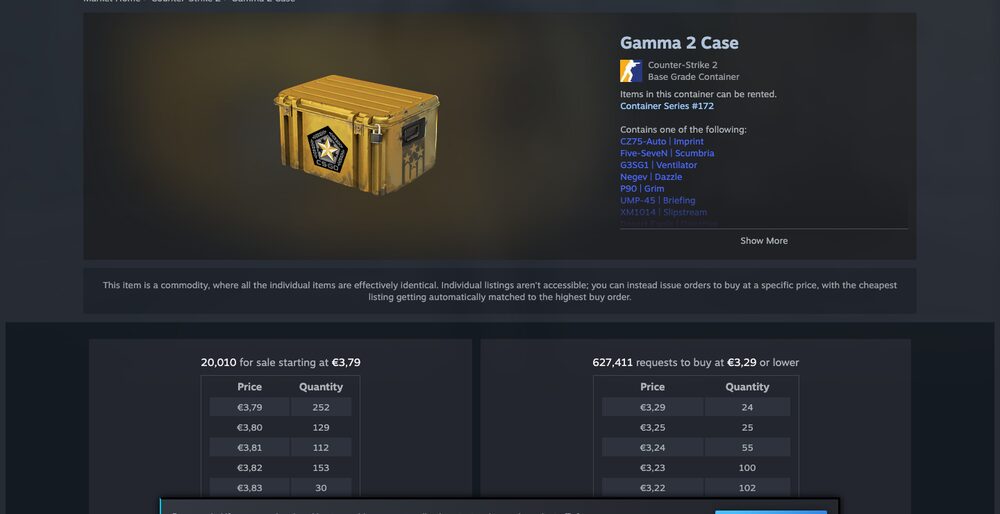
Price the exit before the entry
The only number that matters in a flip is the spread between what you paid and what you net after selling — not the listed discount. That means the resale plan has to exist at buy time: which venue, at what price, with what fee, after what lock. A "30% below market" fill that can only realistically exit on a venue with double-digit fees, into thin demand, after a week of lock, is often a break-even trade wearing a bargain's clothes. This is the core discipline that separates flippers from collectors: the exit decides which items are snipeable at all.
The fee math on a round trip
Every flip pays the market twice: implicitly on the buy (the venue's spread and payment costs) and explicitly on the sell. Fee schedules move, so check the current comparison before trusting any number — but the structural picture has been stable for years:
| Exit route | Typical seller cost | What you receive |
|---|---|---|
| Steam Community Market | ~15% | Wallet funds — never cash |
| Cash marketplaces (P2P) | Low-to-mid single digits, varies | Withdrawable balance |
| Instant-sell / trade-bot sites | Effective 10%+ via the buy price | Immediate balance, worst price |
Two structural notes on that table. Steam's reach is unmatched but its proceeds are trapped: selling there converts your item into wallet credit at inflated wallet prices, which only makes sense if you intend to spend on Steam anyway. And instant-sell routes don't charge a visible fee at all — the cost hides in the bid you accept, which typically sits well below what a patient listing would fetch. Neither is wrong; both must be priced consciously.
Run the arithmetic on a concrete, illustrative flip: buy at $70 against a $100 reference, sell at $95 on a venue charging around 5%, and you net roughly $90 — about $20 of profit, not the $30 the badge implied. Shave the resale to $88 because the market softened during the lock week, and the flip made closer to $13. Fees don't kill flips; they compress them, which is why thin discounts on items you overpaid into so often end red.
The lock week is part of the trade
Almost every sniped item spends time in trade-lock purgatory before it can move again, and how long depends on the venue and the item's history. For a flipper the lock is three costs in one:
- Price risk. The market can reprice during the wait. On volatile items a week of lock can erase a 20% entry edge; on stable, liquid items it usually doesn't. Match your lock exposure to the item's volatility.
- Capital drag. Locked inventory is bankroll you can't redeploy — the reason a deployed ceiling belongs in every sniper's rules.
- A discount on impatience. Some venues let you list locked items for delayed delivery — at a price haircut. Selling through the lock is sometimes right, but you're paying for the privilege.
Choosing the resale venue
The best exit venue is rarely the venue you bought on. What to weigh:
- Demand for your specific item. Liquidity is venue-specific — cases and popular rifle skins clear fast almost everywhere; patterns and high-tier items clear where their collectors browse.
- Fee vs speed. Lower-fee P2P venues generally mean slower, buyer-dependent sales; convenience venues charge for the speed. Pick per item, not by loyalty.
- Cash-out rails. Profit that can't reach your bank isn't profit. Check withdrawal options and reliability before routing volume anywhere, and follow the basic hygiene in the cash-out guide.
- Steam as a last resort. The Steam Market's reach is unmatched, but 15% fees and wallet-locked proceeds make it an exit for people who intend to spend on Steam, not for people running a bankroll.
Timing the relist matters too. Items coming off lock arrive on your schedule, not the market's — and listing into a soft patch just because the lock expired is a choice, not a necessity. If the market dipped during your lock week, the cost of waiting a few extra days for stabilization is usually smaller than the haircut of selling into weakness. The reverse discipline also applies: when your item's price spiked during the lock, take the gift and list immediately rather than extrapolating the spike into a trend. Locks randomize your entry into the selling queue; your job is merely not to compound the randomness with impatience or greed.
Pricing to sell vs pricing to dream
The final leak is psychological. Having bought at a discount, flippers anchor on the reference price and list at it — then sit unsold for weeks, capital frozen, while the "profit" exists only in the listing. The professional habit is the opposite: undercut the current lowest realistic ask slightly, clear the item in days, and put the bankroll back to work. Your edge was the entry; the exit's job is speed. If an item keeps tempting you to hold out for a dream price, that's a signal it belongs in a holding strategy — with actual exit rules — not in a flipping rotation. And if the whole loop of buy-wait-relist starts consuming your evenings, note that the same discounts are capturable passively: standing buy rules that accumulate below your ceiling, no relisting required — the posture compared honestly in snipe now or set a standing order.