
Compounding a Small Budget: $5/Day Is Not Nothing
Five dollars a day feels like a rounding error — a coffee, a third of a case key's worth of dignity. Run it for a year and it's about $1,825 deployed. Run it for three and you've built a position most "waiting for a real budget" people never start. The math of small money is better than it feels.
What $5/day actually deploys
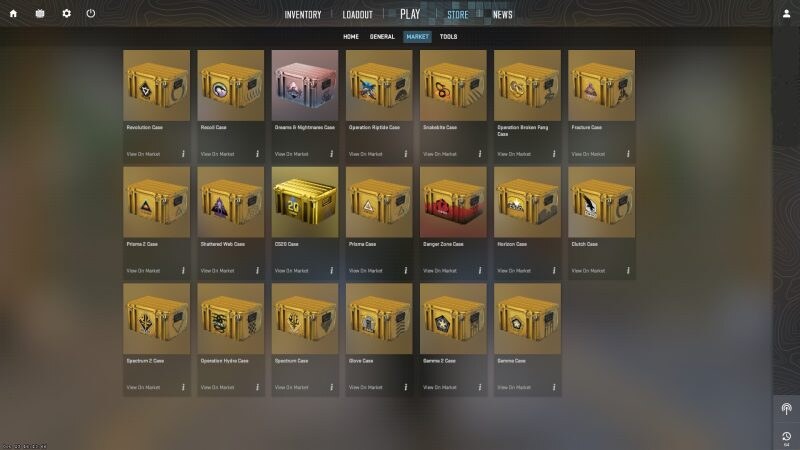
Start with the arithmetic nobody does because it's too simple. $5/day is roughly $150/month, about $1,825/year, about $5,475 over three years — before any price movement at all. In case terms, a daily fiver buys several cheap active-drop cases, or fractions of a rotation across a small list. It's a real accumulation program; it just doesn't feel like one on any individual morning.
That feeling is the trap. Because each buy is trivially small, the whole program gets dismissed as trivially small — and the person who dismisses it usually holds out for the mythical day they'll "put in real money." Three years later, the fiver-a-day stacker owns a five-figure pile of cases at cost, and the real-money person owns a plan.
The growth scenarios, hedged properly
What does appreciation add? Honestly: it depends on a market nobody can promise. Long-run case appreciation has been strong per third-party trackers — some multi-year windows show returns that would embarrass equity indexes, which is why the 2021–2026 growth story gets written about at all. But those windows include survivorship, a once-in-a-game supply squeeze, and crashes that tested everyone who lived through them.
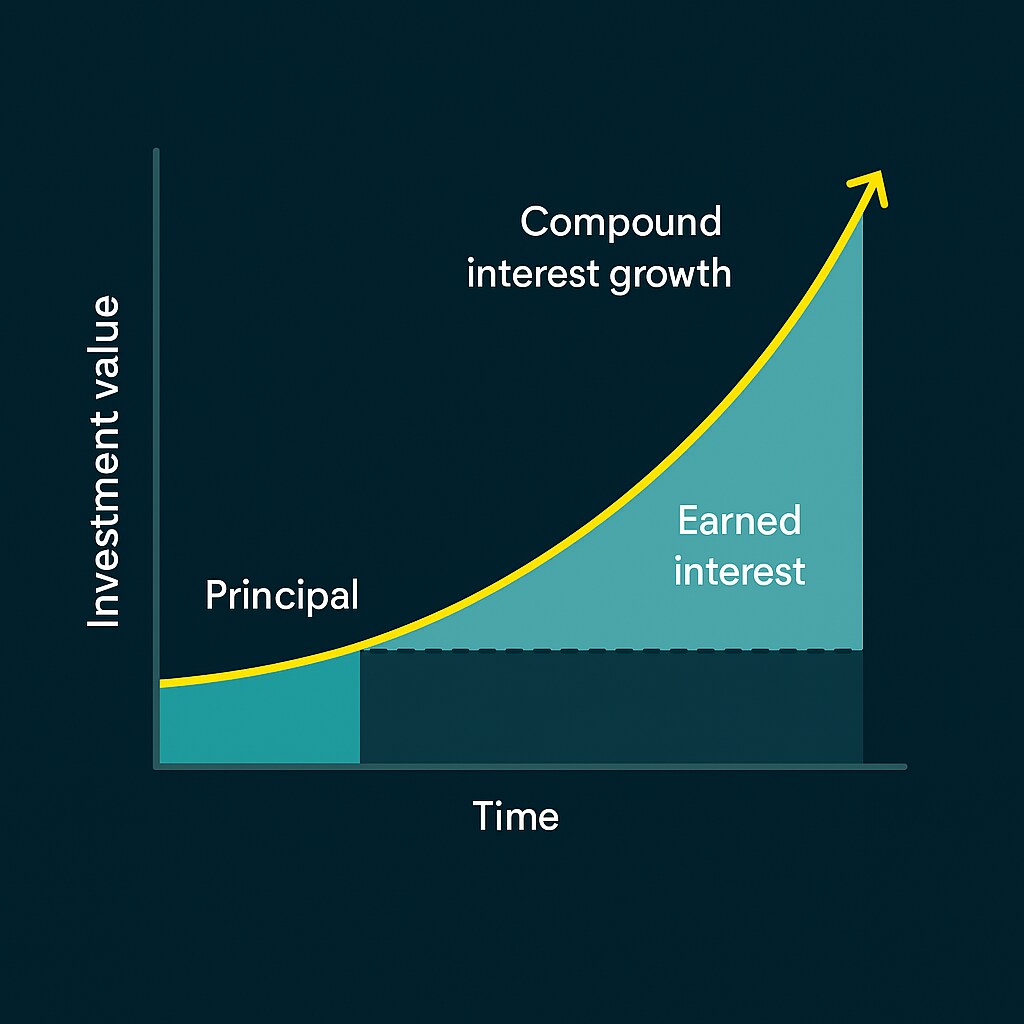
So model conservatively. At 0% appreciation, three years of $5/day is ~$5,475 of cases — worst reasonable case, you saved money in crate form (minus venue fees and spreads on the way in, minus exit fees on the way out). At modest annual appreciation in the single digits to low teens — well below what the boom-window numbers suggest, deliberately — the same schedule lands somewhere between "solidly ahead" and "meaningfully ahead," with the early buys having compounded longest. If the market delivers another boom, the fiver-a-day stack participates in full. If it delivers a crash, your schedule turns the crash into cheap fills — that's the entire logic of buying through corrections, and it works identically at $5 as at $500.
No precise projection survives contact with this market, and anyone quoting one to two decimal places is selling something. The claim here is smaller and sturdier: consistency times time is the only lever a small-budget investor fully controls, and it's a surprisingly powerful one.
Why $5 daily beats $500 sporadically
The alternative most small-budget people actually practice isn't $5/day — it's nothing for months, then a $500 splurge when a YouTube video makes the market exciting. Same annual dollars, wildly different outcomes, for three reasons:
- Splurges cluster at tops. Excitement is highest when prices are. Sporadic buyers systematically overpay because their trigger is hype, which correlates with local peaks. A schedule's trigger is the calendar, which correlates with nothing — the whole point of entry smoothing.
- Splurges skip the fear windows. The best fills of the last several years, per anyone's tracker, happened in ugly months when buying felt stupid. Sporadic buyers were absent; schedules weren't. Bear markets are for stackers.
- Splurges don't survive being human. A plan that requires periodically summoning $500 and conviction on the same day fails the first time either is missing. A fiver leaves before breakfast without asking how you feel.
Running small money well
Small budgets have their own craft. Fees and spreads are proportionally crueler at the bottom of the price board, so favor liquid cases with tight spreads over exotic items where the spread eats a week of contributions — the liquidity-first filter matters more at $5/day, not less. Keep the list short: two to four cases splits a fiver without producing absurd fractional targets, and you can widen later as the budget grows into a proper case ladder. And weekly standing orders solve the lumpy-item problem: a case that costs more than your daily budget can still be a line — "buy one per week" — the way this site's founder pairs ~$19–20/day of case fills with a weekly CS:GO Weapon Case at roughly $110–120 per the public ledger.
The other essential at this scale is cost discipline, because a small budget has no slack to donate. Per-item price caps stop the schedule from paying spike prices; comparing venues on every buy matters when the venue gap on a cheap case can be a meaningful percentage; and skipping a day beats overpaying on it. This is exactly the workload where automation embarrasses manual effort — nobody price-compares two marketplaces every morning for a $5 order, but software does it indifferently, and the pennies compound along with everything else.
Growing up
The quiet superpower of starting at $5/day is that the habit scales and the infrastructure doesn't change. Raise the budget when life allows — $5 becomes $10 becomes $20/day, the level the founder runs publicly — and nothing about the system needs rebuilding: same list logic, same caps, same ledger, bigger number. People who wait to start until they have "real money" aren't just missing compounding time; they're missing the years of cheap tuition where small money teaches you your own risk tolerance, your market's time horizon, and whether you can actually leave a stack alone. That education at $5/day costs almost nothing. At $50/day it's expensive.
Five dollars a day is not nothing. It's a full-sized strategy at a survivable scale — which, for a first strategy, is the only scale that makes sense.