
Bear Markets Are for Stackers
Nobody posts screenshots of the buys they made in a drawdown. The inventory flex comes years later, and by then everyone's forgotten that the average price behind it was manufactured during the months when the subreddit was writing obituaries. Ugly markets are where stacking's work actually happens — if you can make yourself show up.
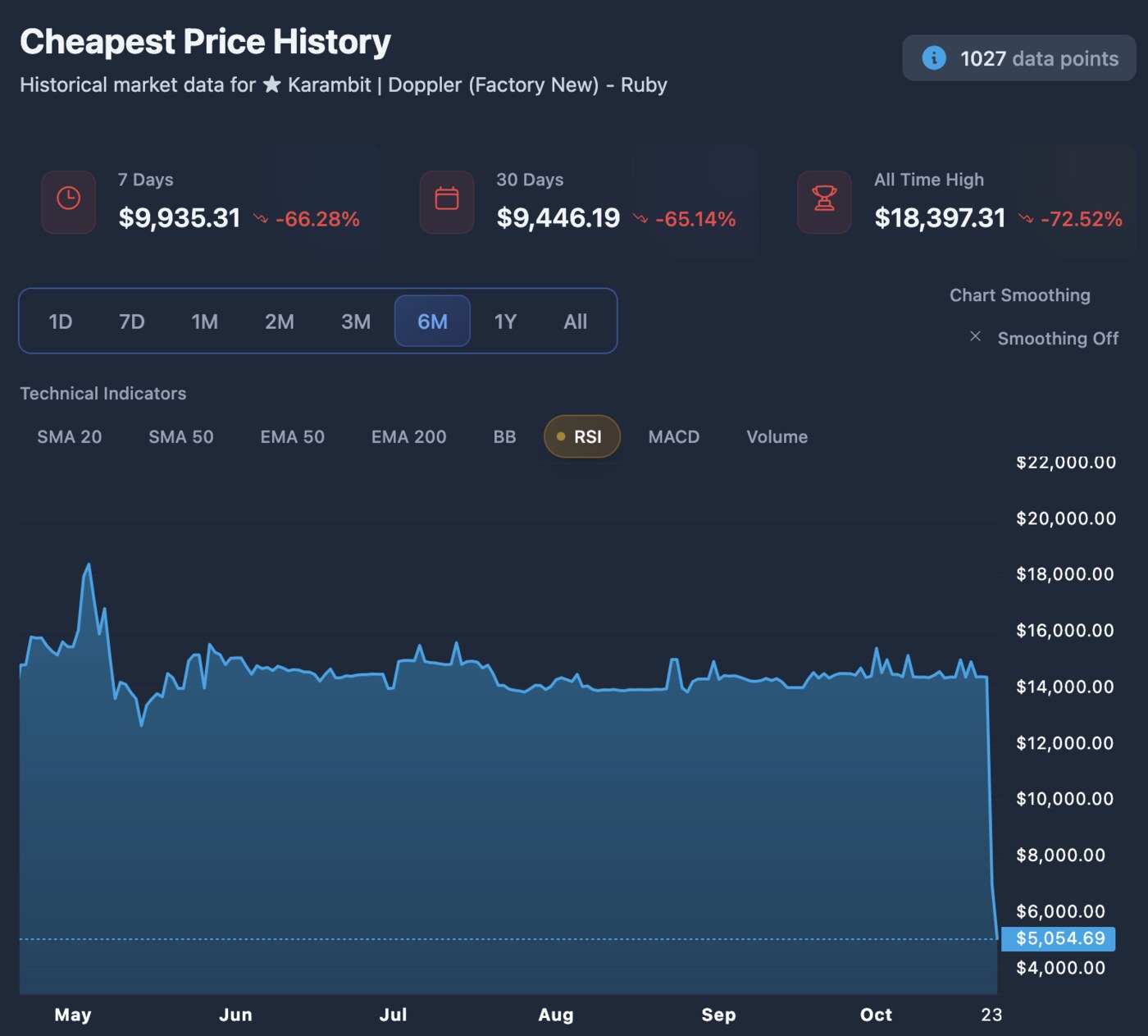
The trade nobody brags about
Every long-term case chart that gets passed around as proof of the strategy has the same anatomy: long boring stretches, a few brutal cliffs, and the climb. The people who did best, per years of community trackers and trade histories, weren't the ones who called the tops. They were the ones still buying at the bottom of the cliffs — not because they knew it was the bottom, but because their schedule didn't ask.
This is worth stating as the thesis of the whole piece: for an accumulator, a bear market is not the risk. It's the discount window. The risk is what your behavior does inside it.
Why drawdowns are structurally kind to stackers
Skin-market crashes have a particular shape that matters here. Prices are set by sentiment and flow in the short run — panic selling, hype buying — but the case market's long-run driver is mechanical: cases get destroyed by opening, drops of older cases fade, and the float only shrinks. A crash changes the price of that mechanism; it doesn't stop it. Openings continue in bear markets (unboxing is entertainment, and entertainment is recession-resistant inside a free game), so attrition grinds on while the price tag says clearance.
That's the asymmetry a scheduled buyer exploits. When prices fall 30%, your fixed daily budget buys roughly 40% more cases per dollar-day than it did at the top. The drawdown isn't interrupting your strategy — it's the period when your strategy accumulates units fastest. Your average cost, the number that decides the entire outcome, is disproportionately manufactured in exactly these windows.
History cooperates with this reading, with the usual hedges. The market has crashed hard and repeatedly — the big ones are ranked here — and each of the major drawdown windows to date looks, in retrospect and per third-party trackers, like an accumulation gift for anyone buying liquid cases through it. Retrospect is doing some lifting in that sentence: survivorship is real, and nothing guarantees the next crash resolves upward. But the pattern is consistent enough that the burden of proof sits with the person who stops buying at -40%, not the one who continues.
Know which bear you're in
One distinction keeps the strategy honest. Not all red is the same red:
- Sentiment bears — broad drawdowns from euphoria, seasonal liquidations like the Lunar New Year dip, macro-driven exits. Nothing about case mechanics changed; only the mood did. These are the accumulation windows. Buy your schedule.
- Structural repricings — an update changed the actual rules. The 2025 trade-up update repriced knives and Coverts in a day because it changed what items do, not what people feel. After one of these, the right move isn't reflexive buying — it's re-underwriting each line against the new rules, then resuming where the thesis survives. The stop-buying checklist is for exactly this.
The tell is usually simple: if you can name the mechanical change, it's structural; if the explanation is a mood ("everyone's bearish," "China rumors," "market's dead"), it's sentiment. Sentiment bears end when moods do. Structural repricings don't end — they're the new floor plan.
The enemy is your hands
Here's the uncomfortable part. Everyone reading this already agrees with it in principle — buy fear, average down, be greedy when others are fearful, all the embroidery. And then the market actually falls 35%, the tracker screenshots turn red, three creators upload "it's over" videos in a week, and agreement quietly stops converting into orders. Not selling feels like discipline enough. The buys just... pause.
This isn't a character flaw; it's the standard human response to watching money evaporate, and it's why manual dip-buying plans fail so reliably that buying through corrections deserves its own article. The plan requires you to act at the exact moment acting feels worst. Some people can. Most people — including most people who think they can — cannot, and the honest ones eventually notice their trade history proves it.
Which is the real argument for automation in bear markets, and it has nothing to do with convenience. A scheduled buyer with a fixed budget and price caps executes identically at sentiment extremes because it doesn't have sentiment. It filled yesterday, it fills today, it will fill tomorrow, and every fill in the ugly window lowers the average that future-you will brag about. The machine isn't smarter than you. It's just not scared — and in a drawdown, not-scared is the entire edge. The same wiring that works as FOMO insurance at tops works as fear insurance at bottoms; it's one property, symmetric.
Bear-market conduct rules
A short list, written for the month you'll want to ignore it:
- Budget must be survivable. The schedule only works if it can run through the whole winter. Fund it with entertainment money, sized so a two-year drawdown changes nothing about your life. A budget you'd need back in six months will be withdrawn at the exact bottom.
- Don't get clever with leverage-shaped behavior. No "tripling down because it's cheap" beyond your plan. If you want extra weight on red days, encode a modest tilt in advance and let the caps do it mechanically.
- Stay in liquid names. Bears punish illiquidity twice — wider spreads on the way in, no exit on the way out. The liquidity filter is not seasonal.
- Log everything. A ledger of your drawdown buys is the receipt that you actually ran the strategy — and the dataset that shows your average cost falling while the market did. It's also what makes the eventual exit math honest.
- Stop reading sentiment as information. Creator doom, Discord despair, "market dead" threads: these are the weather. Supply mechanics are the climate. You're invested in the climate.
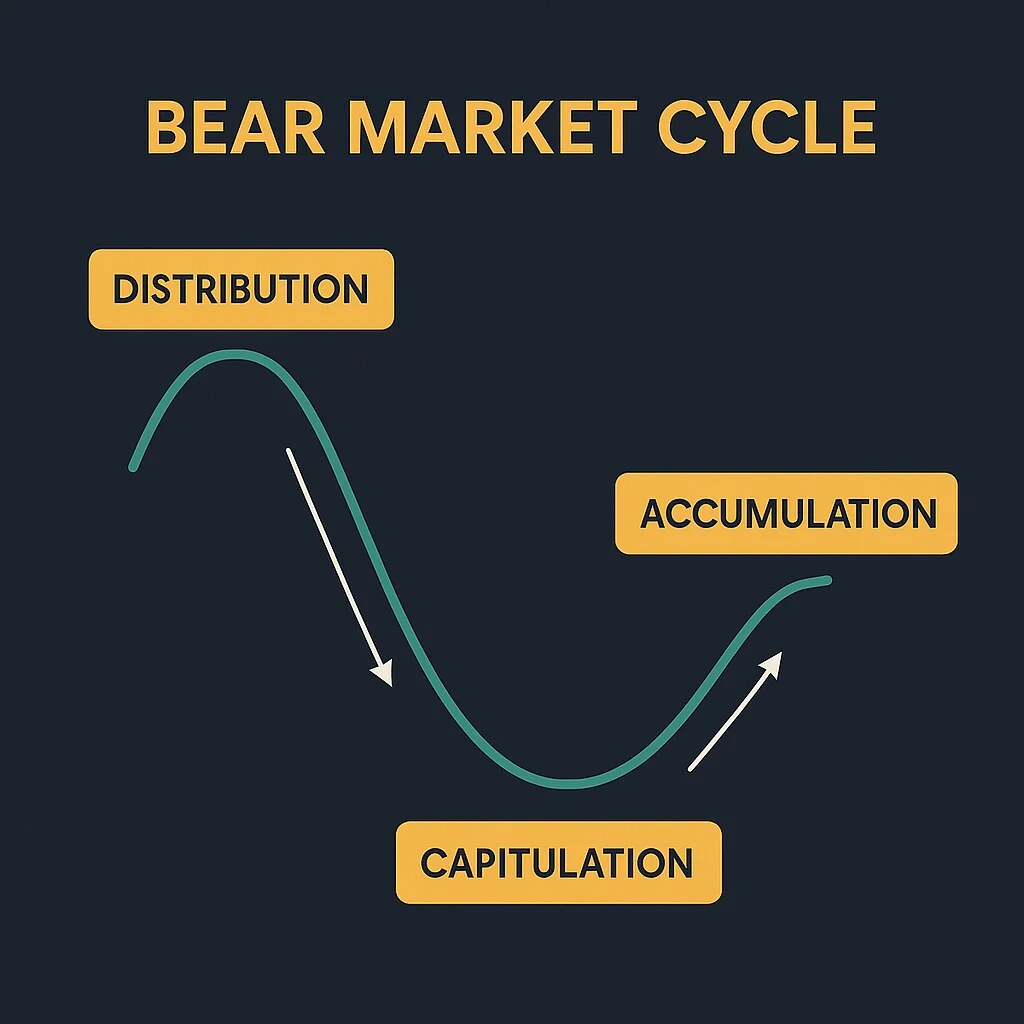
The reframe
A stacker's relationship to bear markets should resemble a value shopper's relationship to sales: mild satisfaction, not fear, and certainly not surprise — this market crashes regularly, and a holder's playbook should assume the next one. You are not trying to avoid buying before drawdowns; on a daily schedule, some of your buys will always be badly timed and it doesn't matter. You're trying to guarantee you're present during them, when each dollar works hardest. The bull market will get the credit later. The bear market did the work.