
DCA Into Strength or Weakness? Tilting Your Schedule
Textbook dollar-cost averaging is deliberately blind: same amount, same items, every day, whatever the price. That blindness is its superpower and its critique. There's a middle path that buys a little more on red days without requiring you to predict anything — and it falls out of a setting you should have anyway.
The argument, honestly stated
Pure DCA ignores price on purpose. Its whole claim is that you can't time this market — patch notes land at Valve's whim, sentiment swings on a streamer's upload schedule — so you stop trying and let the schedule set your average. That works, and it's the strategy this site is built around.
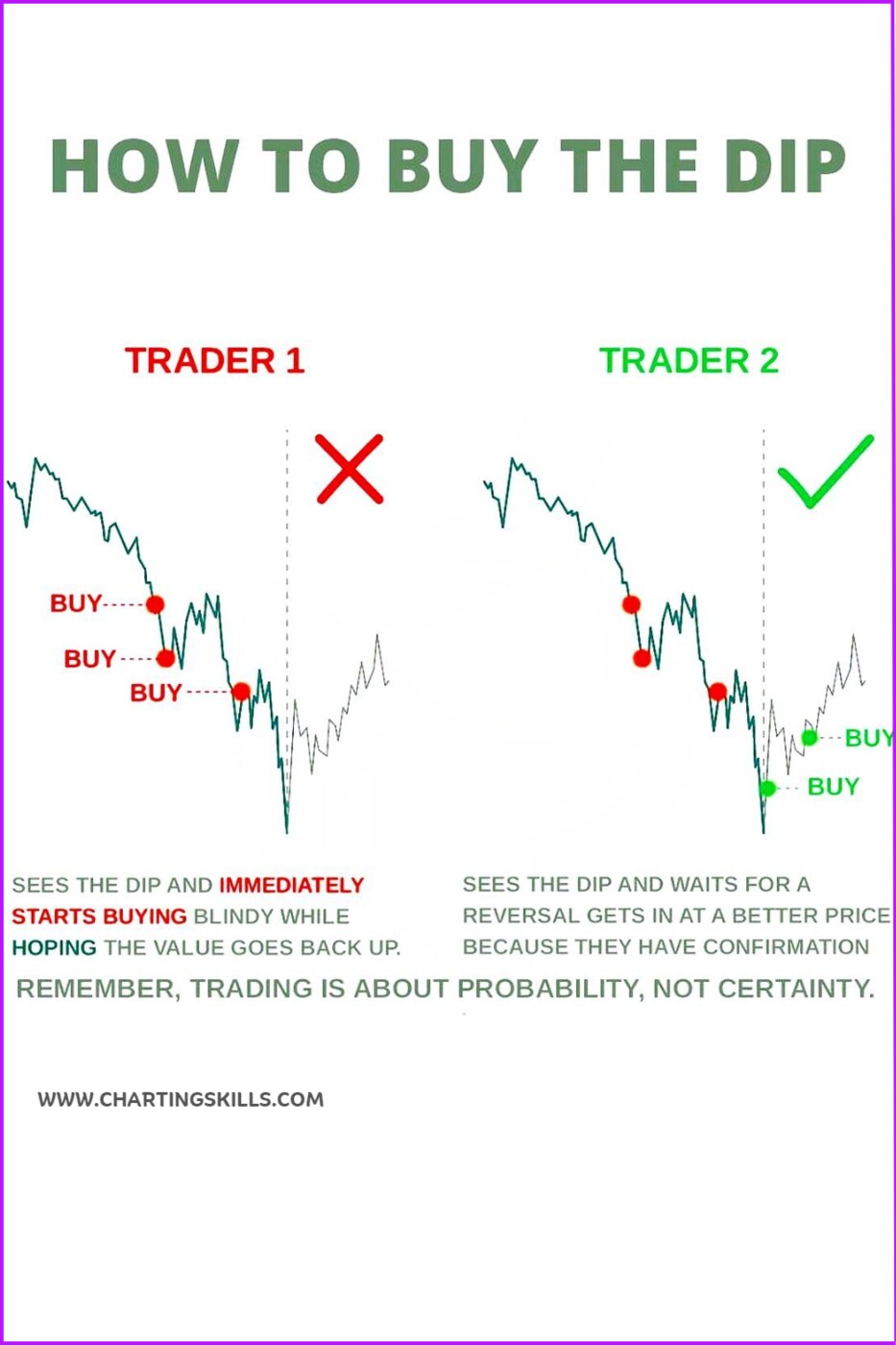
The critique is also fair: a truly blind schedule pays whatever the market asks, including on days when the ask is silly. A case that spikes 30% in a week on hype gets bought at the top of the spike with the same enthusiasm as at the bottom. "Buy the dip" people are right that weakness is, mechanically, a better entry — they're just wrong that you can reliably identify dips in real time with your feelings.
So the interesting question isn't strength versus weakness. It's: can a schedule tilt toward weakness without a human making a call? It can, and the mechanism is embarrassingly simple.
The cap is the tilt
A max-price line is a per-item ceiling: "buy the Falchion Case daily, but never above $X." Most people think of it as overpay protection — a guardrail against fat-fingered listings and flash spikes. It is. But look at what it does to your fill pattern over a month:
- On green spikes, the market price crosses your ceiling and the bot simply doesn't buy. No fill, no chase. The day's allocation goes unspent.
- On normal days, you fill as usual at market.
- On red days, you fill comfortably below your ceiling — and if your setup carries unspent budget forward, those skipped-spike dollars land here, buying more units at lower prices.
Net effect: your average entry tilts below the period's average price, automatically. Nobody predicted anything. Nobody stared at a chart deciding whether this red candle is "the" dip. The ceiling you set weeks ago — calmly, with reference to the case's trading range — did the discriminating for you. It's the same logic that makes entry smoothing work, with one extra clause: and skip the stupid days.
Setting the ceiling: strictness is a dial
Where you put the cap decides how much tilt you get, and there's a real trade-off:
A loose cap (well above the recent range) almost never triggers. You're running near-pure DCA: maximum consistency, near-zero tilt, and the cap only saves you from genuine anomalies like a mispriced venue or a broken feed. This is the right default for cheap, liquid cases where a spike of a few cents doesn't matter.
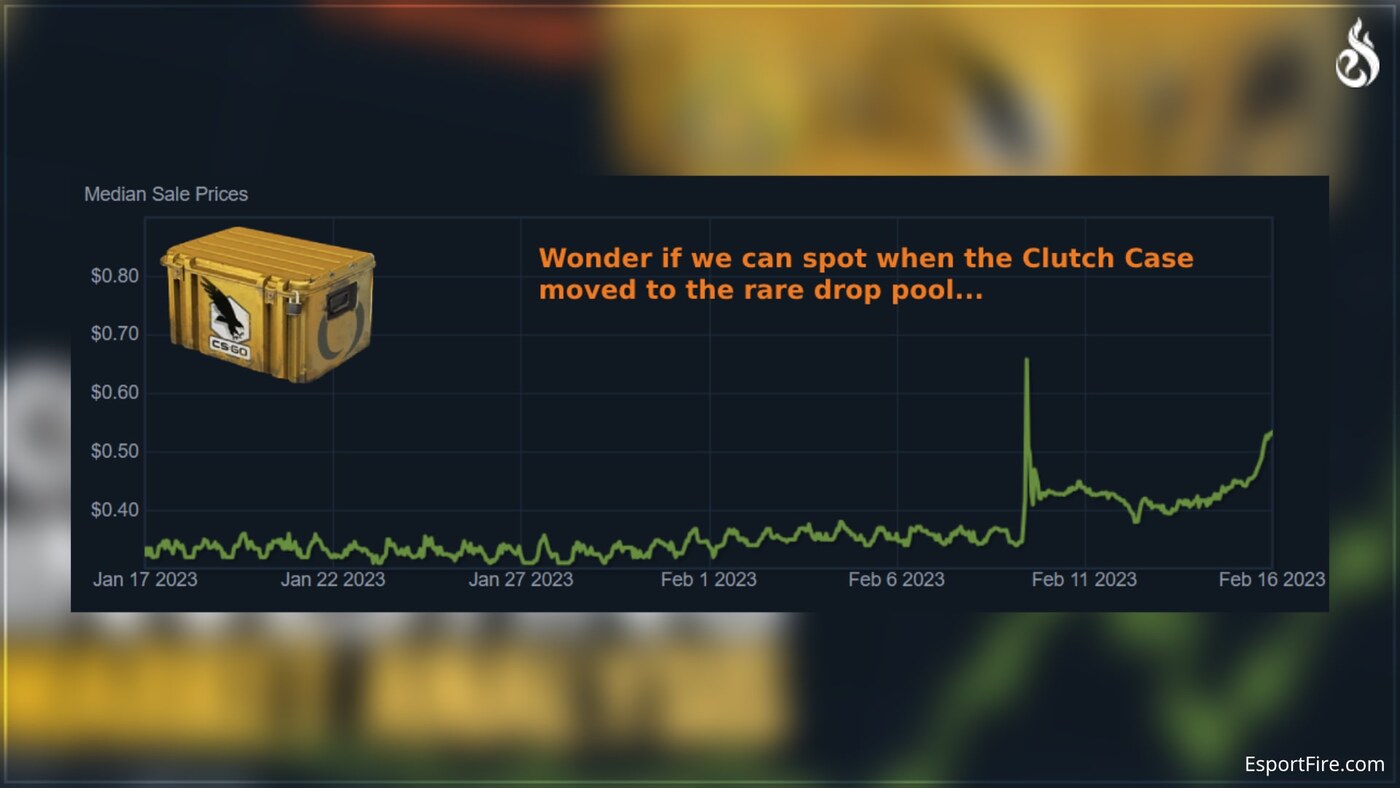
A tight cap (hugging the recent median) skips often. You get real tilt — most of your fills happen in the lower half of the range — but you also accumulate slower, and if the case is genuinely repricing upward on a structural change, you sit out the move entirely while your cap goes stale. A case repricing after something like the 2025 trade-up update never comes back to your old ceiling; a tight cap quietly turns "buy daily" into "buy never."
The honest middle: set caps 10–20% above what you'd consider a normal price, review them on a schedule (monthly is plenty), and treat a cap that's been skipping for weeks as a question — is this a spike, or a repricing? The first means wait; the second means raise the cap or retire the line. Your buy reports make the distinction visible: repeated skips on one line are a signal, not a malfunction.
Why this beats manual dip-buying
Manual dip-buyers fail in two directions at once. In drawdowns, the dip you swore you'd buy feels like a knife falling — most people freeze exactly when their strategy says act, which is why buying through corrections is easier to describe than to do. In rallies, FOMO drags the same people into buying strength at its most expensive. The result, visible in a thousand trade histories, is the opposite of the plan: heavy buying near tops, paralysis near bottoms.
Cap-tilted DCA inverts that without asking anything of your nervous system. The mechanism can't feel fear, so red days fill. It can't feel FOMO, so spike days skip. You wrote one number per item, once. Everything else is execution — and execution is precisely what automation is for.
What tilting doesn't do
Keep expectations flat. Tilting shaves your average entry by low single-digit percentages in most realistic scenarios — meaningful compounded over years, invisible week to week. It is not a source of alpha, it doesn't rescue a bad item pick, and it does nothing about the scenario where the whole market falls for a year (that's a time-horizon problem, not a scheduling problem). It also isn't a substitute for a budget cap: the ceiling controls the price per unit, the budget controls total exposure, and you want both — one protects each trade, the other protects your month.
If you want a heavier tilt — explicit rules like "double the buy when price is 20% under the 90-day average" — you've left DCA and entered systematic trading, with its own backtesting burden and its own failure modes. Nothing wrong with that lane, but be honest about having changed lanes. The cap trick's virtue is that it lives entirely inside the boring strategy: same list, same budget, same schedule, one extra number per line.
The takeaway
Strength or weakness is a false choice. Buy on schedule — that's the part that keeps you invested through the years the supply thesis needs. Then let per-item ceilings quietly veto the worst prices. You'll never top-tick a bottom, and you'll never need to. Your average does the work, and the cap keeps the average honest.