
Taking Profit in a Skin Bull Run: Ladders, Tranches, Discipline
Corrections get all the psychology articles, but more skin-market wealth has evaporated at tops than bottoms. A bull run is the most dangerous market you'll ever hold into, precisely because it doesn't feel dangerous — it feels like being right. Here's how to leave a party while it's still good: with a ladder you built before the music started.
Why tops are harder than bottoms
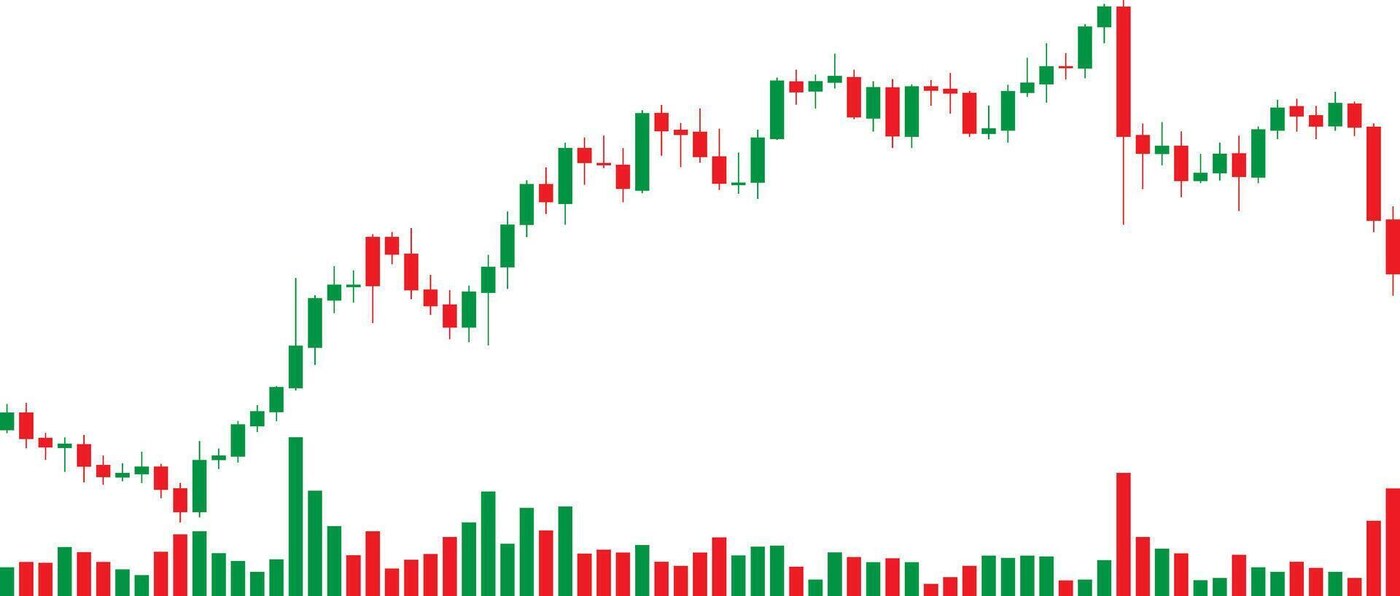
In a crash, fear at least points in a useful direction — toward caution. In a bull run, every signal rewards inaction. Your stack is up, the number climbs weekly, and selling anything feels like donating future gains. Per third-party trackers, the 2024–2025 stretch of the case market handed multi-x marks to holders of plenty of ordinary cases — and the sharpest regret in that period reportedly belonged not to people who missed the run, but to people who watched paper gains round-trip because "it was still going up." The market's whole growth arc is charted in the 2021–2026 growth story; the relevant lesson from it is that every leg up eventually met a repricing event, usually update-shaped, usually unannounced.
So the problem statement is honest: you cannot call the top, and you hold an asset that can reprice 30% on a patch note. The answer isn't a prediction. It's a structure that doesn't need one.
The ladder: selling on prices, not feelings
A profit ladder pre-commits you to selling fixed slices — tranches — at price multiples you chose in advance, measured against your documented average cost. A common shape for a case stack, purely as an illustration:
| Trigger (vs avg cost) | Sell | Still held after | What it buys you |
|---|---|---|---|
| 2x | 20% | 80% | Original capital largely de-risked |
| 3x | 20% | 60% | Locked profit, whatever happens next |
| 5x | 20% | 40% | A result that can't be taken back |
| Never | — | core stack | Full exposure to the long thesis |
The exact rungs matter far less than three properties. The triggers are written down before the run, when you're sober. Each tranche is partial, so being "wrong" in either direction is survivable — if the market keeps climbing you still own most of your stack; if it tops, you banked real money. And there's a permanent core you've decided never rides the ladder at all, which quiets the voice that treats every sale as betrayal of the thesis. Deeper variations live in exit strategies that don't rely on luck and the general discipline piece, when to sell.
Everything hinges on one number
Notice the ladder is denominated in multiples of average cost. That means it's unusable if you don't actually know your average cost — and most manual buyers genuinely don't, beyond a flattering guess. Months of small buys across venues and currencies blur into "roughly doubled, I think," and a ladder built on a guessed basis triggers at the wrong prices or never. This is the unglamorous reason record-keeping decides outcomes: the sell-side plan is only as real as the buy-side ledger under it. An automated, money-exact purchase log — every fill, venue, and converted price — makes "2x" a fact instead of a vibe. That argument gets its own post in cost basis.

The old blue chips are the cautionary half of this lesson: items like the Operation Bravo Case rewarded holders across a decade, per long-run trackers — but nobody who sold slices on the way up did badly either. "I'll sell the top" and "I'll never sell" are both predictions. Ladders are neither.
Where the money lands matters
A profit plan that ends in Steam wallet balance isn't a profit plan — Steam funds can never leave the ecosystem, so a "sale" there converts one locked asset into another (the trap is spelled out in Steam wallet dollars are not dollars). Real profit-taking routes through cash marketplaces, with their fees, payout rails, and timing quirks; the mechanics are covered in cashing out safely. Decide the destination per tranche in advance too: cash off the table, or redeployment into laggards — items on your list that ran less hard. Redeploying is legitimate, but it's rebalancing, not profit-taking, and it deserves its own rules so it doesn't become churn that donates your gains to the fee stack, per rebalancing without overtrading. And sales are taxable events in many places — boring, jurisdiction-dependent, and much easier with a clean ledger, as covered in the unsexy chapter.
What keeps running during the run
One counterintuitive point: a bull run is not automatically a reason to stop buying. If your accumulation plan is long-horizon and capped, the schedule keeps executing — your fixed budget simply buys fewer units at higher prices, which is DCA doing its job in the other direction. Price caps are the release valve: when a case spikes past your max-price line, the bot skips it rather than chasing, which is exactly the FOMO protection you configured it for. What you shouldn't do is silently raise caps and budgets mid-euphoria — that's the flinch again, wearing a bull costume. If the thesis genuinely changed, change the plan deliberately, on a calm day, in writing.
The discipline stack, summarized
Write the ladder before the run. Denominate it in verified average cost, not memory. Sell partial tranches at pre-set multiples, keep a core, and route proceeds somewhere real. Let the buy-side automation keep executing inside its caps, and treat every urge to improvise — up or down — as a signal to re-read the plan, not rewrite it. None of this maximizes the fantasy outcome where you sell everything at the exact top. It maximizes the realistic one: a run that ends, whenever it ends, with profit that actually left the table.