
Rebalancing a Skin Portfolio Without Overtrading
You split your budget evenly across five cases. A year later one of them tripled and now it's 45% of the stack. Congratulations — and also, you have a problem. Here's how to fix allocation drift without handing your gains to the fee schedule.
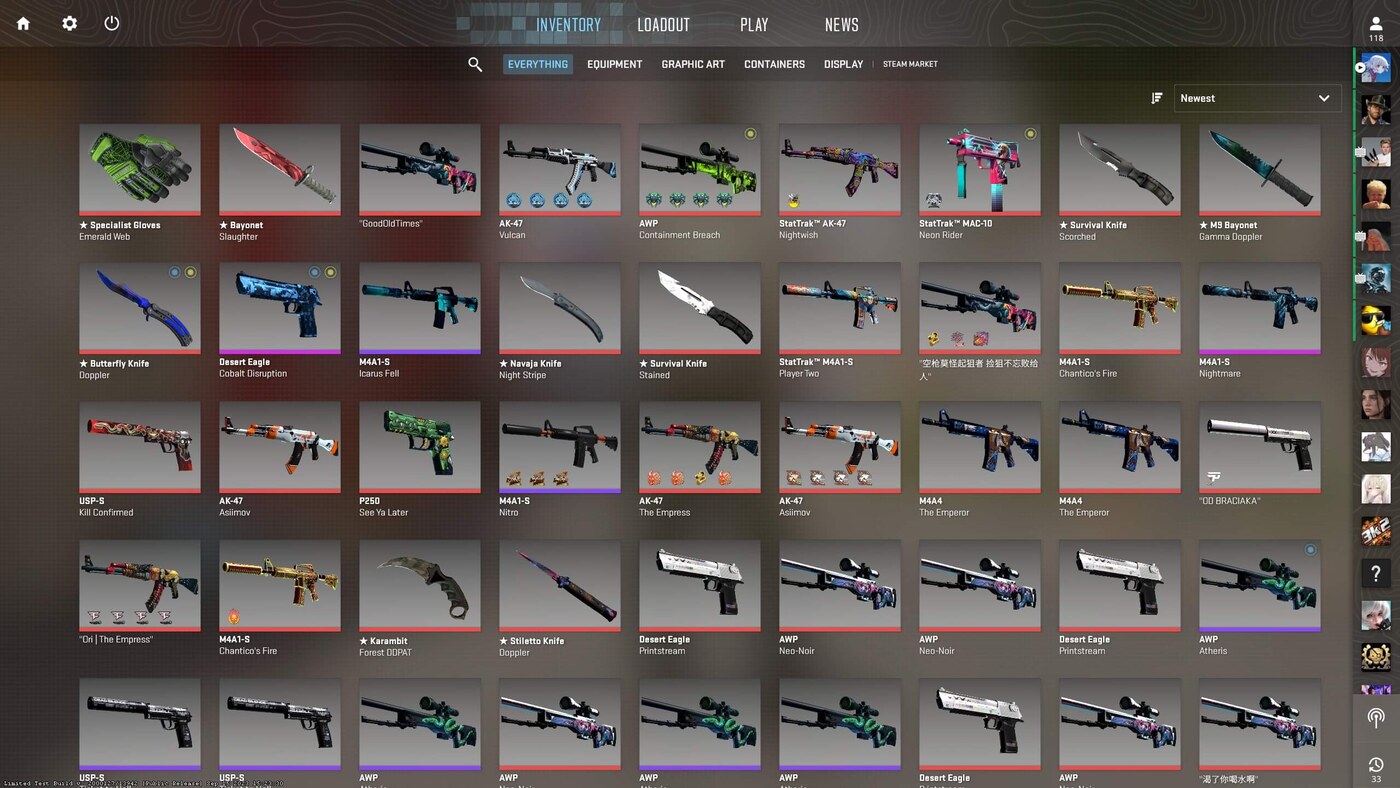
Drift is what winning looks like
Allocation drift isn't a malfunction. If you diversified across several cases precisely because you didn't know which one would run, then by construction one of them will eventually run — and your tidy 20/20/20/20/20 split becomes something lopsided. Community trackers are full of examples: a case catches a knife-meta wave or a supply squeeze and reprices far ahead of its peers while the rest of the stack plods along.

The problem with drift is concentration, not profit. When one item is half your portfolio, your outcome is hostage to that item's next update, and updates reprice things overnight. Rebalancing is just the act of dragging your allocation back toward the split you actually chose. The question is how to do it in a market where every round trip costs real money.
Why textbook rebalancing fails here
In an index fund, selling winners to buy laggards costs a few basis points. In skins, it doesn't. Sell on the Steam Community Market and you pay roughly 13–15% in fees — and receive wallet funds you can't withdraw as cash. Sell on cash marketplaces and seller fees typically run somewhere between 2% and 12% depending on venue, plus spread, plus the hassle. Do that quarterly, like a financial-planner pamphlet suggests, and rebalancing quietly becomes overtrading with a respectable name.
So the rule set has to be adapted. Two changes do most of the work: rebalance by threshold instead of calendar, and rebalance with new money instead of sales.
Threshold rebalancing: act on drift, not dates
Calendar rebalancing ("every quarter, reset to targets") generates transactions whether or not anything meaningful happened. Threshold rebalancing only acts when an allocation strays past a band you set in advance — say, when any position drifts more than 10 or 15 percentage points from its target weight.
| Approach | Trades generated | Fee drag | Good for |
|---|---|---|---|
| Calendar (quarterly reset) | Many, most unnecessary | High | Liquid, cheap-to-trade markets — not this one |
| Threshold (act past X% drift) | Few, only after big moves | Moderate | Concentrated drift after a big run |
| Cashflow (steer new buys) | Zero sales | Near zero | Anyone still in the accumulation phase |
Wide bands are a feature. A position wandering from 20% to 26% of the stack is noise; from 20% to 45% is a decision. The band converts "should I do something?" — a question you'll answer emotionally at the worst possible moment — into a rule you wrote when you were calm.
Cashflow rebalancing: the version that's nearly free
If you're still buying — and most stackers running a daily DCA schedule are — you rarely need to sell anything to rebalance. You just point new contributions at whatever is underweight. The overweight winner doesn't shrink; everything else grows around it until the ratios normalize.
This is the cheapest rebalancing that exists, because buying is something you were doing anyway. There's no sale, no fee, no trade lock, no taxable disposal to think about. Its only cost is time: on a small daily budget, growing the laggards back to weight takes months. For most portfolios that's fine — drift is a slow-burning risk, not an emergency.
In practice it looks like this: instead of an equal split across all five lines, you tilt the split — the tripled case gets a token allocation or none, and its former share flows to the others. If your buying is automated, that's a one-line change to plan weights rather than a nightly manual chore, and the ledger records exactly when you made the change and why the fills shifted.
When selling actually is the right call
Cashflow rebalancing has limits. If a position has run so far that new contributions are a rounding error against it — the tripled case is 60% of a stack you're feeding $5/day — then only a sale moves the needle. A few honest triggers:
- Concentration you can't sleep on. If one patch note hitting one case would genuinely hurt, trim it. That's risk management, and fees are the insurance premium.
- A planned exit tranche. If your exit rules already said "sell a third at 3x," rebalancing and profit-taking are the same trade. Take it.
- A broken thesis. If the case ran on a mechanic Valve just changed, that's not rebalancing territory — that's stop-buying territory, possibly exit territory.
When you do sell, sell once, in size, on the cheapest venue for that item — not in ten dribbles that each pay the minimum-fee floor. And record the cost basis math before you list, because whether you're actually up after fees is frequently a surprise.

A rule set you can steal
Written as one paragraph: set target weights when you build the portfolio. Check drift monthly — checking is free. Do nothing inside a ±15-point band. Outside the band, rebalance with new contributions first, by tilting your buy plan toward the underweights. Only sell when a single position exceeds a hard ceiling you chose in advance (a third to a half of the stack, per your own sleep threshold), or when its thesis breaks. Every action gets a one-line note next to the ledger entry, so future-you knows whether past-you was disciplined or improvising.
It's not glamorous. Neither is drift quietly turning a diversified stack into a single concentrated bet. The whole point of rules is that they act before the market makes the decision for you.