
Buying on Steam vs Cash Marketplaces: The 30% Question
The same case, the same minute, two prices: one on the Steam Community Market, one on a cash marketplace — and the Steam price is routinely a large premium above the other. That gap isn't a glitch. It's the price of a locked door, and which side of it you buy on is one of the few decisions in this market worth real percentage points.
Why the same item has two prices
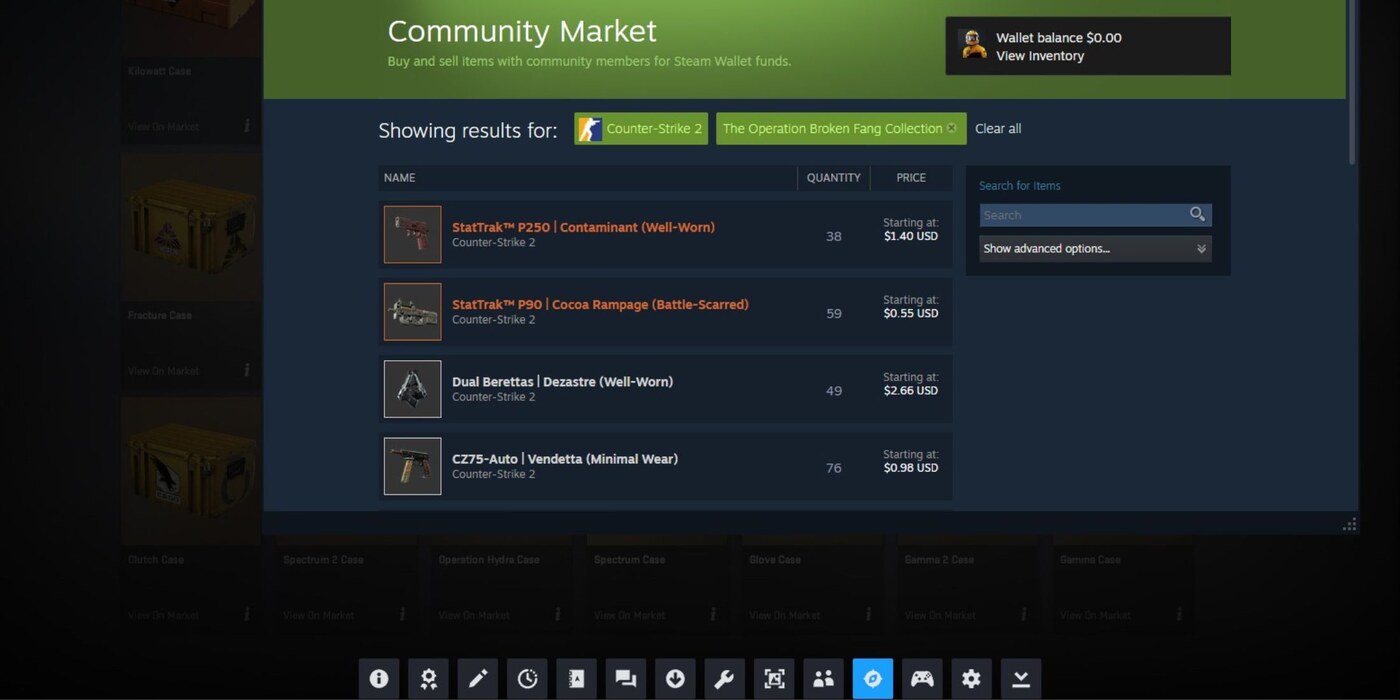
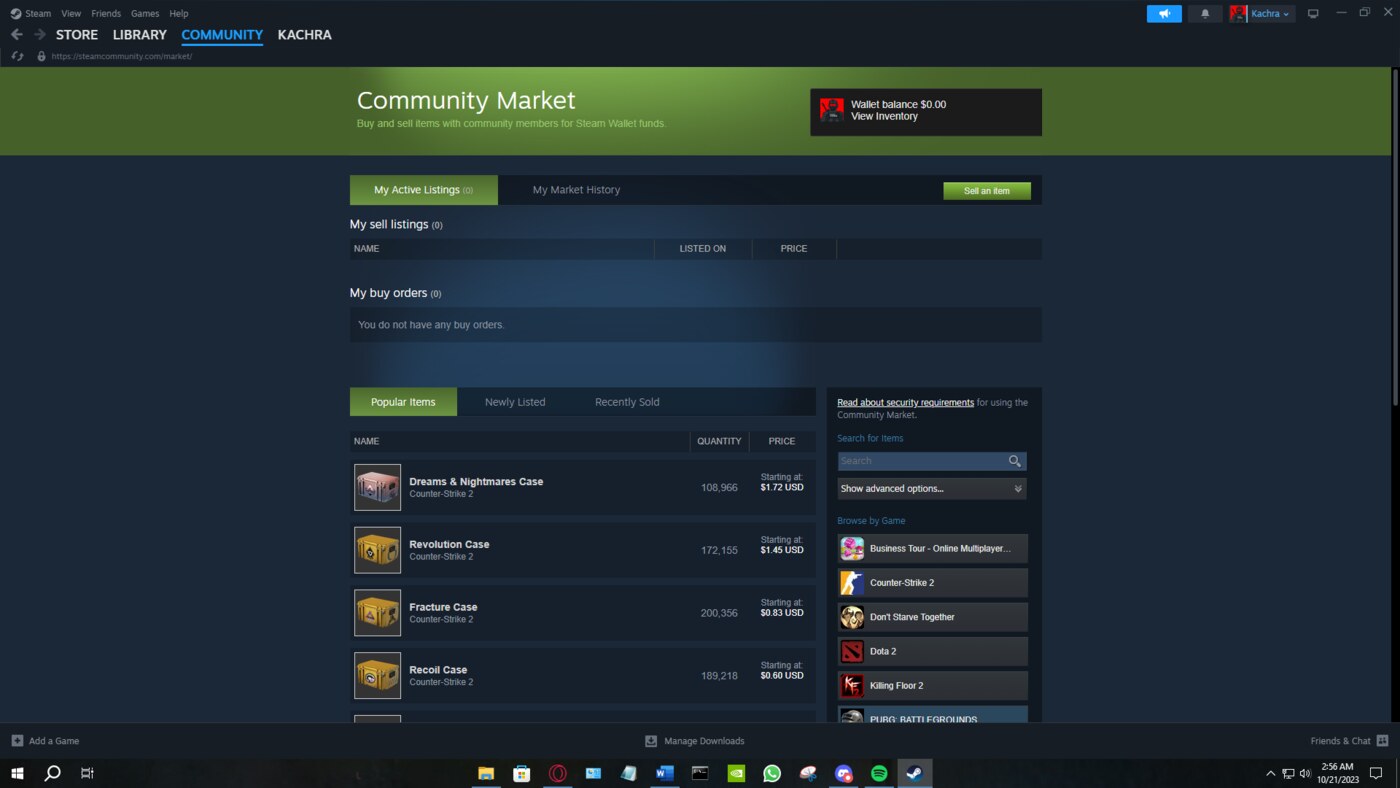
The Steam Community Market settles in Steam wallet funds. Wallet money goes in easily and never comes out — Valve provides no withdrawal mechanism, ever. That makes a wallet dollar structurally worth less than a bank dollar, and the market prices it accordingly: sellers on Steam demand more nominal units of the captive currency, so quoted prices run persistently above cash venues. Per third-party price trackers, the gap on liquid items commonly sits in the 20–35% range, which is why traders shorthand it as "the 30% question." The full logic of the captive currency is unpacked in Steam wallet dollars are not dollars.
Layered on top is the fee structure: Steam takes roughly 13–15% from every sale, a cut whose market-shaping effects are covered in Steam's fee anatomy, while cash marketplaces typically charge sellers somewhere around 2–12% depending on the venue. Sellers price those fees in. Buyers inherit the result.
The venues, side by side
| Steam Community Market | Cash marketplaces (DMarket, SkinBaron, etc.) | |
|---|---|---|
| You pay with | Wallet funds (never withdrawable) | Real money (card, PayPal, etc.) |
| Typical price level | Higher — the wallet premium | Lower; venues also disagree with each other |
| Seller fee baked in | ~13–15% | ~2–12%, venue-dependent |
| Delivery | Instant to inventory | Direct trade offers (SkinBaron) or withdrawal after a hold — DMarket buys have been observed with ~2–7 day trade locks |
| Counterparty | Valve itself | A third-party business — venue risk is real |
| Exit path | Wallet only — value stays inside Steam | Cash out is possible when you eventually sell there |
Ranges above are typical observed figures, not guarantees; venues change fees and every item trades its own spread. The broader marketplace landscape — who's who, and what each is good at — is mapped in the marketplace comparison.
For an accumulator, cash wins the default
If your strategy is buying and holding — cases especially — the arithmetic is hard to argue with. An accumulator's return is built at purchase time; paying a 20–35% venue premium on every single buy means starting every position that deep in the hole before the thesis even gets a vote. A premium paid up front is a drawdown you chose — and a -25% starting hole needs a +33% move just to reach flat. Few investment theses are strong enough to donate that kind of head start, and none of them need to.
Cash buying also preserves optionality at the end. Items bought with cash and eventually sold on a cash venue produce money that reaches a bank account — the entire subject of cashing out. Value that only ever exists in wallet form can buy games and more skins, and nothing else. For anyone treating skins as an investment rather than a hobby budget, that difference is the whole game.
The costs of the cash route are real but manageable. You wait: purchases may sit in trade locks for days before landing in your Steam inventory — irrelevant for a holder measuring in years. You take venue risk: mitigated by withdrawing regularly and not treating a marketplace as a vault. And you do more work per purchase: comparing venues, converting euro listings, checking your caps — which is either a daily chore or, automated, a solved problem.
Where Steam still makes sense
- Spending existing wallet balance. If the money is already trapped — from selling drops or an old cash-in — the premium is sunk. Wallet funds spent on cases at wallet prices is wallet-to-wallet math, and perfectly fine.
- Instant delivery needs. No lock, no trade offer, no third account. For a skin you want to use tonight, Steam is unbeatable.
- Liquidation edge cases. Selling into Steam sometimes nets more purchasing power inside the ecosystem than a cash sale nets outside it — relevant if you'd spend the proceeds on Steam anyway. It's an exit question more than a buying one, and it deserves its own pre-committed rules.
- Tiny experiments. A first-ever $10 dabble doesn't justify creating marketplace accounts. Learning has a fair tuition.
The second-order trick: cash venues disagree with each other
Once you're off Steam, a smaller version of the same question reappears: DMarket and SkinBaron routinely quote different prices for the same item, partly because SkinBaron lists in euros and serves a European seller base while DMarket's flow differs — the FX wrinkle explored in EUR marketplaces, USD brains. The gap is usually small, single-digit percent, but an accumulator buying daily crosses it hundreds of times a year. Comparing venues on every buy is the closest thing retail gets to a free lunch, which is why cs2stack does exactly that — every purchase, both venues checked, cheapest fill taken, euro prices converted at a dated rate, receipt written to the ledger.
The 30% question answers itself once you frame it as an investor instead of a player: buy where money is real and prices are low; use Steam when the money is already trapped or the need is immediate. Then automate the comparison so the answer gets applied every single morning, not just the mornings you remember.