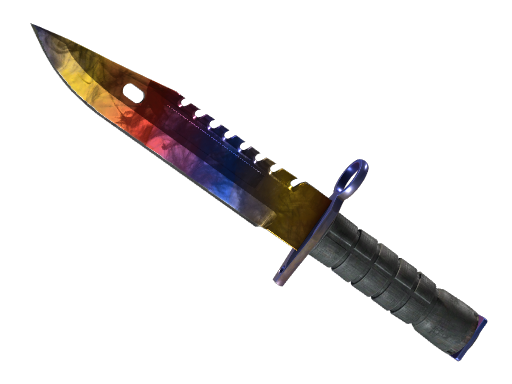
Knife Prices in the 2026 Crash
Knives are the asset the skin market tells itself is safe — the ★ blue chips that "always recover." In 2026 they got repriced along with everything else, on top of a trade-up shock that had already rewritten their floor logic months earlier. What actually happened to knife prices, why the segment held together better than gloves, and what "floor" even means now.
Blue chips reprice too
The 2026 drawdown was defined by breadth: per third-party analyses, roughly 95% of tracked skins fell between March and mid-August, inside a market that halved from its ~$14 billion peak — the numbers unpacked in our damage report. Knives were not exempt. Trackers show broad declines across the segment, from budget Gut knives to grail-tier pieces, though with real dispersion: liquid, popular models repriced smoothly while rarer pieces mostly stopped trading and let stale listings tell flattering lies.
Still, knives entered this crash differently from gloves. Gloves led the decline, sliding 10–20% per trackers before the broader market moved. Knives followed the market rather than leading it — partly because the segment had already absorbed its own private crash the previous autumn.
The precedent: October 2025's trade-up shock
To understand knife floors in 2026, start in October 2025, when Valve's trade-up update let Covert skins trade up into knives. The gate that had kept knife supply strictly case-limited swung open, and an estimated $1.75 billion in paper value evaporated across the market in short order — with knife floor prices taking the direct hit. The full story is in our trade-up crash retrospective.
That event did two lasting things. It reset the cheap end of the knife market — the "any knife tax," the premium for simply owning a ★, deflated when knives became manufacturable. And it taught every premium-tier holder that scarcity in this market is policy, not physics. When the 2026 confidence spiral arrived, knife holders had already rehearsed the feeling — one reason the segment's 2026 decline, while real, read as orderly repricing rather than freefall.
The rehearsal had a selection effect, too. The weakest hands in the knife market — holders who couldn't stomach policy risk — largely exited in the weeks after October 2025. The knives that entered 2026 sat with owners who had already survived a 24-hour repricing and chosen to stay, which is one plausible reason the segment sold off with the market instead of ahead of it.
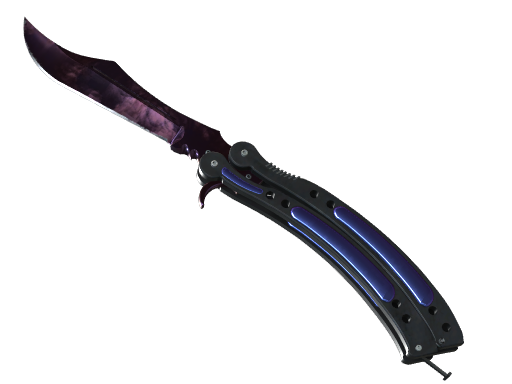
Not one market: liquidity tiers inside knives
"Knife prices" is a category error — the segment is three markets wearing one star:
| Tier | Examples | 2026 behavior (per trackers) |
|---|---|---|
| Budget / liquid | Gut, Navaja, common finishes | Repriced quickly and visibly; deep books kept trading |
| Mid-tier | Popular Bayonets, M9s, Karambits in common finishes | Declines with widening spreads; slower sales |
| Grail / pattern | Blue gems, rare Doppler phases, low-float unicorns | Trading thinned out; marked prices lag reality |
The practical consequence: the crash you can measure lives in the bottom two rows, while the top row's damage is mostly unrealized and unknown. Pattern and float premiums — the scarcity layers explained in our float guide — compress in thin markets not because the items got less rare, but because the marginal buyer paying for that rarity went home.
For sellers, the tiering dictates tactics: a liquid knife can be sold this week at a knowable discount, a grail cannot be sold quickly at any fair price, and treating the second like the first is how five-figure items print four-figure sales. For buyers, it dictates where the real bargains hide — mid-tier knives with widened spreads are where motivated sellers actually transact, while grail "discounts" are often just stale asks nobody has tested.
Where the floor logic comes from now
Pre-October 2025, the knife floor was a supply argument: knives only came from cases at ~0.26% odds, so the cheapest knife could only be so cheap. Post-trade-up, the floor is an arbitrage argument: a knife can't durably trade below the cost of the Covert skins that trade up into it. That's a real floor, but a lower and more elastic one — it moves with Covert prices, which themselves fell through 2026.
Above the floor, knife value rests on the same pillars as before, each stress-tested this year: usage demand from a player base that stayed strong throughout the crash; the cultural weight of the ★; and per-item scarcity in finishes, floats, and patterns. None of those broke. What broke was the assumption that the pillars guarantee a price — the same lesson every drawdown in the crash rankings has taught in its own dialect.
Holding or hunting
If you hold knives, the triage from should I sell? applies, with one segment-specific note: liquid knives are among the best crash assets to sell if you must sell something, precisely because their spreads stayed workable. Dumping grails into a thin book, by contrast, realizes worst-case prices.
If you're hunting, discounted blue chips are the classic crash purchase — and the classic trap when bought on reflex. A minimal pre-purchase checklist for crash-time knife buying:
- Price the exit tier, not the item class. Know whether you're buying liquidity or locking up capital.
- Check real sales, not listings. Especially above mid-tier, where asks are fiction until tested.
- Respect the new floor logic. Trade-up arbitrage anchors the cheap end; don't pay pre-2025 premiums for post-2025 scarcity.
- Set the maximum before you browse. Ceilings chosen while looking at a beautiful knife are not ceilings.
Decide the model, finish, and maximum price in advance, and let the market come to you; watching for bottom fingerprints beats guessing. In full disclosure, that's the use case we built cs2stack for: it watches DMarket and SkinBaron lowest prices for your exact targets and snipes them when they cross your line, with caps and a dry-run mode — patience, automated.