The Skins That Survive Crashes Best
When roughly 95% of tracked skins fall in five months, "survival" stops meaning "went up" and starts meaning "fell less, and will be wanted on the other side." The 2026 drawdown is a natural experiment in what actually holds value when confidence drains out of a virtual economy — and the relative winners share traits you can screen for.
First, honesty: almost nothing was spared
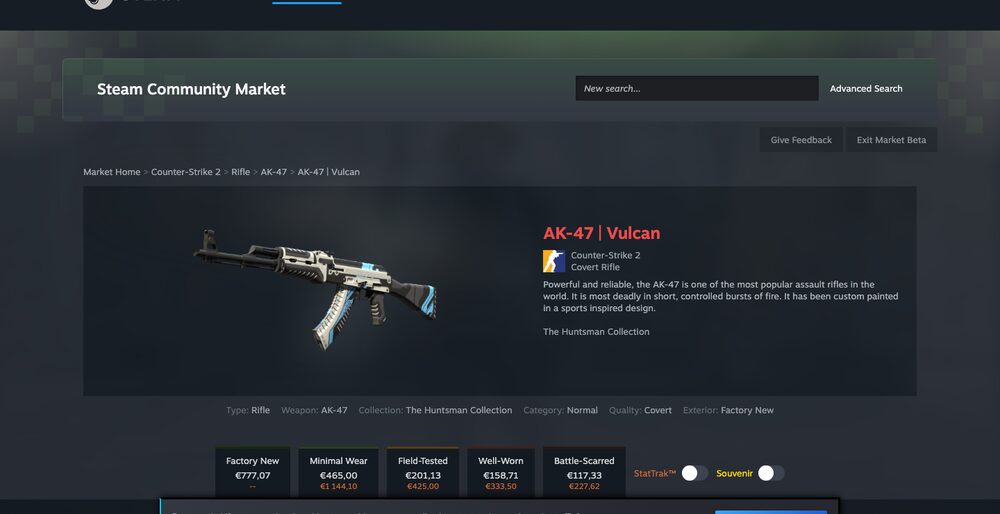
Per one widely cited third-party analysis, 1,128 of 1,186 tracked skins declined between March and mid-August 2026 — the breadth behind the market cap roughly halving from its ~$14 billion peak, as detailed in our damage report. So any article about "crash-proof skins" is lying by headline. In a confidence-driven cascade, everything correlates: the panicked seller dumps their liquid AK skins to fund life, their gloves because gloves were falling first, and their cases because cases are what's left. The behavioral chain is the subject of our panic-selling piece.
What the data does support is relative resilience: some categories fell later, fell less, or kept trading actively while others went bidless. Those differences compound enormously across a full cycle.
The traits that correlate with holding up
Across this crash and the ones before it, the items that come out of drawdowns wanted tend to share most of these:
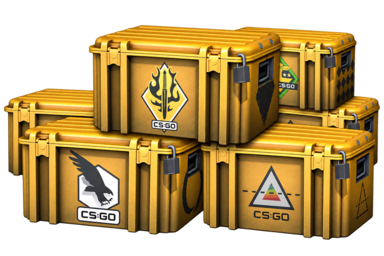
- Fixed or shrinking supply. Nothing new can be minted. Discontinued cases got a structural boost here when the December 17, 2025 Rare Drop Pool zeroing took 35+ cases out of circulation entirely — case deflation, made absolute.
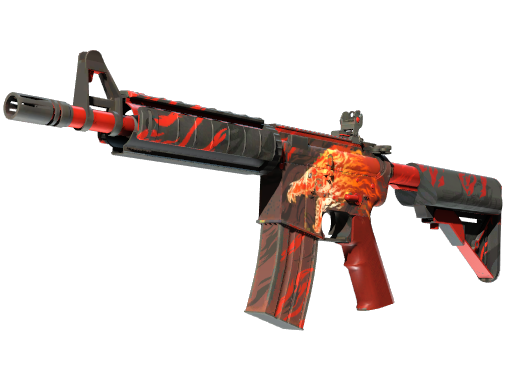
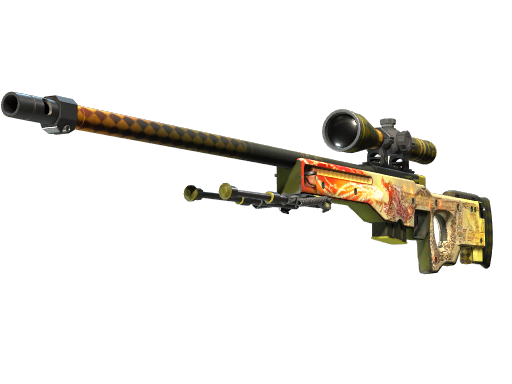
- Iconic status. Dragon Lores, Howls, blue gems, Katowice-era stickers: items whose value rests on a decade of culture, not on last month's sentiment. Icon demand thins in crashes but rarely vanishes.
- Liquidity depth. Items that trade constantly reprice smoothly instead of gapping down, and their holders can always exit. Illiquid items don't show crash damage until someone actually sells — then show all of it at once.
- Usage demand. Skins people actually equip in a game with strong player counts have a demand floor that pure collectibles lack. Player numbers stayed robust through 2026, which quietly supports this whole tier.
- Verifiable scarcity within the item. Low floats and rare patterns are scarcity you can prove — though beware: their premiums are also the first thing thin markets stop paying for.
Why do these traits matter beyond bragging rights in a red market? Because relative resilience compounds. An item that falls 25% while the market falls 50% needs a far smaller recovery to reclaim its old price, keeps a working exit the whole way down, and — historically — attracts the first wave of returning capital, since buyers coming back from the sidelines start with the names that never scared them. Relative strength during the fall has also been one of the more reliable early tells near turns, which is why it features in our bottom-signals piece.
How the segments compared
Hedged to what third-party trackers broadly agree on, the 2026 pecking order looked like this:
| Segment | Crash behavior | Resilience logic |
|---|---|---|
| Gloves | First and hardest: −10–20% early, per trackers | High prices, thin buyers — see the glove crash |
| Knives | Broad declines on top of the Oct 2025 repricing | Blue-chip status dented; covered in knife prices in the crash |
| Active-drop cases | Pressured by ongoing new supply | Weakest structural story |
| Discontinued cases | Fell with the market, but with a live scarcity narrative | RDP zeroing froze supply — see cases in the crash |
| Liquid mid-tier skins | Down with the 95% breadth, but continuously traded | Usage demand + deep books |
Note what the table doesn't say: it doesn't name specific items as safe. Individual performance within every segment varied widely, and any list of "the exact skins that held up" would be overfitting five months of noisy, unaudited data.
The icon premium, stress-tested
The most interesting 2026 result is philosophical: the crash tested whether grail-tier value is a liquidity illusion. The answer so far is nuanced. Marked prices on icons fell like everything else — and stale, rarely-traded listings mean tracker prices on grails should be trusted least of all — the standard market-cap methodology caveat, at maximum strength. But the ownership base of top items is long-horizon by construction: people who can afford a five-figure skin rarely need to sell it in a panic. Forced sellers cluster in the middle of the market, so the middle crashes visibly while the top goes quiet. Quiet is not the same as strong — but historically, it has been the tier that reprices upward fastest when confidence returns.
Screening your own list
If you're building a crash-resistant watchlist, work the traits as a checklist: Is supply frozen? Is there a decade of demand history, or two years of hype? Does it trade daily? Would someone equip it? And is today's price real — checked against actual sales, per our valuation framework, not against a stale listing? Items that clear four or five of those bars are the ones worth watching through the rest of this drawdown — and if you plan to accumulate them, do it with rules rather than reflexes, as laid out in the dip-buying framework.
The final trait isn't in the item at all — it's in the holder. Skins survive crashes when their owners can: sized small enough to ignore a red year, funded with money that has no deadline, and held by someone with a written thesis rather than a screenshot habit. The best survivor list in the world doesn't help if a margin call on your life forces you to liquidate it at the low.