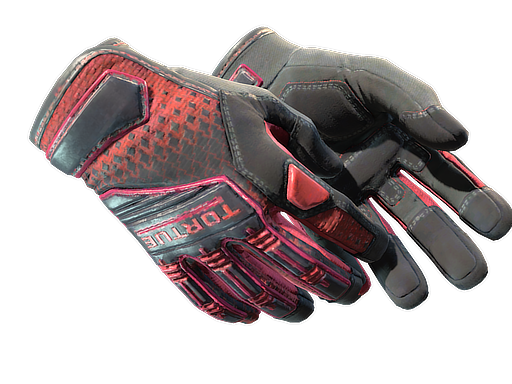
The 2026 Glove Crash: What Happened and What's Left
Before the broad market rolled over, gloves were already bleeding. Per third-party trackers, the glove segment slid an estimated 10–20% in early 2026 while most other categories still looked stable — making hands the canary of the biggest drawdown in skin history. Here's why the premium segment cracked first, and what its repricing means for everyone who holds or wants a pair.

First in, hardest hit
The timeline matters. Trackers date the glove weakness to early 2026 — weeks before the mid-May drop-rate and new-case update that most analyses mark as the trigger for the general decline. By the time roughly 95% of tracked skins were falling between March and mid-August, gloves had already given up double digits. In the full accounting of how much the market dropped, gloves function as the opening chapter.
That sequencing isn't a coincidence, and it isn't unique to this crash. Premium segments with thin buyer pools tend to lead drawdowns, because their prices rest on the smallest number of marginal buyers. When even a few of those buyers step back, there's nothing underneath.
It's worth pausing on how a 10–20% segment decline gets measured at all. Glove price discovery is sparse — many pairs trade a handful of times a month — so tracker figures for the segment lean on the most liquid pairs and interpolate the rest. The true early-2026 damage was probably uneven: milder on liquid mid-tier pairs where the number is well-observed, and anyone's guess on grails that simply stopped printing sales. The range, not the point estimate, is the honest reading.
Why gloves were the weak link
Several traits stacked against gloves at once:
- High absolute prices, thin demand. Desirable gloves start in the hundreds and run to five figures. The buyer pool at those prices is narrow, and it's the first pool to evaporate when confidence wobbles.
- No scarcity ladder. Unlike knives, gloves have no trade-up path and, for most wanted pairs, price discovery happens in a handful of trades. Books are shallow; single sales move the marked price.
- Pure vanity premium. A glove does nothing a cheaper glove doesn't. In risk-off mode, holders discover how much of the price was mood.
- Supply-side nerves. The Armory era changed how items enter circulation, and after the October 2025 trade-up update wiped an estimated $1.75 billion of paper value across premium tiers — the shock chronicled in our trade-up crash piece — holders of expensive cosmetics repriced Valve risk permanently upward.
Add the general confidence spiral that analysts blame for much of 2026's damage, and the segment with the least structural support fell first. The same logic, one notch milder, played out in knives.
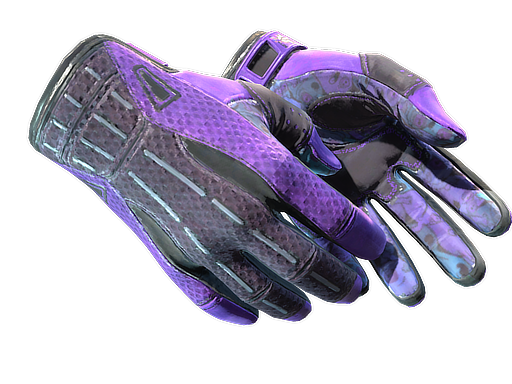
The 2025 preludes
Glove weakness didn't come from nowhere. Two late-2025 events primed it:
| Event | Date | Relevance to gloves |
|---|---|---|
| Trade-up update | October 2025 | ~$1.75B paper-value wipe per trackers; premium-tier floors repriced |
| Rare Drop Pool zeroed | December 17, 2025 | 35+ cases out of circulation; scarcity narratives reshuffled across segments |
Neither event targeted gloves directly. Both taught the same lesson: Valve can restructure supply and crafting paths overnight, and the most expensive, least liquid items absorb that policy risk worst. By January 2026, glove holders were the market's most nervous constituency — and it showed in the prices first.
In retrospect, that nervousness made gloves the market's best early-warning gauge. Anyone watching the segment's slide in January and February had weeks of notice before the mid-May update turned the broad market — one reason segment-level relative weakness earns a place on any crash dashboard.
What's left of the glove premium
The bear reading says the glove premium was a bull-market artifact and the segment permanently re-rates lower. The bull reading says gloves remain among the rarest equippable item classes in a game whose player counts stayed strong through the entire crash, and that a 10–20% markdown on grail-tier hands is a gift in hindsight. Honest answer: the data can't settle this yet, and anyone claiming otherwise is extrapolating a mood. What we can say is that the premium's components aged differently. Rarity survived — nothing about 2026 made desirable gloves more common. Liquidity worsened — spreads on mid-tier pairs widened notably per market observers. And the pure-flex component is cyclical: it drains in crashes and has, historically, refilled with confidence. Which components dominate your specific pair determines what it's now worth — a per-item exercise in valuation discipline more than segment-level forecasting.
If you hold, and if you're shopping
Holders face the standard crash triage — need the money, thesis, sleep — laid out in should I sell now?. The glove-specific note: this segment's illiquidity cuts both ways. Selling into a thin book realizes the worst version of the drawdown, so if you don't need to exit, the cost of waiting for functioning markets is lower here than for liquid items.
Shoppers, meanwhile, are looking at the first meaningful discount on hands in years — with the caveat that "first and hardest down" says nothing about "first back up." If you're buying, buy like a planner, not a reflex: staged entries, a hard per-item ceiling, and target pairs you'd be happy holding through another leg down. Segment survivors and their traits are mapped in the skins that survive crashes — gloves test every one of those traits at once, which is exactly why the segment rewards patience and punishes urgency in both directions.