
CSFloat Market Review (2026): Float Data Meets P2P Trading
Few marketplaces earn their reputation the way CSFloat has: it began as the community's own float-checking tool and built a market on top of the data. The result is the most transparent listing page in CS2 — every float, pattern, and sticker detail up front — paired with lean fees that show up directly in what you pay. Its peer-to-peer delivery asks a little patience; here's the full read on both halves.
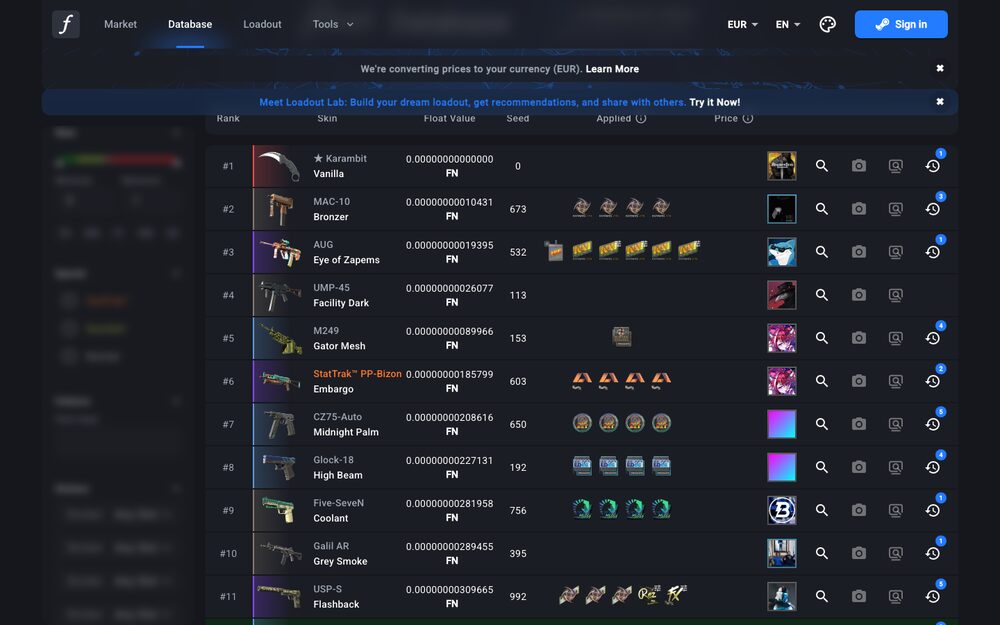
What CSFloat is
CSFloat (formerly CSGOFloat) began life as the inspection tool traders used to check float values before the game showed them anywhere useful. The marketplace grew out of that credibility, and it inherited the tool's DNA: every listing carries first-class float, pattern, and sticker data, rendered the way a trader actually evaluates an item. Prices are in USD, and the community around the venue skews toward serious traders — float snipers, pattern collectors, people who care about the third decimal. That heritage matters: most marketplaces added item data as an afterthought, while CSFloat built the market around the data, and the difference is visible on every listing page.
The model: P2P, with your Steam inventory as the warehouse
CSFloat runs the peer-to-peer model: items stay in sellers' own Steam inventories until sold. When you buy, the seller delivers via a Steam trade offer, which you accept on your end. The site enforces delivery timelines and penalizes flaky sellers — the specifics of those rules change, so read the current policy — but structurally, your purchase completes on a human schedule, not a database's. That's the opposite of on-site inventory venues where a buy settles instantly into venue custody; the two architectures trade off against each other in ways that should drive your venue choice more than any fee number.
The P2P model has a real upside: no custody means the venue never warehouses your items, and sellers avoid deposit friction — which is part of why CSFloat can run lean fees. The downside is equally real: buys can take hours to deliver, an occasional seller flakes entirely, and every purchase needs a human to accept a trade offer. (Disclosure in passing: this is cs2stack's blog, and cs2stack automates buying on DMarket and SkinBaron — the on-site inventory venues — not on CSFloat, precisely because of that last point.)
Strengths
- Best-in-class transparency. Float, paint seed, sticker placement and wear — all first-class on every listing. No other venue presents item data this well, and for float- or pattern-sensitive purchases it materially changes what you can evaluate before paying.
- Low seller fees. Per its published schedule, the base commission sits in the low single digits — verify the current figure — which is among the leanest in the market and shows up in listing prices.
- Buy orders. Standing bids by item, float range, or pattern that fill when a matching listing appears. For patient buyers this is the venue's killer feature; our buy-orders guide covers how to use them well.
- Community trust. Years of goodwill from the float tool, an active trader community, and a track record that has held up. In this industry that's earned, not given.
Weaknesses
- Delivery latency and flake risk. P2P means waiting for a seller to send the trade offer. Usually quick, sometimes hours, occasionally a cancelled sale and a re-buy.
- Hostile to full automation. A bot can place buy orders, but a human must accept each incoming trade offer on Steam. Hands-off accumulation doesn't work here the way it does on on-site venues like DMarket.
- Depth gaps. Strong on skins traders care about; thinner than the giant venues on some item classes, especially the bulk commodity end like cases.
- Cash-out cadence. Withdrawing proceeds involves KYC and processing times that vary; if fast liquidity is the point, check current rails first.
Fees, payments, and KYC
The fee story is genuinely good: a low-single-digit base seller commission per the published schedule (verify before listing), with buyers paying sticker price plus payment costs. Compare that with Steam's ~15% into a locked wallet and the mid-range commissions elsewhere — the 2026 fee comparison lines them all up. Deposit options and cash-out rails have evolved over time, so verify what's currently offered in your region; expect identity verification before meaningful withdrawals, scaling with amounts, as at every venue that touches real money.
The scorecard
| Strengths | Weaknesses |
|---|---|
| Unmatched float/pattern/sticker transparency | P2P delivery latency; occasional seller flakes |
| Low base seller commission | Trade-offer accepts block full automation |
| Buy orders by float and pattern | Thinner depth on commodity items like cases |
| Strong community trust and track record | Cash-out speed varies; KYC before withdrawals |
Who it's for — and the verdict
CSFloat is a gift to the deliberate trader: the float sniper, the pattern collector, the seller after lean fees, and the patient buyer running standing orders on specific items all get more here than almost anywhere else. The one buyer it doesn't suit is the fully hands-off accumulator — trade-offer accepts need a human — and it's overkill for commodity cases where float doesn't exist.
Verdict: the best listing page in CS2, honest low-single-digit economics, and buy orders that quietly land bargains for you — more than enough to earn a permanent slot for item-quality-sensitive purchases, with the instant-settlement venues covering volume. Knowing which venue is cheapest for what is most of the game. No venue, CSFloat included, holds the cheapest listing every day of the week. Cross-checking two or three great marketplaces before each buy costs seconds and pays for itself constantly — it's the least glamorous habit in skin buying and the most profitable one.