Seven Sniping Mistakes That Turn Deals Into Losses
Here is the uncomfortable base rate: when a beginner finds a "bargain" that thousands of bots and experienced snipers passed on, the likeliest explanation is that it wasn't a bargain. The market is not efficient, but it is efficient enough that most visible discounts are explained by something the price already knows. These seven mistakes account for most of the tuition new snipers pay.
The prior you should start from
Real mispricings exist — urgency sellers, pattern-blind listings, cross-venue lag are all documented, recurring phenomena. But they are rare and contested, while apparent mispricings are everywhere. So the productive question in front of any deal is never "how do I buy this fast enough?" It's "what does the seller know that I don't?" Only when that question has a satisfying answer does speed matter. With that prior in place, the mistakes below are all versions of skipping the question.
The seven mistakes
-
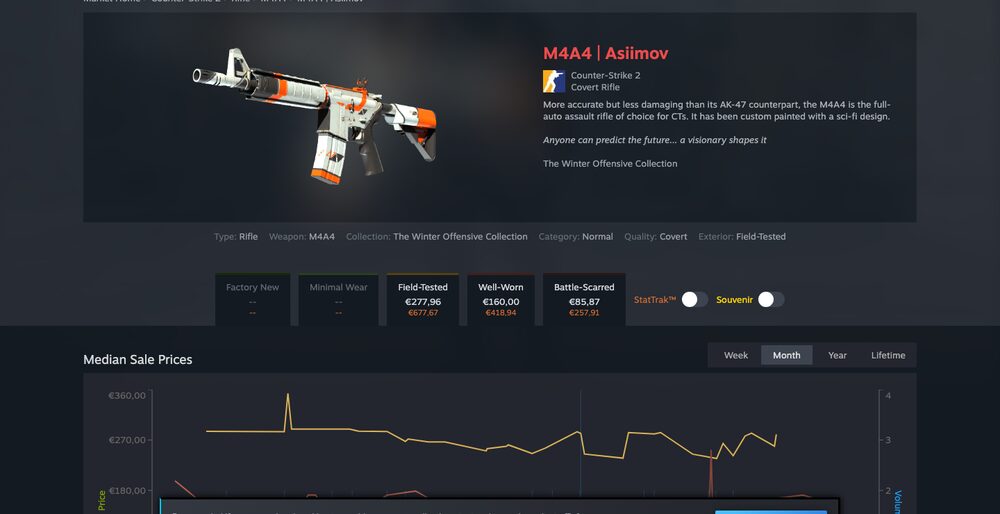
Comparing across wear tiers. The classic: seeing a Field-Tested listing at "half price" against the Minimal Wear number in your head. Wear tiers are effectively different products with different markets, and inside a tier, float extremes reprice items again. Always compare like-for-like: same skin, same wear, similar float bracket.
-
Souvenir and StatTrak mixups. Souvenir and StatTrak variants carry premiums (or occasionally discounts) that vary wildly by item. A normal version priced against a souvenir reference looks like a 60% steal and is nothing of the kind. The variant label is one word in the item name — the single most expensive word beginners skim past.
-
Overvaluing crafts. Stickers add resale value far less often, and far less linearly, than sticker price math suggests. A skin wearing $200 of stickers is not a $200-over-base item; applied stickers usually recover only a fraction of their cost, except in genuine craft-collector territory, which takes real knowledge to recognize. Pricing a craft at "base plus sticker prices" is how beginners pay a premium for someone else's sunk cost.
-
Missing the pattern story — in either direction. Two identical-looking listings can differ enormously because pattern seeds create hidden tiers. Beginners lose both ways: buying a "cheap" Case Hardened that's cheap because its pattern is bottom-tier, or passing on a real deal because they can't tell tier 1 from tier 30.
-
Ignoring the trade lock. The item you buy today is frozen for days — the lock adds price risk and delays the resale. A discount that's thinner than the item's typical weekly price movement isn't an edge; it's a coin flip with fees.
-
Fee-blind flip math. Buying 15% under reference and reselling at reference nets roughly nothing once seller fees and payment costs are paid — and less than nothing if the exit venue is expensive. The full round-trip cost belongs in the decision before the buy; the resale guide walks the arithmetic.
-
Trusting the discount badge. Marketplace "-40%" labels are computed against reference prices the marketplace chooses, and those references are routinely inflated. A badge is an advertisement, not a valuation. If you didn't compute the discount yourself against a cross-venue reference, you don't know the discount.
There's an unofficial eighth mistake that amplifies all seven: revenge buying. After watching a real deal slip away — or after a loss — beginners lower their standards to force the next fill, and the market is very good at supplying plausible-looking bargains to someone who needs one emotionally. If you notice yourself relaxing a rule mid-session to make a listing qualify, close the tab. The deal flow is infinite; your bankroll is not.
The pre-buy checklist
Every mistake above is caught by a check that takes seconds once it's habit:
- Exact item name read twice — wear, StatTrak, souvenir, variant.
- Float and pattern inspected, not assumed — valued like the market values them.
- Reference price computed from live cross-venue data, ideally via a 60-second comparison workflow — never from the badge.
- Exit plan named: venue, expected net after fees, tolerance for the lock week.
- Deal cleared against your per-deal cap — no exceptions for "special" listings.
If a deal can't survive a 30-second checklist, it was never a deal. Genuinely underpriced listings do get taken in seconds, and yes, the checklist costs you some of those races — but losing a race you'd have won is cheaper than winning ten races you should have lost. The professionals you're competing against don't skip these checks; they've compressed them into reflexes for a narrow set of items they've traded hundreds of times. Depth over breadth is the entire trick.
Making the checklist automatic
The deeper fix is structural: most of these errors happen because a human is evaluating an exciting stranger of an item under time pressure. Snipers who last flip the setup — they define, in advance, a short list of items they know cold, with filters precise enough that anything that pages them has already passed the wear, variant, and reference-price checks. The judgment moves to calm configuration time; the moment of the deal becomes mere execution. Done fully, that's a standing rule rather than a reflex — the posture that keeps paying in 2026 after the reflex game got botted.