
Quick-Sell Listings: Where the Deepest CS2 Discounts Come From
Every marketplace has a button that says something like "sell instantly". Every seller who presses it accepts less than their item is worth, on purpose, because money now beats money later. That decision — repeated thousands of times a day across venues — is the single most reliable source of genuinely underpriced CS2 listings. Here's how quick-sell supply gets created, and who ends up owning it.
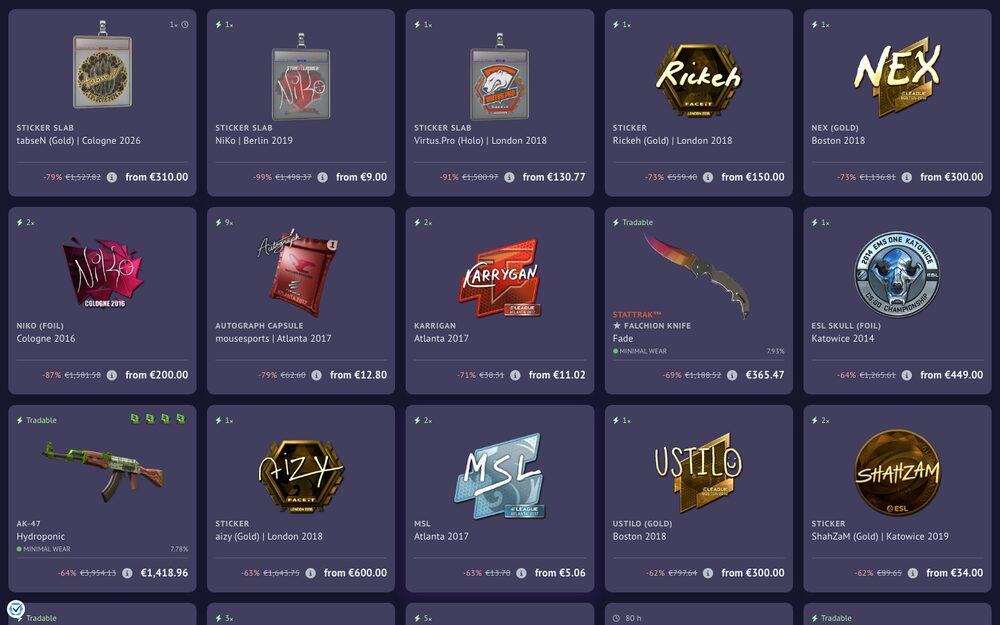
The trade every quick-sell makes: price for speed
A skin's "market price" is really the price of patience. List at the going rate and you might wait hours or days for a buyer; list meaningfully below it and you sell in minutes. Quick-sell listings are what happens when a seller decides the wait is worth more to them than the difference. Sellers underprice on purpose far more often than by accident — and unlike fat-finger errors, this supply is systematic. It shows up every day, in volume, wherever people need to convert pixels into cash quickly.
That systematic quality is what makes quick-sells interesting to buyers. A mispriced pattern is a lottery ticket. A steady stream of sellers paying a speed premium is a market structure — and market structures can be harvested with rules instead of luck.
Instant-sell flows: the venue pays its bid
The most industrialized version is the instant-sell button itself. The mechanics are simple: the venue (or a market-making bot operating on it) quotes the seller a firm price — typically a reference price minus a margin — pays it immediately, and takes the item into its own inventory. The seller gets certainty; the venue gets the item below reference and relists it at or near market.
Two things about this flow matter for buyers:
- The initial displacement creates cheap supply. The venue's bid commonly sits well below the going ask — that gap is the market maker's compensation for taking inventory risk. When the relist happens, it's often priced to move rather than to squeeze the last percent, because the venue's profit is already locked in at acquisition. On busy days, or when the bot's reference lags a fast-moving market, those relists can land meaningfully under the cross-venue mid.
- Some sellers skip the venue and quote themselves. Instead of accepting the instant-sell bid, they list manually just above it — still far below the market ask — hoping a human buyer beats the bot to it. These listings are the classic snipe.
Either way, the same displacement is happening: an item changed hands below its resale value because someone wanted out now. The discount is real, not cosmetic — which is exactly what separates this supply from the "-40%" badges computed against inflated suggested prices.
Manual quick-sells: rent-week pricing
The second flavor is entirely human. A seller who needs cash tonight doesn't tinker with pricing strategy — they look at the current lowest listing and undercut it hard enough to be first in the default sort. Not by 1%, which gets leapfrogged in minutes, but by enough that no rational buyer scrolls past it. Rent-week economics are blunt: the seller isn't maximizing proceeds, they're minimizing time-to-cash, and the price is whatever accomplishes that.
These listings are rarer than instant-sell relists but commonly deeper. They also die fastest, because a listing sorted to the top of "lowest price first" on a liquid item is visible to every scanner on the venue within seconds. The buyers who actually win them are the ones described in our deep-discount sniping guide: rule-matching automation first, primed humans with new-listing feeds second, casual browsers essentially never.
Bulk exits: when a whole portfolio hits one venue
The third source is the most dramatic: someone liquidating an entire inventory at once. A trader quitting the game, a stacker rebalancing into cash, an estate of cases dumped after a price run — dozens or hundreds of items hitting a single venue in one session. Even a mid-sized portfolio can temporarily overwhelm the local order book on the less liquid items, pushing prices below where the same items trade elsewhere at the same moment.
This is a local phenomenon, which is the key to exploiting it. The dump crushes prices on that venue; the cross-venue mid barely moves. Buyers who price against a multi-venue reference see the gap instantly; buyers who only watch one marketplace can't tell a bulk exit from a market-wide decline. Venue depth matters too — the same liquidation that a top-tier book absorbs without blinking can bend a thinner one for hours, which is why knowing each venue's real liquidity tells you where these dislocations are likely to appear. The mechanics of intentional underpricing are covered in more depth in why sellers list below market.
Timing compounds all three sources. Quick-sell supply clusters when cash needs cluster and when fewer buyers are watching — late nights in a region, the start of the month, moments right after market-wide drops. The best hours to catch underpriced listings are largely the hours when quick-sellers outnumber the eyes on the feed.
A buyer's checklist before touching a "cheap" listing
Not every listing that looks like a quick-sell is one. Before buying, run the same three checks every time:
- Verify the discount against a real reference. Compare to a liquid cross-venue mid, not the venue's own suggested price. A discount measured against an inflated anchor is a fake discount, and venues have every incentive to manufacture them.
- Check that the item explains nothing. Pull the inspect link. A bottom-tier pattern, an ugly float within its wear band, ruined sticker placement — any of these can mean the price is correct, not cheap. A true quick-sell is an ordinary item at an extraordinary price, not an extraordinary-in-the-bad-direction item at its fair one.
- Price the exit before the entry. If your plan is to flip, the round trip through fees and the trade lock eats a real slice of the spread — commonly enough to turn a modest discount into breakeven. Work out where and how you'll resell before you click buy, not after.
If a listing passes all three, you've found the real thing: someone else's urgency, priced in your favor.
Who actually collects the spread
Here's the uncomfortable part: on liquid items, the answer is mostly "whoever's software saw it first". Instant-sell relists and rent-week undercuts are rule-clean — a bot that knows the reference price doesn't need judgment to buy a standard item at a deep discount. The manual buyer's edge survives only where valuation takes knowledge, where liquidity is thin, or where nobody's bot happens to be pointed.
The lazier — and for accumulators, arguably smarter — way to stand in the path of quick-sell supply is a standing rule. Full disclosure: this is what our own tool does. cs2stack holds a price ceiling for each item you're accumulating and checks live lowest listings across DMarket and SkinBaron; when a quick-seller's price dips under your cap, the buy fires automatically, within a hard budget, with every fill logged to the cent. You don't win races that way — you just get filled whenever someone, somewhere, decides that speed matters more than price. Given how often that happens, patience plus a standing order captures a surprising share of the same spread the snipers fight over.