
Drawdown Math: Why -50% Needs +100%
Losses and gains are not symmetric, and the market that forgets this most reliably is the one priced by patch notes. A position that falls by half doesn't need to rise by half to recover — it needs to double. Here's the arithmetic, and what it means for how you enter a market famous for overnight cliffs.
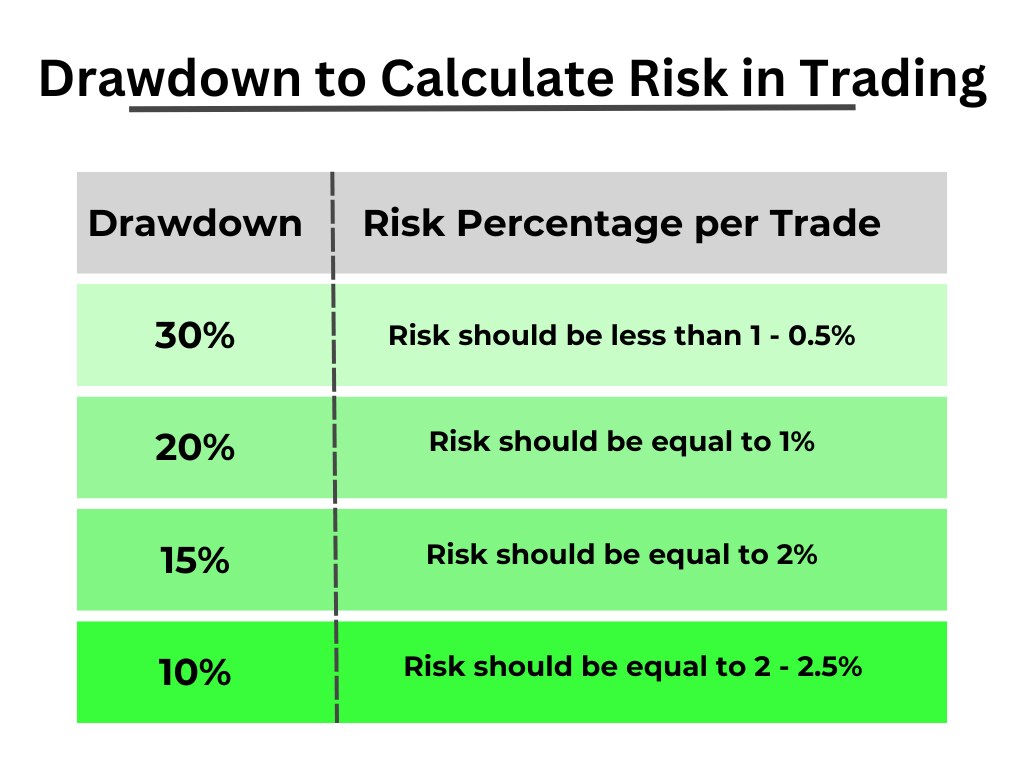
The asymmetry, in one table
A drawdown is just the percentage fall from a peak. The trap is that the recovery required grows much faster than the loss, because you're climbing back from a smaller base:
| Drawdown | Gain needed to break even |
|---|---|
| -10% | +11% |
| -20% | +25% |
| -33% | +50% |
| -50% | +100% |
| -70% | +233% |
| -90% | +900% |
Nothing here is opinion; it's division. $100 that falls to $50 must double to get home. The consequence is that avoiding the deepest losses matters far more than catching the sharpest rallies — a portfolio that dodges one -70% event outperforms one that catches several +30% moves and then rides the cliff down.
Why this hits skins harder than most assets
Equities drift into drawdowns over weeks. The CS2 market falls off cliffs, because its biggest price driver is a single company shipping updates without warning. The October 2025 trade-up change is the canonical example: Valve announced that five Covert items could be traded up to a knife or glove, Covert prices jumped on the announcement, and knife prices — suddenly manufacturable — took the other side. Holders of the wrong item went to sleep flat and woke up deep in the red, a story told in full in the 2025 trade-up crash and its predecessors.
Update-driven cliffs mean drawdown math isn't a stress-test scenario in this market — it's a recurring weather pattern. Any plan that only works if nothing ever gaps down 30% overnight is not a plan; the single-publisher risk is priced into honest expectations or it will price itself in later.
Sequence risk: when you buy decides as much as what
Now add timing. A lump sum has one entry price, so its fate is chained to one date. Put everything in the week before a repricing update and the entire position needs the full recovery multiple from the table above. This is sequence risk — the order of returns mattering, not just their average — and it's the strongest argument in the lump-sum-versus-DCA debate for anyone who can't predict patch notes, which is everyone.
Continuous small buys change the geometry. If you're deploying a fixed amount daily, a crash splits your position in two: the copies bought before it (down, needing recovery) and every purchase after it (made at the new, lower price). The post-crash buys don't need the market to reclaim its old high to profit — they only need it to climb off the floor. Your average cost falls with the market, so the break-even point of the whole position drops below the old peak. Mechanically, buying through the red weeks is what entry smoothing means.
A worked sketch
Illustrative numbers, deliberately round. A case trades at $1.00 for fifty days, an update knocks it to $0.60, and it spends fifty days there before recovering to $0.90.
- Lump sum at $1.00: still down 10% at $0.90, needing +11% more just to break even. The full -40% drawdown was endured with no offsetting mechanism.
- Daily buyer, same total outlay: half the copies at ~$1.00, half at ~$0.60, for a basis near $0.80. At $0.90 the position is up ~12% — despite the identical market path.
Same asset, same crash, opposite outcomes — decided entirely by entry structure. This is also why the two red weeks in a real 100-day DCA run end up being the most profitable ones in hindsight, and why experienced stackers describe corrections as accumulation windows rather than emergencies.
Run the sensitivity the other way and the lesson sharpens. If the recovery only reaches $0.75 instead of $0.90, the lump-sum buyer is down 25% and needs a further +33%; the daily buyer sits roughly at break-even. If the crash never comes and the price grinds straight up, the lump sum wins — that's the fair price of insurance. Averaging in trades away some best-case upside to amputate the worst-case scenario, and in a market where the worst case arrives via patch note, that's usually the right trade for anyone who values sleep.
What this does — and doesn't — license
Drawdown math is not a promise that averaging down always works. It assumes the asset eventually recovers; a case that goes to zero rewards nobody's discipline, which is why item selection — liquidity, a living knife pool, a supply story — still matters as much as entry structure. It also assumes you keep buying through the ugly stretch — the exact moment human buyers reliably stop. Fear pauses the plan at the bottom, which converts the strategy back into a lump sum bought at the top.
That behavioral failure is the practical case for automation. Software doesn't read Reddit sentiment; it executes the schedule, within budget caps and per-item price ceilings you set in advance, on green days and red ones alike. And it keeps the score honest — you can only know your position's true break-even if your cost basis is tracked to the cent, which is what an automated ledger is for.
Respect the table. Size positions so a -50% print is survivable, structure entries so it's exploitable, and let something unemotional do the buying when it arrives.