
CS2 Trading Bots: What You're Actually Paying For
"Free" skin tools aren't free and paid ones aren't priced honestly, because the real costs of automated buying mostly don't appear on a pricing page. They appear in fees, spreads, exchange rates, and the quiet tax of buying the wrong thing at the wrong price. Here's the whole cost stack, layer by layer, and which layers are actually worth paying.
The cost stack, top to bottom
Every automated purchase in the skin market carries some mix of five costs. Most people only ever look at the last one.
| Layer | Who charges it | Typical size |
|---|---|---|
| Marketplace fees | The venue | Steam ~13–15% of sales; cash venues roughly 2–12% for sellers |
| Spread | The order book | Varies with liquidity; widest on thin items |
| FX conversion | EUR venues / your bank | Small per buy, compounds over hundreds of buys |
| Execution quality | Yourself, mostly | Overpaying vs the cheapest venue; missed buys |
| The tool itself | Subscription or rake | The only line item people compare |
Layer one: marketplace fees
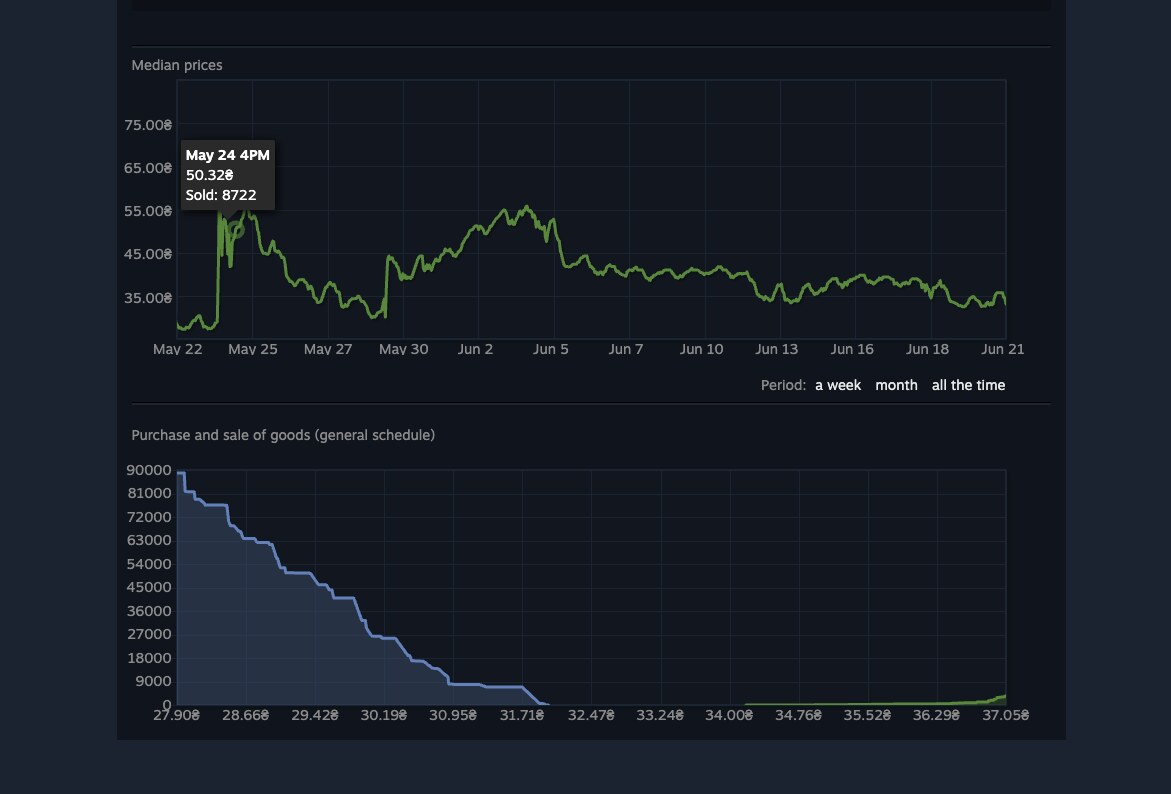
These exist whether you automate or not, but they decide where a bot should shop. Steam takes roughly 13–15% of every sale, and the proceeds are locked in a wallet that can never become cash. Cash marketplaces typically charge sellers somewhere between 2% and 12% depending on the venue. Sellers price to their net, so the buyer-facing consequence is that identical items sit at different prices on different venues — the full mechanics are in Steam's 15% cut and the marketplace comparison. A bot that shops on one venue inherits that venue's fee distortion on every single buy.
Layer two: spread and slippage
The spread — the gap between what buyers bid and sellers ask — is a cost you pay crossing it, and it widens as items get thinner. For liquid cases it's usually small. For anything niche, a bot that market-buys without a price cap will happily walk up the order book, paying more for each successive unit. This is why size is a strategy in small markets, and why any bot spending real money needs per-item ceilings, not just a total budget.
Layer three: currency conversion
If your tool touches European venues — and it should, since that's where a good share of cheap listings live — euros enter the picture. Converting at a stale or padded rate is a silent percentage tax on every cross-currency buy. It's the least visible layer and one of the easiest to get right in software: use a fresh daily rate, apply it before comparing venues, log the rate used. We wrote up the details in converting EUR listings fairly, because on a year of daily buys this rounding error is real money.
Layer four: execution quality (the big one)
This is the layer nobody invoices you for, and it dwarfs the others. It has three components:
- Overpaying. Buying on venue A when venue B had it cheaper. Per-item trackers routinely show venue-to-venue gaps on ordinary days; a single-venue habit donates that gap on every purchase.
- Missed buys. Every day you were "going to buy later" and didn't is an execution cost. For DCA strategies, consistency is the strategy — the gap between intention and execution is quantified in manual vs automated numbers.
- Overtrading. The opposite failure: churning positions and paying the fee stack repeatedly. Fees compound against activity, which is how traders donate their edge in fees without noticing.
Good automation is worth paying for exactly insofar as it fixes this layer: it never forgets, never picks the expensive venue out of laziness, and never gets bored and starts churning.
Layer five: the tool
Skin tools charge in three ways: a subscription, a percentage rake on volume, or "free" — which usually means you're paying in data, in referral routing to a preferred marketplace, or in being the product some other way. None of these models is automatically dishonest, but each deserves a question. For a subscription: does the time saved and the execution improvement plausibly exceed the fee at your budget size? For a rake: does the tool's incentive (more volume) match yours (better fills)? For free: where does the money actually come from?
One more distinction matters: what kind of bot it is. Sniper bots rent you speed in a race against other sniper bots — an arms race with entry fees, covered in DCA bots vs sniper bots. Accumulation bots sell you consistency, which doesn't decay when a faster competitor shows up. Speed depreciates; discipline doesn't.
What's actually worth paying for
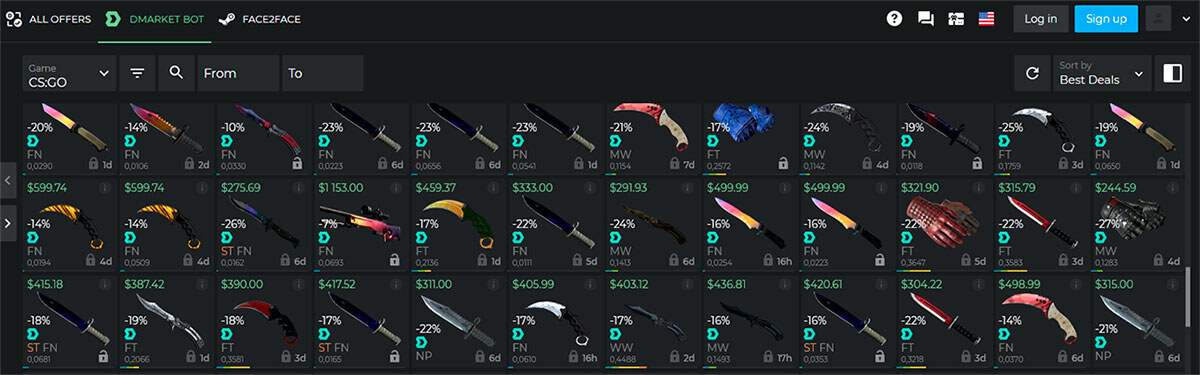
Ranked by return on cost, in our view: venue comparison on every buy (attacks layer four directly), hard price caps and budget caps (prevents the catastrophic version of layers two and four), honest FX handling (layer three), and an audit ledger so you can verify all of the above instead of trusting it. Notice that raw speed isn't on the list — for a buy-side accumulator, paying for milliseconds is paying for someone else's game.
And the cheapest cost-control of all is free: a smaller, well-chosen list of liquid items, bought on a schedule, at capped prices. The tooling exists to enforce that plan, not to replace it. What a bot should cost is a small, predictable line item; what it should save is the whole messy human layer — the math on that trade is in the hidden time cost of manual trading.
Run the comparison at your own budget size before paying for anything. At $5/day of buying, a pricey subscription can eat any realistic execution edge; at $50/day, even a small per-buy improvement dwarfs most tool fees. The cost stack is the same for everyone — which layers dominate depends entirely on how much you move through it.