Will There Be a New CS2 Operation? What It Would Mean
Let's put the disclaimer where it belongs: at the top. There is no announced CS2 operation. Valve has said nothing, published no roadmap, and confirmed nothing to anyone. Everything below is either history or clearly labeled speculation. What history offers, though, is unusually useful — because Valve ran the operation playbook eleven times, and the market's response was remarkably consistent.
First, the honest ground truth: nothing is announced
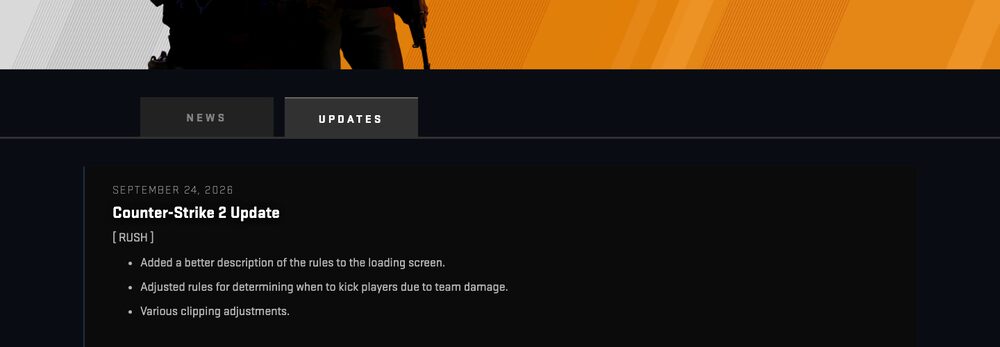
Valve does not pre-announce content. It never has for Counter-Strike. Operations in the CS:GO era arrived as patch notes, not press releases, and CS2's updates follow the same doctrine: the company communicates through shipping, not speaking. Dataminers occasionally surface strings and asset references that hint at unreleased content, and those hints fuel every "operation confirmed" thumbnail you've seen. Treat all of it as unverified. As of this writing there is no announcement, no teaser, and no credible leak that meets any reasonable evidentiary bar.
So why write this post? Because the question — would an operation matter? — is answerable from history even when the question will there be one? is not. And in a bear market, knowing what the catalyst would do matters more than guessing its date.
What an operation actually was, 2013–2021
CS:GO shipped eleven operations, from Payback in April 2013 to Riptide in September 2021, with famous gaps in between. The format evolved, but the mature version — Shattered Web, Broken Fang, Riptide — bundled a consistent package:
- A paid pass, typically around $15, unlocking the operation's reward track.
- Mission campaigns — weekly objectives that paid out stars redeemable for rewards, keeping players logging in for months.
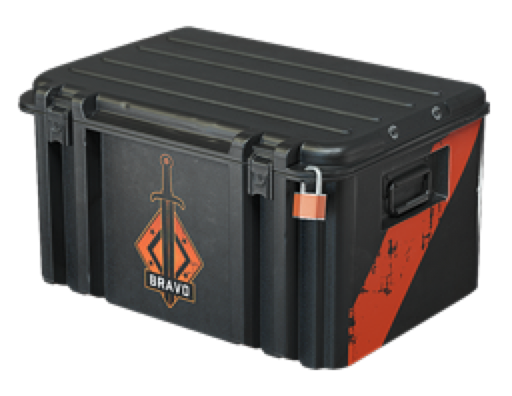
- Exclusive cases — operation cases droppable or redeemable only during the operation window, which is why Bravo-era cases became the blue chips of the market.
- Exclusive collections — skin collections available only via the pass or operation drops, with supply hard-capped by the operation's duration.
- Agents, patches, and coins — cosmetic categories that in some cases only exist because an operation introduced them.
- New and community maps in official matchmaking — the content that gave non-traders a reason to care.
Economically, the pattern was a demand event and a supply event at once: new items flooded in, but attention flooded in faster. Player counts rose during operation windows, unboxing activity rose with them, and the operation-exclusive items began their long march from "abundant" to "discontinued" — the lifecycle that turns capped supply into structural appreciation.
The drought — and the Armory sitting in the operation's chair
Riptide ended in early 2022. Nothing operation-shaped has shipped since — roughly four and a half years, the longest gap in the franchise's history. We've covered what droughts do to case prices in detail: scarcity narratives strengthen, discontinued supply keeps burning, and the market gets increasingly wound up about the eventual release.
But CS2 didn't leave the monetization slot empty. The Armory, launched in late 2024, is arguably the operation's replacement: a paid pass, a credit grind, redeemable cases and charms. What it lacks is everything that made operations demand events — no missions, no maps, no campaign, no window of exclusive attention. The result, as we covered in our Armory analysis, was the inverse of an operation: supply industrialized without a matching demand catalyst, and per third-party trackers that supply contributed materially to the 2026 drawdown. If Valve views the Armory as the operation's successor, the demand half of the old formula is still missing. That gap is the strongest incentive-based argument that something demand-shaped is rational for Valve to ship — which, to be clear, is our speculation, not information.
Set side by side, the gap is explicit:
| Element | CS:GO operations (2013–2021) | Armory (2024–) |
|---|---|---|
| Paid pass | Yes, with a reward track | Yes, with a credit grind |
| Missions and campaign | Weekly objectives, months of engagement | None |
| Maps and matchmaking content | New and community maps | None |
| Exclusive cases and collections | Supply hard-capped by the operation window | Ongoing, industrialized supply |
| Net market effect | Demand event — attention outran new supply | Supply without a matching demand catalyst |
What an operation would mean for a bear market
Here is the mechanism, stated as history rather than prophecy. Operations moved markets through three channels:
Attention. Operations reliably lifted player counts and press coverage. More players means more weekly drops, but historically it meant even more demand — new wallets entering the economy faster than new supply. In a market that per third-party analyses has roughly halved from its ~$14B peak, with something like 95% of tracked skins down between March and August 2026, an attention shock is the single most plausible reversal catalyst that doesn't require Valve to touch supply at all.
Direct revenue. Valve's incentive here is not subtle. Per third-party analyses, CS2 generated over $1.16 billion in 2025 from keys and marketplace fees. Operation passes at ~$15 across even a fraction of CS2's player base are a nine-figure product with a decade of proven demand. A company that has pulled every other lever on its dashboard in the past year has left this one conspicuously untouched.
Sentiment reset. Crashes end when the narrative changes. An operation is the loudest narrative instrument Valve owns. Whether that's a reason to expect one is, again, speculation — Valve has let droughts run for years while the community begged, and its patch cadence answers to internal logic nobody outside the company can audit.
The bear case for holding your breath
Balance demands the other side. Valve shipped the Armory instead of an operation once already, and may simply consider the format retired. Operations are expensive to build relative to cases, and Valve's headcount famously follows its own interests. And an operation is not automatically bullish for your specific holdings: operation windows historically redirected spending toward the new exclusive items, and a fresh wave of cases and collections is still new supply landing on a market already digesting the Armory flood. If you hold recent-era cases, an operation could extend their flatline even while it lifts the market's mood.
Positioning without a crystal ball
The practical takeaway is boring on purpose: don't position for a date nobody knows. Position for the distribution. If an operation lands, attention-driven demand historically lifted discontinued supply first and hardest; if it doesn't, the drought dynamics keep grinding in the same direction anyway. Both paths favor patient accumulation over event-timing. Full disclosure of our angle: cs2stack is our tool — free, about three minutes to set up — and it exists for exactly this posture: it watches DMarket and SkinBaron and buys your chosen items under your price caps, dry-run mode and hard budget limits included, while our founder runs it on his own money through the crash with a public ledger. The strategy it automates is buying through the drawdown on a schedule, not betting on patch notes.
If the operation comes, you'll read about it the way everyone always has: in the update notes, after it shipped. Until then, the only honest answer to "will there be one?" is that nobody outside Valve knows — and everyone claiming otherwise is selling something.