
Standing Buy Orders: the Original Autobuy
Before anyone rented a sniper bot or wired an API key into a script, the market already had automation: the buy order. Post your price, walk away, and if a seller ever meets it, the trade happens without you. It's autobuy with the venue itself as the executor — no third party, no server, no subscription. Buy orders are older, simpler, and in several situations still better than everything built since. Here's where they exist, how to price them, and when a live bot actually earns its complexity.
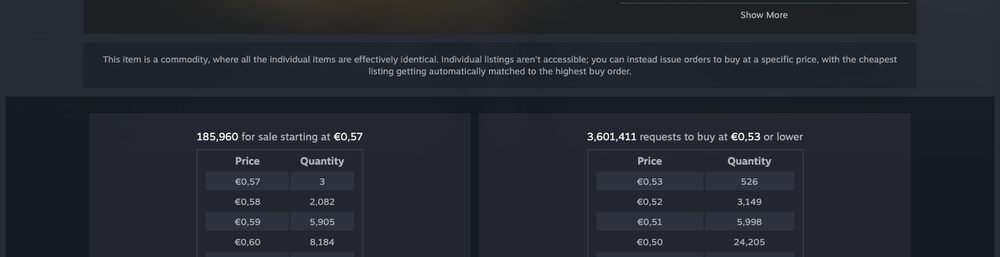
What a buy order actually is
A buy order is a standing, funded commitment: I will pay up to $X for this item, and the marketplace may execute against me whenever a matching sell appears. The key word is funded — the venue holds or earmarks your money, which is what lets the fill happen while you sleep. That's the entire difference between a buy order and a price alert: an alert notifies a human who then has to show up, while an order is the showing up, done in advance. (If you're weighing alerts against automation generally, alerts vs autobuy maps that decision.)
Notice what this means structurally: a buy order flips you from taker to maker. A sniper hunts existing listings and races other buyers to them; an order sits in the book and waits for a seller to come to it. No race, no refresh rate, no speed war. The price of that calm is patience — an order only fills when someone chooses to sell at your number.
Where buy orders exist
The two best-known implementations bracket the design space:
- Steam Community Market. The oldest and largest order book in the ecosystem. You commit wallet funds at a price; Steam matches incoming sales automatically. Fully automatic settlement, enormous liquidity — but priced in wallet money you can never withdraw, with Valve's roughly 15% fee structure baked into every seller's ask. The full trade-offs are in Steam buy orders vs third-party autobuy.
- CSFloat. The best-known third-party order book, in real cash, with float-range-aware orders — a genuinely different instrument, covered step by step in the CSFloat buy orders guide. Because CSFloat is peer-to-peer, a matched order still needs the seller to complete a Steam trade, so settlement isn't instant the way Steam's is.
- Other venues. Several marketplaces run their own variants — DMarket's target orders being the notable one on an on-site-inventory venue, where settlement needs no seller cooperation at all. Whether fills are instant or trade-dependent comes down to the venue's custody model; P2P vs on-site inventory explains why that one design choice decides everything.
The queue: why two identical orders aren't equal
When many buyers post orders on the same item, the venue has to decide whose order fills first. The near-universal intuition — hedged here because each venue's published behavior governs the details — is price, then time: the highest bid wins, and among equal bids, the earlier order goes first. Two practical consequences follow.
First, on liquid items the top of the book is a contested ladder. Outbidding the best order by one cent takes the front of the queue, which is why top-of-book positions on popular items get leapfrogged constantly. Second, an order deep below the current price isn't dead — it's a limit order waiting for a bad day. Market dips, panic sells, and fat-fingered listings all sweep down through the book, and the patient order three rungs down catches what the front-runners' budgets couldn't absorb.
Pricing an order that actually fills
The craft is choosing the number. Three postures, in rising order of patience:
| Posture | Where you price | What you're buying | Risk |
|---|---|---|---|
| Front of book | At or one tick above the best bid | Fast fills at roughly market price | Leapfrog wars; you win mostly when winning is worthless |
| Mid book | A few percent under the current lows | Ordinary volatility — sellers who want out today | Slow fills; capital committed while it waits |
| Deep book | Well under market, at your "gladly" price | Dips, panics, and mistakes | May never fill; that's acceptable by design |
The deep-book posture is the underrated one. It's the standing-order version of sniping: instead of racing to a mispriced listing, you pre-position where mispricings land. The same logic drives price caps as standing orders — a hard maximum that turns every red day into an automatic fill. One discipline matters more than the number itself: price from your own valuation, not from the book. An order at "one cent above the next guy" inherits the next guy's judgment, and on thin items the whole book can be two bored speculators mirroring each other.
Standing orders vs live sniping: when each wins
Both approaches buy below market. They win in different regimes:
- Orders win on liquid, fungible items. Cases, capsules, commodity skins — where any unit is as good as another and volume is constant, a well-priced order fills reliably and racing bots for listings adds nothing but stress.
- Sniping wins on specific items. A particular float, pattern, or sticker craft may never see a matching sell route through your order book. The deal exists as one listing on one venue for one moment; only a live watcher catches it.
- Orders win on time cost. Set once, funded once, working forever. No uptime, no scripts, nothing to babysit.
- Live tools win on breadth. An order lives on one venue and can't see that the same item is 8% cheaper across the street. Cross-venue comparison is structurally beyond any single order book — that's the gap third-party automation actually fills, and it's the gap cs2stack (ours, so discount accordingly) was built for: standing max-price rules executed against live lowest prices on both DMarket and SkinBaron, capped and ledgered, rather than parked on one venue's book.
- On P2P venues, both share a ceiling. However the intent is automated, settlement still waits on a human seller completing a trade.
The honest synthesis: standing orders are the right default for accumulation, and live automation earns its complexity only when you need speed on specifics or eyes on multiple venues at once. Start with the oldest tool; upgrade when you hit its walls.