Do Float Premiums Survive a Bear Market?
In the bull market, a 0.003 float was worth double the same skin at 0.06, and nobody asked why for long — the next buyer was already typing. Then the market roughly halved from its ~$14 billion peak, per third-party trackers, and every collectible premium got asked the hard question at once: when everything is falling, what is rarity actually worth? The answer from 2026 is messier, and more useful, than either the float-faithful or the skeptics predicted.
What a float premium actually is
Quick grounding (the full float explainer goes deeper): every skin carries a wear value between 0 and 1, and within a wear tier, lower is scarcer and cleaner-looking. A Factory New skin at 0.003 might be one in thousands of that skin. The premium you pay over a mid-tier float is a bet with two legs: an aesthetic leg (it looks better, worth something to any player) and a scarcity leg (someone will pay more for the rank itself). Bull markets never force you to price the legs separately. Bear markets price nothing else.
What the crash did to premiums
Directionally, per third-party analyses and the pattern visible across trackers this year: float premiums compressed, and they compressed more than base prices fell. With roughly 95% of 1,186 tracked skins declining March to mid-August, the base skin fell with the market — but the multiple on top of it shrank too, a double hit for premium holders. The mechanism is liquidity. A float premium needs a specific buyer: not "someone who wants this skin" but "someone who wants this skin, cares about float ranks, and will fund that care today." In a crash that buyer pool thins fastest, spreads on collectible-tier items widen most, and the marginal sale happens at whatever the best generalist bid is — which prices the skin, not the decimal. A premium is precisely the part of the price the marginal buyer stops paying under stress. We hedge the exact magnitudes deliberately: thin markets print noisy data, and single sales get quoted as trends. But the direction — premiums compressing harder than bases — showed up consistently.
Where premiums held, and where they evaporated
The compression wasn't uniform, and the split is the actionable part:
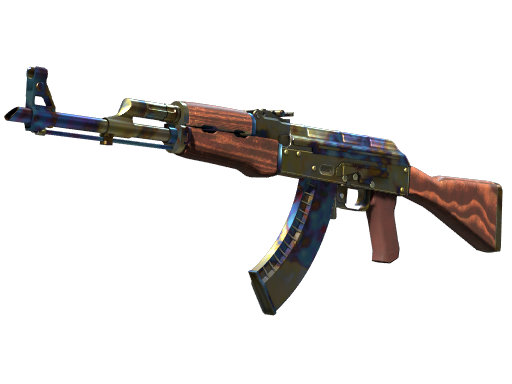
- Held best: visible, top-of-tier floats on iconic liquid skins. A top-100 float on an AK or AWP everyone recognizes kept a meaningful premium — thinner than 2025's, but real. Deep demand for the base skin means the specialist buyer pool never emptied.
- Held on relative value: clean floats bought near base price. Buyers who'd followed the low-float-without-the-float-tax playbook — good floats at small premiums — had little premium to lose. Their downside matched the market's, not the collectible market's.
- Evaporated: paper ranks on illiquid skins. Leaderboard floats on obscure skins, premiums justified only by a database ranking, marginal "FN vs low FN" distinctions on mid-tier items — these repriced toward base value and found no bid on the way. The scarcity leg turned out to be the whole premium, and scarcity without demand is just a spreadsheet fact.
- A special mention: premiums propped by trade-up demand. Float math feeding trade-up contracts gave some low floats utility value — but the October 2025 trade-up shock had already shown (to the tune of ~$1.75 billion in paper value, per analyses) that utility premiums live and die by one patch note.
The split, condensed:
| Premium type | Crash outcome | Why |
|---|---|---|
| Top-of-tier floats on iconic liquid skins | Held, thinner | Deep base demand kept the specialist pool alive |
| Clean floats bought near base price | Held on relative value | Little premium to lose; downside matched the market's |
| Paper ranks on illiquid skins | Evaporated | Scarcity without demand is a spreadsheet fact |
| Premiums propped by trade-up demand | Fragile | Utility premiums live and die by one patch note |
The buyer's side of a compressed premium
Flip the lens and 2026 was the best float-buying window in years. Premium compression means the gap between a great float and an ordinary one is on sale — the collectible attribute costs less, in both absolute and relative terms, than at any point in the bull market. For float snipers, distressed sellers listing by base price without repricing the float meant top-tier decimals slipping out at ordinary-skin prices all year. The discipline required is the same as all crash-season sniping: liquid base skins only, fresh reference prices, and sizing that assumes further decline. Buying a compressed premium is a bet that specialist demand returns with the market — historically it has, but "historically" is doing real work in that sentence.
One measurement caveat before the rules, because it matters for anyone checking these claims against a tracker: premium compression is partly invisible in listed prices. Sellers of rare floats mostly don't cut their asks in a crash — they delist, or let listings go stale at 2025 prices. What compresses first is the executable price: the offers actually arriving, the sales actually printing. So a database can show a rank-#3 float "worth" its old multiple for months while every real bid comes in 40% under it. If you're auditing your own inventory, price it by recent comparable sales, not standing asks — the gap between the two is itself the best single gauge of how much premium has really survived.
Rules for floats in a bear market
What the year teaches, condensed: hold float premiums only on skins whose base demand is bulletproof, because the premium is a call option on the base skin's buyer pool. Buy premiums when they're compressed, not when they're celebrated. Never pay for a database rank the eye can't see on an illiquid skin — that premium is the first casualty of every stress event. And account honestly: mark your collectibles at executable prices, not last year's leaderboard sales, or the next crash will do the marking for you. The decimal still matters. The market just spent five months clarifying exactly when.